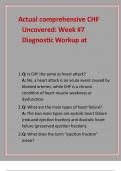
Actual comprehensive CHF
Uncovered: Week #7
Diagnostic Workup at
1. Q: Is CHF the same as heart attack?
A: No, a heart attack is an acute event caused by
blocked arteries, while CHF is a chronic
condition of heart muscle weakness or
dysfunction.
2. Q: What are the main types of heart failure?
A: The two main types are systolic heart failure
(reduced ejection fraction) and diastolic heart
failure (preserved ejection fraction).
3. Q: What does the term “ejection fraction”
mean?
, A: Ejection fraction (EF) is the percentage of
blood the left ventricle pumps out with each
contraction.
4. Q: What is a normal ejection fraction?
A: Normal EF ranges from 55% to 70%.
5. Q: What EF value typically indicates systolic
heart failure?
A: An EF less than 40% usually indicates systolic
heart failure.
6. Q: Can CHF affect the right side of the heart?
A: Yes, right-sided heart failure can occur, often
due to left-sided failure or lung diseases.
7. Q: What is the difference between left-sided
and right-sided heart failure?
A: Left-sided failure affects the left ventricle’s
pumping ability, causing pulmonary congestion;
right-sided failure leads to fluid buildup in the
body, like swelling in legs.
, 8. Q: What are common causes of CHF?
A: Coronary artery disease, hypertension,
cardiomyopathy, valvular heart disease, and
myocarditis.
9. Q: How does high blood pressure cause CHF?
A: It increases the heart’s workload, causing
thickening and stiffening of the heart muscle,
eventually leading to failure.
Symptoms and Signs
11. Q: What are the common symptoms of
CHF?
A: Shortness of breath, fatigue, swelling in legs
and abdomen, rapid or irregular heartbeat, and
persistent cough.
12. Q: Why do CHF patients experience
shortness of breath?
A: Fluid backs up into the lungs due to poor
heart pumping, causing pulmonary congestion.
Uncovered: Week #7
Diagnostic Workup at
1. Q: Is CHF the same as heart attack?
A: No, a heart attack is an acute event caused by
blocked arteries, while CHF is a chronic
condition of heart muscle weakness or
dysfunction.
2. Q: What are the main types of heart failure?
A: The two main types are systolic heart failure
(reduced ejection fraction) and diastolic heart
failure (preserved ejection fraction).
3. Q: What does the term “ejection fraction”
mean?
, A: Ejection fraction (EF) is the percentage of
blood the left ventricle pumps out with each
contraction.
4. Q: What is a normal ejection fraction?
A: Normal EF ranges from 55% to 70%.
5. Q: What EF value typically indicates systolic
heart failure?
A: An EF less than 40% usually indicates systolic
heart failure.
6. Q: Can CHF affect the right side of the heart?
A: Yes, right-sided heart failure can occur, often
due to left-sided failure or lung diseases.
7. Q: What is the difference between left-sided
and right-sided heart failure?
A: Left-sided failure affects the left ventricle’s
pumping ability, causing pulmonary congestion;
right-sided failure leads to fluid buildup in the
body, like swelling in legs.
, 8. Q: What are common causes of CHF?
A: Coronary artery disease, hypertension,
cardiomyopathy, valvular heart disease, and
myocarditis.
9. Q: How does high blood pressure cause CHF?
A: It increases the heart’s workload, causing
thickening and stiffening of the heart muscle,
eventually leading to failure.
Symptoms and Signs
11. Q: What are the common symptoms of
CHF?
A: Shortness of breath, fatigue, swelling in legs
and abdomen, rapid or irregular heartbeat, and
persistent cough.
12. Q: Why do CHF patients experience
shortness of breath?
A: Fluid backs up into the lungs due to poor
heart pumping, causing pulmonary congestion.