Chapter 3: Germany
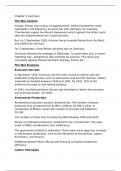
The War Context
Initially, Britain had a policy of appeasement, where Chamberlain used
negotiation and diplomacy to avoid war with Germany. For example,
Chamberlain signed the Munich Agreement which agreed that Hitler could
take the Sudentenland from Czechoslovakia.
But, on 1 September 1939, German forces invaded Poland from the West,
and USSR from the East.
On 3 September, Great Britain declared war on Germany.
Germany followed the strategy of ‘Blitzkrieg’, to avoid static war. It meant
‘lightning war’, designed to take enemies by surprise. This tactic was
successful against Poland, Denmark, Norway, France etc.
The War Economy
Economic Decrees
In December 1939, economic decrees were issued to outline vast war
production programmes, such as submarines and aircraft. German military
expenditure doubled between 1939 and 1941. By 1941, 55% of the
workforce focused on war-related products.
In 1941, the Rationalisation Decree was intended to reform the economy
and eliminate waste - by Hitler.
Armaments Production
Armaments production actually remained low. The number of planes
produced only increased from 8,290 in 1939 to 10,780 in 1941. In
comparison to Britain, where the number of aircrafts had trebled to
20,100.
The number of tanks only increased by 800 between 1940 and 1941.
Poorly co-ordinated production caused this lack of production. The early
onset of WW2 contributed to this inefficiency.
The government lacked co-ordination. There were many agencies involved
in war-product production, such as the Ministries of Armaments, Labour,
Economics, and Finance.
Infighting between Nazi officials and financial corruption weakened
efficiency.
Labour Shortages
, Conscription of 4 million men to fight, caused the workforce to decline
from 24.5 million to 20.5 million (1939-1940).
Forced recruitment of workers from Southern / Central Europe. In 1944,
6.5? million foreign workers were in the German labour force, 25% of the
workforce.
The Nazis tried to place women in the workforce, but this directly
contrasted their family values. In 1939, over 37% of the labour force were
women, and 55% by 1944.
Hitler repeatedly vetoed plans to conscript married women, as he felt this
would damage the morale of soldiers.
The Reich Labour Ministry tried to conscript single women, but this was
unpopular. There was a growing reliance on foreign labour as a result.
Amount spent on war
The failure of Germany to mobilise their army at the start of the war
allowed Britain to overtake Germany. Before the war, Germany was
spending more on war than Britain (1938 – 17% vs 8%). Yet, by 1941, it
was 47% vs 60%.
Rationing
Introduced in 1939, with a simple diet which limited dairy and meat
problems. It also rationed clothes and soap, with toilet paper not available
at all! Hot water was available 2 days / week.
Rationing was efficient initially, with goods brought in from conquered
lands. Rationing was increased in times of increased death and violence,
such as Christmas 1942 with the brutal Russian campaign.
After 1943 Total War declaration, rationing worsened and became far more
severe. All clothing manufacturing ended.
As defeat became more likely, chaos ensured. Ration cards not honoured
and the black market grew.
Goebbels
Goebbels called publicly for ‘Total War’ in a speech in Berlin in 1943, after
the German surrender at Stalingrad. This signified the total commitment
of all human and material resources to the war effort.
Stalingrad had seen the loss of 868,000 German men. Seen as a turning
point in the war.
Even with this, the economy never reached its full potential.
The War Context
Initially, Britain had a policy of appeasement, where Chamberlain used
negotiation and diplomacy to avoid war with Germany. For example,
Chamberlain signed the Munich Agreement which agreed that Hitler could
take the Sudentenland from Czechoslovakia.
But, on 1 September 1939, German forces invaded Poland from the West,
and USSR from the East.
On 3 September, Great Britain declared war on Germany.
Germany followed the strategy of ‘Blitzkrieg’, to avoid static war. It meant
‘lightning war’, designed to take enemies by surprise. This tactic was
successful against Poland, Denmark, Norway, France etc.
The War Economy
Economic Decrees
In December 1939, economic decrees were issued to outline vast war
production programmes, such as submarines and aircraft. German military
expenditure doubled between 1939 and 1941. By 1941, 55% of the
workforce focused on war-related products.
In 1941, the Rationalisation Decree was intended to reform the economy
and eliminate waste - by Hitler.
Armaments Production
Armaments production actually remained low. The number of planes
produced only increased from 8,290 in 1939 to 10,780 in 1941. In
comparison to Britain, where the number of aircrafts had trebled to
20,100.
The number of tanks only increased by 800 between 1940 and 1941.
Poorly co-ordinated production caused this lack of production. The early
onset of WW2 contributed to this inefficiency.
The government lacked co-ordination. There were many agencies involved
in war-product production, such as the Ministries of Armaments, Labour,
Economics, and Finance.
Infighting between Nazi officials and financial corruption weakened
efficiency.
Labour Shortages
, Conscription of 4 million men to fight, caused the workforce to decline
from 24.5 million to 20.5 million (1939-1940).
Forced recruitment of workers from Southern / Central Europe. In 1944,
6.5? million foreign workers were in the German labour force, 25% of the
workforce.
The Nazis tried to place women in the workforce, but this directly
contrasted their family values. In 1939, over 37% of the labour force were
women, and 55% by 1944.
Hitler repeatedly vetoed plans to conscript married women, as he felt this
would damage the morale of soldiers.
The Reich Labour Ministry tried to conscript single women, but this was
unpopular. There was a growing reliance on foreign labour as a result.
Amount spent on war
The failure of Germany to mobilise their army at the start of the war
allowed Britain to overtake Germany. Before the war, Germany was
spending more on war than Britain (1938 – 17% vs 8%). Yet, by 1941, it
was 47% vs 60%.
Rationing
Introduced in 1939, with a simple diet which limited dairy and meat
problems. It also rationed clothes and soap, with toilet paper not available
at all! Hot water was available 2 days / week.
Rationing was efficient initially, with goods brought in from conquered
lands. Rationing was increased in times of increased death and violence,
such as Christmas 1942 with the brutal Russian campaign.
After 1943 Total War declaration, rationing worsened and became far more
severe. All clothing manufacturing ended.
As defeat became more likely, chaos ensured. Ration cards not honoured
and the black market grew.
Goebbels
Goebbels called publicly for ‘Total War’ in a speech in Berlin in 1943, after
the German surrender at Stalingrad. This signified the total commitment
of all human and material resources to the war effort.
Stalingrad had seen the loss of 868,000 German men. Seen as a turning
point in the war.
Even with this, the economy never reached its full potential.