

15/11/2019
LECTURE 12: MULTINATIONAL ORGANISATION
TODAY’S OBJECTIVES: TODAY’S LEARRNING OUTCOMES:
• Why organizational structures? By the end of this session you will be able to:
• Organizational structures (a selection) • Describe organizational structures used
• Organizing strategy when beginning international expansion
• Essay advice • Describe global structures that are used as
• Essay questions firms increase their international presence
• Describe ways of approaching the
assessment
HOW CAN EXECUTIVES ORGANISE THEIR MNES TO MAXIMISE SUCCESS?
How do you control success and avoid problems?
How do managers control staff?
COORDINATION PROCESSES
MNE structure must answer the question:
What do we want to achieve?
Organizational processes: decision making, communicating and controlling – what will work efficiently
Decision making: choosing from among alternatives
Communication: transferring meanings from sender to receiver
Controlling: determining that everything goes according to plan
• How do we decide who is in charge of what?
• If we remove extra layers of management, it is easier and faster to make decisions.
Decision making is easier, communication is better, and changes happen faster.
• If you have different layers of management if a mistake gets made it is hard to find who is
responsible. It is easier to manage and control less layers.
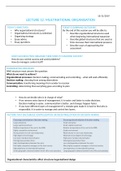
FACTORS THAT ENCOURAGE CENTRALIZATION OR DECENTRALIZATION OF DECISION MAKING
Organisational characteristics affect structure/organisational design
, EARLY ORGANIZATION STRUCTURES
Initial internationalization of operations sees a simple extension of domestic operations
Primary focus continues to be the domestic market
As international operations increase, MNEs take steps to address growth structurally
Develop a specific export department to handle international sales or an overseas subsidiary
EARLY EXPORT DEPARTMENT STRUCTURE
As you start to have a bigger international market this set up does not work.
You need to keep changing your structure in base of you activities in international business.
EARLY INTERNATIONALIZATION SUBSIDIARY STRUCTURE
LECTURE 12: MULTINATIONAL ORGANISATION
TODAY’S OBJECTIVES: TODAY’S LEARRNING OUTCOMES:
• Why organizational structures? By the end of this session you will be able to:
• Organizational structures (a selection) • Describe organizational structures used
• Organizing strategy when beginning international expansion
• Essay advice • Describe global structures that are used as
• Essay questions firms increase their international presence
• Describe ways of approaching the
assessment
HOW CAN EXECUTIVES ORGANISE THEIR MNES TO MAXIMISE SUCCESS?
How do you control success and avoid problems?
How do managers control staff?
COORDINATION PROCESSES
MNE structure must answer the question:
What do we want to achieve?
Organizational processes: decision making, communicating and controlling – what will work efficiently
Decision making: choosing from among alternatives
Communication: transferring meanings from sender to receiver
Controlling: determining that everything goes according to plan
• How do we decide who is in charge of what?
• If we remove extra layers of management, it is easier and faster to make decisions.
Decision making is easier, communication is better, and changes happen faster.
• If you have different layers of management if a mistake gets made it is hard to find who is
responsible. It is easier to manage and control less layers.
FACTORS THAT ENCOURAGE CENTRALIZATION OR DECENTRALIZATION OF DECISION MAKING
Organisational characteristics affect structure/organisational design
, EARLY ORGANIZATION STRUCTURES
Initial internationalization of operations sees a simple extension of domestic operations
Primary focus continues to be the domestic market
As international operations increase, MNEs take steps to address growth structurally
Develop a specific export department to handle international sales or an overseas subsidiary
EARLY EXPORT DEPARTMENT STRUCTURE
As you start to have a bigger international market this set up does not work.
You need to keep changing your structure in base of you activities in international business.
EARLY INTERNATIONALIZATION SUBSIDIARY STRUCTURE


