INFORMATION AND COMMUNICATION
TECHNOLOGY FOR PRACTICE AND
ASSOCIATED ASPECTS OF CYBER LAW
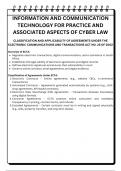
CLASSIFICATION AND APPLICABILITY OF AGREEMENTS UNDER THE
ELECTRONIC COMMUNICATIONS AND TRANSACTIONS ACT NO. 25 OF 2002
Overview of ECTA:
Regulates electronic transactions, digital communications, and e-commerce in South
Africa.
Establishes the legal validity of electronic agreements and digital records.
Defines electronic signatures and ensures their admissibility in court.
Governs online contracts, email agreements, and digital evidence.
Classification of Agreements Under ECTA:
1. Electronic Contracts – Online agreements (e.g., website T&Cs, e-commerce
transactions).
2. Automated Contracts – Agreements generated automatically by systems (e.g., click-
wrap agreements, API-based contracts).
3. Electronic Data Interchange (EDI) Agreements – Transactions between businesses
using digital formats.
4. Consumer Agreements – ECTA protects online consumers and mandates
transparency in pricing, contract terms, and refunds.
5. Excluded Agreements – Certain contracts must be in writing and signed physically
(e.g., wills, property transfers, and long-term leases).
, SECURITY OF PERSONAL INFORMATION
Lawyers must secure client data under the Protection of Personal Information Act
(POPIA).
Personal data must be collected lawfully and stored securely.
Clients must be informed how their data is used and who has access.
Unauthorized disclosure of personal information can lead to fines, lawsuits, and
reputational damage.
Security Measures:
Use encrypted databases for sensitive client data.
Restrict access to confidential information to authorized staff.
Implement two-factor authentication (2FA) and secure login protocols.
TECHNOLOGY FOR PRACTICE AND
ASSOCIATED ASPECTS OF CYBER LAW
CLASSIFICATION AND APPLICABILITY OF AGREEMENTS UNDER THE
ELECTRONIC COMMUNICATIONS AND TRANSACTIONS ACT NO. 25 OF 2002
Overview of ECTA:
Regulates electronic transactions, digital communications, and e-commerce in South
Africa.
Establishes the legal validity of electronic agreements and digital records.
Defines electronic signatures and ensures their admissibility in court.
Governs online contracts, email agreements, and digital evidence.
Classification of Agreements Under ECTA:
1. Electronic Contracts – Online agreements (e.g., website T&Cs, e-commerce
transactions).
2. Automated Contracts – Agreements generated automatically by systems (e.g., click-
wrap agreements, API-based contracts).
3. Electronic Data Interchange (EDI) Agreements – Transactions between businesses
using digital formats.
4. Consumer Agreements – ECTA protects online consumers and mandates
transparency in pricing, contract terms, and refunds.
5. Excluded Agreements – Certain contracts must be in writing and signed physically
(e.g., wills, property transfers, and long-term leases).
, SECURITY OF PERSONAL INFORMATION
Lawyers must secure client data under the Protection of Personal Information Act
(POPIA).
Personal data must be collected lawfully and stored securely.
Clients must be informed how their data is used and who has access.
Unauthorized disclosure of personal information can lead to fines, lawsuits, and
reputational damage.
Security Measures:
Use encrypted databases for sensitive client data.
Restrict access to confidential information to authorized staff.
Implement two-factor authentication (2FA) and secure login protocols.