

Public History
Learning History Lecture – Semester 2 Week 4
History, Film and Memory
Re-Visioning the Past and late Soviet Reform
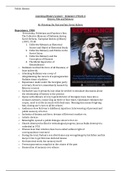
Repentance, 1984
- ‘Perestroika, Politicians and Pandora’s Box:
The Collective Memory of Stalinism during
Soviet Reform,’ European Review of History
(1997), 73-90
1. Collective Memory as Historical
Source and Object of Historical Study
2. Collective Memory and Politics in the
Soviet Union
3. Collective Memory and the
Conception of Glasnost
4. The Moral Imperative of
Remembrance
o Stalinism touched the lives of all Russians, at
least indirectly
o Attacking Stalinism was a way of
delegitimising the careers of septuagenarian
Stalinist titans of politics
o Repentance made under the Georgian party
secretary. However, immediately banned by
Moscow censors
o Gorbachev saw it privately. Just what he needed to stimulate discussion about
the relationship of history to the present
o Opens with obituary of very typical dictator of Georgian town. Goes into a
woman’s memory, corpse dug up three or four times. Cakemaker exhumes the
corpse, need to settle accounts with dead man. ‘Burying him means forgiving
him, closing one’s eyes to all his crimes.’
o Audiences view Ketevan’s childhood, injustices. Interweaving of personal and
public memory of terror.
o Inclusion of fantasy and farce, dreams of Ketevan’s mother etc.
o Artistic devices
o Meaningful, opened a public dialogue about terror etc.
o Church destroyed in film for technological progress, just as Stalin destroyed a
cathedral in 1931
o Women hear that relatives have been exiled without right of
correspondence/executed
o During the trial, Varlam's son Abel denies any wrongdoings by his father and his
lawyer tries to get Ketevan declared insane.
o Not historical truth, but memory itself
o Present generation complicit in the crimes of the past
o Reassertion of memory over silence
Learning History Lecture – Semester 2 Week 4
History, Film and Memory
Re-Visioning the Past and late Soviet Reform
Repentance, 1984
- ‘Perestroika, Politicians and Pandora’s Box:
The Collective Memory of Stalinism during
Soviet Reform,’ European Review of History
(1997), 73-90
1. Collective Memory as Historical
Source and Object of Historical Study
2. Collective Memory and Politics in the
Soviet Union
3. Collective Memory and the
Conception of Glasnost
4. The Moral Imperative of
Remembrance
o Stalinism touched the lives of all Russians, at
least indirectly
o Attacking Stalinism was a way of
delegitimising the careers of septuagenarian
Stalinist titans of politics
o Repentance made under the Georgian party
secretary. However, immediately banned by
Moscow censors
o Gorbachev saw it privately. Just what he needed to stimulate discussion about
the relationship of history to the present
o Opens with obituary of very typical dictator of Georgian town. Goes into a
woman’s memory, corpse dug up three or four times. Cakemaker exhumes the
corpse, need to settle accounts with dead man. ‘Burying him means forgiving
him, closing one’s eyes to all his crimes.’
o Audiences view Ketevan’s childhood, injustices. Interweaving of personal and
public memory of terror.
o Inclusion of fantasy and farce, dreams of Ketevan’s mother etc.
o Artistic devices
o Meaningful, opened a public dialogue about terror etc.
o Church destroyed in film for technological progress, just as Stalin destroyed a
cathedral in 1931
o Women hear that relatives have been exiled without right of
correspondence/executed
o During the trial, Varlam's son Abel denies any wrongdoings by his father and his
lawyer tries to get Ketevan declared insane.
o Not historical truth, but memory itself
o Present generation complicit in the crimes of the past
o Reassertion of memory over silence


