21/2/25
Race, Writing and Decolonisation: Lecture 8 - Christina Sharpe.
Christina Sharpe
● Professor of English Literature and Black Studies (York University in Toronto).
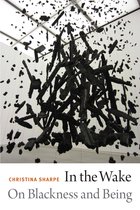
● 3 Books: Monstrous Intimacies (2009) , In the Wake: On Blackness and Being
(2016), Ordinary Notes (2023).
● Associated with ‘Afro-pessimism’ - to criticise radical black movements and moderate
movements.
Why Sharpe? Why theory?
1. Structured Thinking - enabling us to think in more expansive ways.
2. Dialogic Thinking - exists in relation to other theory.
3. Creative Thinking - blurs boundaries between autobiographical and critical. Carve
out space for a new way of thinking.
4. Praxis
● Angela Davis (activist in black liberation movements in America in the 1960s).
‘One not only uses these conceptual methods to try to understand the world but must
also constantly question the conceptual apparatus. One must ask: why am I using
this tool, this concept, this particular theory, this method? How does that change the
outcome of what I am trying to learn? How do changes in the material world have an
impact on my theoretical framework?’
Structured Thinking
● Theory to explore our own thoughts.
● Example of structured thinking - explores the idea of ‘The Wake’ in an organised
way.
● Chapter begins with a tragic memory of the death of her sister. Sparked the thinking
which has taken form and structure through this book. Reflect on the high number of
deaths and how they can represent a broader systematic problem.
● A ‘conceptual frame’: way of organising thought. Articulate through idea of ‘wake’, a
metaphor to help make her story visible.
● ‘As this deathly repetition appears here, it is one instantiation of the wake as the
conceptual frame of and for living blackness in the diaspora in the still unfolding
aftermaths of Atlantic chattel slavery’.
Dialogic Thinking
● Frantz Fanon (psychiatrist)
● Claudia Rankine (poet)
● Dionne Brand (poet, novelist).
● Saidiya Hartman (theorist)
● Sylvia Wynter (theorist).
Race, Writing and Decolonisation: Lecture 8 - Christina Sharpe.
Christina Sharpe
● Professor of English Literature and Black Studies (York University in Toronto).
● 3 Books: Monstrous Intimacies (2009) , In the Wake: On Blackness and Being
(2016), Ordinary Notes (2023).
● Associated with ‘Afro-pessimism’ - to criticise radical black movements and moderate
movements.
Why Sharpe? Why theory?
1. Structured Thinking - enabling us to think in more expansive ways.
2. Dialogic Thinking - exists in relation to other theory.
3. Creative Thinking - blurs boundaries between autobiographical and critical. Carve
out space for a new way of thinking.
4. Praxis
● Angela Davis (activist in black liberation movements in America in the 1960s).
‘One not only uses these conceptual methods to try to understand the world but must
also constantly question the conceptual apparatus. One must ask: why am I using
this tool, this concept, this particular theory, this method? How does that change the
outcome of what I am trying to learn? How do changes in the material world have an
impact on my theoretical framework?’
Structured Thinking
● Theory to explore our own thoughts.
● Example of structured thinking - explores the idea of ‘The Wake’ in an organised
way.
● Chapter begins with a tragic memory of the death of her sister. Sparked the thinking
which has taken form and structure through this book. Reflect on the high number of
deaths and how they can represent a broader systematic problem.
● A ‘conceptual frame’: way of organising thought. Articulate through idea of ‘wake’, a
metaphor to help make her story visible.
● ‘As this deathly repetition appears here, it is one instantiation of the wake as the
conceptual frame of and for living blackness in the diaspora in the still unfolding
aftermaths of Atlantic chattel slavery’.
Dialogic Thinking
● Frantz Fanon (psychiatrist)
● Claudia Rankine (poet)
● Dionne Brand (poet, novelist).
● Saidiya Hartman (theorist)
● Sylvia Wynter (theorist).