NOTES NURS 190 - Week 2
Eye:
Disease: Cataracts
● An opacity in the lens; usually occurs in aging
● Signs & Symptoms
○ Clouded
○ Blurred Vision
○ Increased difficulty with vision at night
○ Halo’s around light, double vision in a single eye
● Treatment: Prescription glasses → then surgery
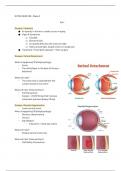
Disease: Retinal Detachment
What is happening? (Pathophysiology)
- Acute
- The retina (layer in the back of the eye -
detaches)
What will I see?
- The vision loss is reported like “the
curtain closed on my vision”
What will I do? (Interventions)
- Fall Precautions
- Surgery - AVOID things that increase
intraocular pressure (heavy lifting)
Disease: Macular Degeneration
- Loses central vision.
What is happening? (Pathophysiology)
- Macula is deteriorating
- Chronic
- Age Related
- Education: Yearly eye exams
What will I see?
- Gradual central vision loss
What will I do? (Interventions)
- Fall/Safety Precautions
, - Regular Eye Exams
- Vitamin A (Helps protect the eyes)
Sign & Symptoms: Blind spots and loss of central vision
● Can lead to visual disability
Disease: Glaucoma (Increases Intraocular Pressure)
What is happening? (Pathophysiology)
- Rising intraocular pressure because the fluid cannot drain properly.
- Open and Closed angle glaucoma
- Pupil is oval shaped and dilated
- Cornea = cloudy
What will I see?
- Loss of peripheral vision
- Sudden eye pain
Sign & Symptoms: Loss of peripheral vision, blurred vision, vision loss.
Treatment: Medications -
1. Betablocker (Eye Drop) - Timolol
a. Why? To lower the intraocular pressure in the eye
i. Application: You apply eye drops to the conjunctival sac, apply light
pressure to the corner of the eye.
2. Osmotic Diuretic - Mannitol
a. Why? To pull fluid from the eye
Disease: Conjunctivitis
- 3 types
- Bacterial:
- Viral: watery discharge, contagious
- Allergic: itchy, bilateral redness, related to allergens
Inspection of the eye:
● One eyelid dropping = ptosis, dysfunction of CN III
● Illuminated pupil - observe the simultaneous reaction (consensual constriction) of the
other pupil. The direct reaction should be faster and greater than the consensual reaction
(Normal)
Lifespan Consideration:
● Infant:
○ The red reflex should be elicited from birth
○ Binocular vision develops at 6 weeks of age
Eye:
Disease: Cataracts
● An opacity in the lens; usually occurs in aging
● Signs & Symptoms
○ Clouded
○ Blurred Vision
○ Increased difficulty with vision at night
○ Halo’s around light, double vision in a single eye
● Treatment: Prescription glasses → then surgery
Disease: Retinal Detachment
What is happening? (Pathophysiology)
- Acute
- The retina (layer in the back of the eye -
detaches)
What will I see?
- The vision loss is reported like “the
curtain closed on my vision”
What will I do? (Interventions)
- Fall Precautions
- Surgery - AVOID things that increase
intraocular pressure (heavy lifting)
Disease: Macular Degeneration
- Loses central vision.
What is happening? (Pathophysiology)
- Macula is deteriorating
- Chronic
- Age Related
- Education: Yearly eye exams
What will I see?
- Gradual central vision loss
What will I do? (Interventions)
- Fall/Safety Precautions
, - Regular Eye Exams
- Vitamin A (Helps protect the eyes)
Sign & Symptoms: Blind spots and loss of central vision
● Can lead to visual disability
Disease: Glaucoma (Increases Intraocular Pressure)
What is happening? (Pathophysiology)
- Rising intraocular pressure because the fluid cannot drain properly.
- Open and Closed angle glaucoma
- Pupil is oval shaped and dilated
- Cornea = cloudy
What will I see?
- Loss of peripheral vision
- Sudden eye pain
Sign & Symptoms: Loss of peripheral vision, blurred vision, vision loss.
Treatment: Medications -
1. Betablocker (Eye Drop) - Timolol
a. Why? To lower the intraocular pressure in the eye
i. Application: You apply eye drops to the conjunctival sac, apply light
pressure to the corner of the eye.
2. Osmotic Diuretic - Mannitol
a. Why? To pull fluid from the eye
Disease: Conjunctivitis
- 3 types
- Bacterial:
- Viral: watery discharge, contagious
- Allergic: itchy, bilateral redness, related to allergens
Inspection of the eye:
● One eyelid dropping = ptosis, dysfunction of CN III
● Illuminated pupil - observe the simultaneous reaction (consensual constriction) of the
other pupil. The direct reaction should be faster and greater than the consensual reaction
(Normal)
Lifespan Consideration:
● Infant:
○ The red reflex should be elicited from birth
○ Binocular vision develops at 6 weeks of age