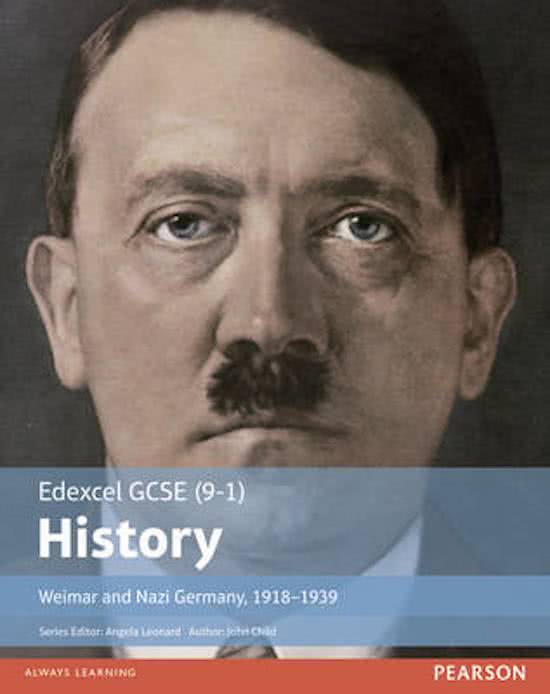
EN1
Spartacist uprising
● Left wing group who were supported by Soviet Union
○ Emil Eihorm sacked so spartacists took their chance to undermine the
government
● 6 Jan 1919 100,000 workers went on strike in the streets and took the gov newspaper
and telegraph offices
● Freikorps used to oppose spartacists (these were right wing ex army soldiers who still
had their weapons
○ 250,000 men by March 1919
● Freikorps beat spartacists as they were armed/more experiences/powerful
● By 16 Jan Rosa Luxemburg and Karl Liebnecht shot and killed, without leaders the
revolt failed
Kapp Putsch
● Led by wolfgang kapp (right wing) MARCH 1920
● Freikorps feared unemployment and turned against public using violence
● Declared theyd be taking over and invited old kaiser back
● Government went to Weimar out of fear
● Workers went on st and cut off electricity, water etc
● Kapp fled and was put in prison reolt failed
POLITICAL MURDERS 376 between 1919 an 1922
Golden years of the Weimar Republic
Changes in the standard of living
● Due to the economic problems between 1918 and 1923 living standards suffered,
however this improved during the Weimar golden years
○ The unemployment insurance act of 1927 provided unemployment and sickness
benefits (60 marks per week) for people if they fell out of work
■ Unemployment at 1926 was 2 million but by 1928 it was 1.3 million
○ Wages and working conditions improved
■ Working week reduced from 50 hours to 46 hours
■ Real wages rose by 25%
○ Housing improved as a 15% rent tax was introduced to fund building things
■ From 1925 to 1929 around 101,000 homes were built
○ War veterans were offered help under the 1920 Reich pension law
○ Education improved and was encouraged
■ Number of students in higher education before WW1 was 70,000 by 1928
this increased to 110,000
Changes for women
● In November 1918 women were granted the right to vote by the new Republic
● They also strengthened the rights of women and stated:
, ○ Women had equal rights to men
○ Women could vote and stand for elections
■ The turnout of women voters was 90%
■ By 1932 almost 10% of the Reichstag were female
○ Marriage was an equal partnership
○ Women should be able to enter all professions as men can
● During WW1 since men were involved with the fighting, 75% of women were doing work
that was usually done by men
● After the war many women dropped out of work and few entered high status professions
○ Due to thriving retail many part time jobs were made available for women with
families
○ In more liberal professions such as medicine number of women also rose
■ Between 1925 and 1932 number of female doctors rose from 2,500 to
around 5,000
● For many young, unmarried women the 1920’s brought greater financial independence
and the concept of the new woman rose
● The new woman went out more and expressed their independence by cutting their hair
short, wearing makeup, jewellery, smoking, drinking and obtained liberal sexual attitudes
○ Many men and women were opposed to this as they believed this threatened the
societal aspects of marriage and motherhood etc
■ This was seen as the birth rate was falling, by 1980 the birth rate fell from
128 live births per 1000 women per year to 80
■ Divorce rates were rising and rose from 27 divorces per 100,000 couple
to 60 by 1913
Cultural changes
● Art
○ There was a rise in expressionism- the idea that the arts should reflect the
thoughts and feelings of the artist as well as their political views rather than
showing things how they exactly look
■ This is seen in the work of Otto Dix
● Architecture
○ The Bauhaus movement became popular, this stressed the importance of
simplistic design, technology and careful craftsmanship in their work
■ Eric Mendelsohn was influenced by this
● Cinema
○ Film became very popular and widespread across Germany
■ One of the world’s first horror films ‘the cabinet of doctor caligari’ was
created in Germany
■ The first film with sound was made in 1930
■ By 1932 there were 3800 German cinemas showing films with sound
, EN2 How did Hitler take control of the NSDAP
FACTORS Details
Party policy - 25 point It was a document containing the policies of the DAP
programme e.g
- Strongly opposed to the November
criminals
- Opposed to democracy and the Weimar
Constitution
- Opposed to the Jews for undermining the
German economy
Hitler’s personal appeal Hitler was very skilled at speeches and this was a
large aspect of his appeal, he was very persuasive -
He would use gestures as part of this and produced
publicity photos and paintings portraying him to be
very skilled
Hitler appeared as a public speaker 31 times at 46
party gatherings from 1919 to 1920. From June 1920
party membership was 1000 and it grew to 3000 by
end on 1920.
Party organisation By 1920 Hitler was the party’s leader of propaganda
and made a number of changes to the party
- He proposed that the DAP becomes NSDAP
(Nationalist Socialist German Workers Party) to
appeal to a larger number of people
- Rudolf Schussler was hired as the party’s
administrator which increased membership
and funds
- The swastika and straight armed salute was
developed straight after this
- By December 1920 the party had enough
funds to buy a newspaper
Party leadership (JULY 1921) Hitler forced a leadership contest-
Drexler was defeated and Hitler became party
leader. He surrounded himself with supporters to help
him lead the party, each were carefully selected for
their skills and the image they would give the NSDAP
party
The sturmabteilung (SA) (AUGUST 1921) The SA were used by Hitler to
control the NSDAP party and opposition. They
impressed people with a sense of power and subdued
opposition to Hitler with violence
800 SA by 1922
Spartacist uprising
● Left wing group who were supported by Soviet Union
○ Emil Eihorm sacked so spartacists took their chance to undermine the
government
● 6 Jan 1919 100,000 workers went on strike in the streets and took the gov newspaper
and telegraph offices
● Freikorps used to oppose spartacists (these were right wing ex army soldiers who still
had their weapons
○ 250,000 men by March 1919
● Freikorps beat spartacists as they were armed/more experiences/powerful
● By 16 Jan Rosa Luxemburg and Karl Liebnecht shot and killed, without leaders the
revolt failed
Kapp Putsch
● Led by wolfgang kapp (right wing) MARCH 1920
● Freikorps feared unemployment and turned against public using violence
● Declared theyd be taking over and invited old kaiser back
● Government went to Weimar out of fear
● Workers went on st and cut off electricity, water etc
● Kapp fled and was put in prison reolt failed
POLITICAL MURDERS 376 between 1919 an 1922
Golden years of the Weimar Republic
Changes in the standard of living
● Due to the economic problems between 1918 and 1923 living standards suffered,
however this improved during the Weimar golden years
○ The unemployment insurance act of 1927 provided unemployment and sickness
benefits (60 marks per week) for people if they fell out of work
■ Unemployment at 1926 was 2 million but by 1928 it was 1.3 million
○ Wages and working conditions improved
■ Working week reduced from 50 hours to 46 hours
■ Real wages rose by 25%
○ Housing improved as a 15% rent tax was introduced to fund building things
■ From 1925 to 1929 around 101,000 homes were built
○ War veterans were offered help under the 1920 Reich pension law
○ Education improved and was encouraged
■ Number of students in higher education before WW1 was 70,000 by 1928
this increased to 110,000
Changes for women
● In November 1918 women were granted the right to vote by the new Republic
● They also strengthened the rights of women and stated:
, ○ Women had equal rights to men
○ Women could vote and stand for elections
■ The turnout of women voters was 90%
■ By 1932 almost 10% of the Reichstag were female
○ Marriage was an equal partnership
○ Women should be able to enter all professions as men can
● During WW1 since men were involved with the fighting, 75% of women were doing work
that was usually done by men
● After the war many women dropped out of work and few entered high status professions
○ Due to thriving retail many part time jobs were made available for women with
families
○ In more liberal professions such as medicine number of women also rose
■ Between 1925 and 1932 number of female doctors rose from 2,500 to
around 5,000
● For many young, unmarried women the 1920’s brought greater financial independence
and the concept of the new woman rose
● The new woman went out more and expressed their independence by cutting their hair
short, wearing makeup, jewellery, smoking, drinking and obtained liberal sexual attitudes
○ Many men and women were opposed to this as they believed this threatened the
societal aspects of marriage and motherhood etc
■ This was seen as the birth rate was falling, by 1980 the birth rate fell from
128 live births per 1000 women per year to 80
■ Divorce rates were rising and rose from 27 divorces per 100,000 couple
to 60 by 1913
Cultural changes
● Art
○ There was a rise in expressionism- the idea that the arts should reflect the
thoughts and feelings of the artist as well as their political views rather than
showing things how they exactly look
■ This is seen in the work of Otto Dix
● Architecture
○ The Bauhaus movement became popular, this stressed the importance of
simplistic design, technology and careful craftsmanship in their work
■ Eric Mendelsohn was influenced by this
● Cinema
○ Film became very popular and widespread across Germany
■ One of the world’s first horror films ‘the cabinet of doctor caligari’ was
created in Germany
■ The first film with sound was made in 1930
■ By 1932 there were 3800 German cinemas showing films with sound
, EN2 How did Hitler take control of the NSDAP
FACTORS Details
Party policy - 25 point It was a document containing the policies of the DAP
programme e.g
- Strongly opposed to the November
criminals
- Opposed to democracy and the Weimar
Constitution
- Opposed to the Jews for undermining the
German economy
Hitler’s personal appeal Hitler was very skilled at speeches and this was a
large aspect of his appeal, he was very persuasive -
He would use gestures as part of this and produced
publicity photos and paintings portraying him to be
very skilled
Hitler appeared as a public speaker 31 times at 46
party gatherings from 1919 to 1920. From June 1920
party membership was 1000 and it grew to 3000 by
end on 1920.
Party organisation By 1920 Hitler was the party’s leader of propaganda
and made a number of changes to the party
- He proposed that the DAP becomes NSDAP
(Nationalist Socialist German Workers Party) to
appeal to a larger number of people
- Rudolf Schussler was hired as the party’s
administrator which increased membership
and funds
- The swastika and straight armed salute was
developed straight after this
- By December 1920 the party had enough
funds to buy a newspaper
Party leadership (JULY 1921) Hitler forced a leadership contest-
Drexler was defeated and Hitler became party
leader. He surrounded himself with supporters to help
him lead the party, each were carefully selected for
their skills and the image they would give the NSDAP
party
The sturmabteilung (SA) (AUGUST 1921) The SA were used by Hitler to
control the NSDAP party and opposition. They
impressed people with a sense of power and subdued
opposition to Hitler with violence
800 SA by 1922