3 - 19 Energetics
Exothermic (放熱的) reactions
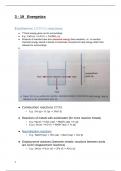
● ***Heat energy given out to surroundings
● E.g.: CaO (s) + H2O (l) → Ca(OH)2 (s)
● Products of reaction have less chemical energy than reactants, i.e.: in reaction
chemical energy stored in bonds of chemicals converted to heat energy which then
released to surroundings
●
● Combustion reactions (燃燒)
○ E.g.: 2H2 (g) + O2 (g) → 2H2O (l)
● Reactions of metals with acids/water (for more reactive metals)
○ E.g.: Mg (s) + H2SO4 (aq) → MgSO4 (aq) + H2 (g)
○ E.g.2: Na (s) + H2O (l) → NaOH (aq) + H2 (g)
● Neutralisation reactions
○ E.g.: NaOH (aq) + HCl (aq) → NaCl (aq) + H2O (l)
● Displacement reactions (between metals; reactions between acids
are ALSO displacement reactions)
○ E.g.: 2Al (s) + Fe2O3 (s) → 2Fe (l) + Al2O3 (s)
1
, Enthalpy change (ΔH - measured in kJ/mol)
● ***Definition: amount of heat energy taken in/given out in chemical reaction (i.e.:
difference between energy of products and energy of reactants)
○ Exothermic - -ΔH, lose heat
■ E.g.: Mg (s) + H2SO4 (aq) → MgSO4 (aq) + H2 (g)
ΔH = -466.9 kJ/mol
○ Endothermic - +ΔH, absorb heat
■ E.g.: CaCO3 (s) → CaO (s) + CO2 (g)
ΔH = +178 kJ/mol
2
Exothermic (放熱的) reactions
● ***Heat energy given out to surroundings
● E.g.: CaO (s) + H2O (l) → Ca(OH)2 (s)
● Products of reaction have less chemical energy than reactants, i.e.: in reaction
chemical energy stored in bonds of chemicals converted to heat energy which then
released to surroundings
●
● Combustion reactions (燃燒)
○ E.g.: 2H2 (g) + O2 (g) → 2H2O (l)
● Reactions of metals with acids/water (for more reactive metals)
○ E.g.: Mg (s) + H2SO4 (aq) → MgSO4 (aq) + H2 (g)
○ E.g.2: Na (s) + H2O (l) → NaOH (aq) + H2 (g)
● Neutralisation reactions
○ E.g.: NaOH (aq) + HCl (aq) → NaCl (aq) + H2O (l)
● Displacement reactions (between metals; reactions between acids
are ALSO displacement reactions)
○ E.g.: 2Al (s) + Fe2O3 (s) → 2Fe (l) + Al2O3 (s)
1
, Enthalpy change (ΔH - measured in kJ/mol)
● ***Definition: amount of heat energy taken in/given out in chemical reaction (i.e.:
difference between energy of products and energy of reactants)
○ Exothermic - -ΔH, lose heat
■ E.g.: Mg (s) + H2SO4 (aq) → MgSO4 (aq) + H2 (g)
ΔH = -466.9 kJ/mol
○ Endothermic - +ΔH, absorb heat
■ E.g.: CaCO3 (s) → CaO (s) + CO2 (g)
ΔH = +178 kJ/mol
2