TORT SUPERVISION 8 REVISION
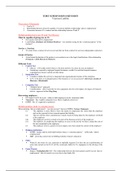
Vicarious Liability
Necessary Elements
1. Tort by X
2. Relationship between D and X capable of vicarious liability (relationship ‘akin to employment’
3. Connection between X’s conduct and the relationship between D and X
Relationship between D and Tortfeasor
Must be capable of giving rise to VL
Not strictly restricted to employment
Lord Phillips (Institutes of Christian Brothers) – was member acting for the “common purpose” of the
institute?
Service v. Services
VL arises from a contract of service (servant) but not from contract for services (independent contractor)
Intent of Parties
Actual intent/declaration of the parties is not conclusive as to the legal classification of the relationship
(Ferguson v John Dawson & Partners)
Different Tests
1. Control Test
Old test – if D could control what is to be done and how it is done, he was an employer
Limitations exposed by negligent hospital treatment: couldn’t be said that hospital manners
controlled how doctors carried out their duties
2. Integration Test
Considers whether the activity is integrated into organisational structure of the enterprise
Is X’s work done as an integral party of the business or is it an accessory? (Stevenson, Joedan &
Harrison v Macdonald)
3. Composite Test
“Multiple factor” approach
Considerations – does X provide his own equipment; hire his own helpers, his degree of financial
risk etc.; approved in Lee Ting Sang
Borrowing employees
If D lends X to D2 for a job – either or both employers can be vicariously liable
Viasystems – Rix J applies integration test; May LJ applied control test
CCWS – Rix LJ’s approach is preferred
Relationships akin to employment
When deciding ‘akin to employment’ – tae into account 5 factors (CCWS v Various Claimants)
(i) The employer is more likely to have the means to compensate the victim than the employee
and can be expected to have insured against that liability;
(ii) The tort will have been committed as a result of activity being taken by the employee on behalf
of the employer
(iii) The employee's activity is likely to be part of the business activity of the employer;
(iv) The employer, by employing the employee to carry on the activity will have created the risk of
the tort committed by the employee;
(v) The employee will, to a greater or lesser degree, have been under the control of the employer.”
1. Religious institutions
CCWS – Instute and the individual brothers shares a “common purpose” – sufficiently “akinto
eomployment’
JGE - priest has central role in fulfilling Catholic Church’s objectives
2. Police
Where D, the owner of a car, expressly or impliedly requests X to drive the car in performance of
some task carried out for D, D will be vicariously liable for X’s negligence in the driving of the
car.
3. Foster Parents
Armes v Nottinghamshire CC - The relationship between the foster parents and D was not ‘akin to
employment’; lack of control over over day to day family life
Vicarious Liability
Necessary Elements
1. Tort by X
2. Relationship between D and X capable of vicarious liability (relationship ‘akin to employment’
3. Connection between X’s conduct and the relationship between D and X
Relationship between D and Tortfeasor
Must be capable of giving rise to VL
Not strictly restricted to employment
Lord Phillips (Institutes of Christian Brothers) – was member acting for the “common purpose” of the
institute?
Service v. Services
VL arises from a contract of service (servant) but not from contract for services (independent contractor)
Intent of Parties
Actual intent/declaration of the parties is not conclusive as to the legal classification of the relationship
(Ferguson v John Dawson & Partners)
Different Tests
1. Control Test
Old test – if D could control what is to be done and how it is done, he was an employer
Limitations exposed by negligent hospital treatment: couldn’t be said that hospital manners
controlled how doctors carried out their duties
2. Integration Test
Considers whether the activity is integrated into organisational structure of the enterprise
Is X’s work done as an integral party of the business or is it an accessory? (Stevenson, Joedan &
Harrison v Macdonald)
3. Composite Test
“Multiple factor” approach
Considerations – does X provide his own equipment; hire his own helpers, his degree of financial
risk etc.; approved in Lee Ting Sang
Borrowing employees
If D lends X to D2 for a job – either or both employers can be vicariously liable
Viasystems – Rix J applies integration test; May LJ applied control test
CCWS – Rix LJ’s approach is preferred
Relationships akin to employment
When deciding ‘akin to employment’ – tae into account 5 factors (CCWS v Various Claimants)
(i) The employer is more likely to have the means to compensate the victim than the employee
and can be expected to have insured against that liability;
(ii) The tort will have been committed as a result of activity being taken by the employee on behalf
of the employer
(iii) The employee's activity is likely to be part of the business activity of the employer;
(iv) The employer, by employing the employee to carry on the activity will have created the risk of
the tort committed by the employee;
(v) The employee will, to a greater or lesser degree, have been under the control of the employer.”
1. Religious institutions
CCWS – Instute and the individual brothers shares a “common purpose” – sufficiently “akinto
eomployment’
JGE - priest has central role in fulfilling Catholic Church’s objectives
2. Police
Where D, the owner of a car, expressly or impliedly requests X to drive the car in performance of
some task carried out for D, D will be vicariously liable for X’s negligence in the driving of the
car.
3. Foster Parents
Armes v Nottinghamshire CC - The relationship between the foster parents and D was not ‘akin to
employment’; lack of control over over day to day family life