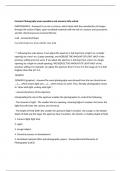
Advanced Psych Theory & Clinical Modalities exam questions and answers fully solved
Rollo May and Irvin Yalom; Emmy van Deurzen-Smith - AnswersFounders of existential therapy
Umwelt - AnswersNatural World
Mitwelt - AnswersPublic world
Eigenwelt - AnswersPrivate world
Uberwelt - Answersthe ideal world, derived from spiritual beliefs
existential therapists - Answersthese therapists "attempt to assist the individual to reconstruct
his inner world by focusing on the surrounding reality."
Existential psychotherapy - Answersthis approach values the therapist's attempts to relate
authentically with the client, through honesty and self-scrutiny.
Ultimate Rescuer - Answersto keep the spectator of death in check, people may consciously
create a belief in a personal omnipotent savior who eternally guards and protects their welfare
specialness - Answersa defense used to avoid the reality of ordinariness resulting in feelings of
invulnerability and immortality
James Bugental - AnswersFocused on the concept of living "authentically". Founder of
humanistic psychology
Gestalt therapy - Answerstype of existential psychotherapy that emphasizes personal
responsibility, focuses on the individual's experience of the present moment and the therapist-
client relationship, evaluates the environmental and social contexts of an individual's life, and
evaluates the self-regulating adjustments an individual makes.
Frederick and Laura Perls - AnswersFounders of Gestalt therapy
Gestalt - AnswersPerceptions and feelings > explanations and interpretations in this type of
therapy
Phenomenological - AnswersPerceived through subjective reality, as opposed to physically and
objectively.
Process; Content - AnswersGestalt therapy highlights the ___________ (what is taking place)
and not the ___________ (what is said about it). The stress is on what IS happening rather than
what might happen.
,awareness; experimentation - AnswersGestalt therapy uses focused _______________ and
____________________ to develop insight.
Field Theory - AnswersPaying attention to and exploring what is occurring at the boundary
between the person and the environment.
Here and now focus - AnswersThe past is discussed in terms of how the past affects the present.
behavior, principles, beliefs, lifestyle, body posture - AnswersThe here and now is comprised of
things left from the past including:
Existential Phenomenology - Answersan emphasis on interpreting everyday experience to reveal
its meaning with respect to the question of existence or Being
Self-delusion - Answers_________________ is the reason for inauthenticity.
Support Gestalt - Answersanything that makes contact with or withdrawal from with the
environment possible, including energy, body support, breathing, information, concern for
others, and language.
Gestalt dialogue - Answersthis type of dialogue is based on genuineness and responsibility
Inclusion - AnswersImmersion into the experience of the person without judgment, analysis, or
interpretation while maintaining a sense of one's detached, independent presence.
Presence - AnswersThe gestalt therapist uses remarks, fondness, feelings, private experience
and opinions regularly, sensibly, and with discrimination. Not used to influence through
manipulation, theory, or technique but to assist the client in complying with their own goals.
Contact - Answersa process which takes place between people from natural communication.
dancing, words, songs, or any other method of expressing or moving energy between the
therapist and client. - AnswersIn gestalt therapy, dialogue can have various modes including:
Gestalt therapy - AnswersStresses that experience is more trustworthy than interpretation.
their goal is increased awareness; they come out of the phenomenologic work and dialogue;
ethical practice parameters are taken into account. - AnswersGestalt therapists can use any
methods or techniques when:
Awareness - AnswersThe one aim or goal of Gestalt therapy.
reowning - Answersthe client reexperiences his separated parts, determining if they are ego-
syntonic or ego-alien and integrates all parts (think of in terms of a cake- ingredients may not be
enjoyed on their own, but all parts are essential to make a tasty cake).
, change the client's direction, alter their feelings, to recondition, or to promote catharsis. -
AnswersTechniques used in Gestalt are meant to enlarge direct experience, not to
I-Thou relationship - AnswersRogerian and Existentialistic
(relationship is horizontal in nature)
Remain with it - AnswersA common Gestalt technique to encourage awareness
Enactment - AnswersClient is asked to turn sensations or thoughts into acts
empty chair technique - Answersa Gestalt technique in which clients engage in emotional
expression by imagining that the person to whom they would like to speak is sitting in an empty
chair facing them
exaggeration exercise - AnswersExaggerate movements, gestures, and postures to become
aware of subtle signals and cues
Guided Fantasy - AnswersTherapist encourages visualizing rather than enacting
loosening and integrating techniques in Gestalt - Answersasking "only the client" to visualize the
contrary of what seems to be right. Example would be communicating both the positive and
negative emotions of a similar person.
Body Techniques - AnswersBring patients' awareness to their body functioning or help them to
be aware of how they can use their bodies to support excitement, awareness, and contact.
Dyadic developmental psychotherapy DDP - AnswersA family-focused therapy used for
attachment-disordered children.
ineffective - AnswersTraditional therapies are __________________ for children with
attachment disorders.
Dan Hughes - AnswersFounder of Dyadic developmental psychotherapy (DDP)
Dyad - Answersa group of two people
dyadic communication - Answersan exchange of information between two people
DDP - AnswersAn experiential-based treatment designed to facilitate experiences of safety and
security so that a secure attachment can grow.
Reactive Attachment Disorder (RAD) - AnswersThis disorder is caused by significant and
substantial experienced neglect, abuse, or prolonged and unresolved pain in the first three
years of life. The child lacks trust, safety, and security and develops a negative working model of
the world.
Rollo May and Irvin Yalom; Emmy van Deurzen-Smith - AnswersFounders of existential therapy
Umwelt - AnswersNatural World
Mitwelt - AnswersPublic world
Eigenwelt - AnswersPrivate world
Uberwelt - Answersthe ideal world, derived from spiritual beliefs
existential therapists - Answersthese therapists "attempt to assist the individual to reconstruct
his inner world by focusing on the surrounding reality."
Existential psychotherapy - Answersthis approach values the therapist's attempts to relate
authentically with the client, through honesty and self-scrutiny.
Ultimate Rescuer - Answersto keep the spectator of death in check, people may consciously
create a belief in a personal omnipotent savior who eternally guards and protects their welfare
specialness - Answersa defense used to avoid the reality of ordinariness resulting in feelings of
invulnerability and immortality
James Bugental - AnswersFocused on the concept of living "authentically". Founder of
humanistic psychology
Gestalt therapy - Answerstype of existential psychotherapy that emphasizes personal
responsibility, focuses on the individual's experience of the present moment and the therapist-
client relationship, evaluates the environmental and social contexts of an individual's life, and
evaluates the self-regulating adjustments an individual makes.
Frederick and Laura Perls - AnswersFounders of Gestalt therapy
Gestalt - AnswersPerceptions and feelings > explanations and interpretations in this type of
therapy
Phenomenological - AnswersPerceived through subjective reality, as opposed to physically and
objectively.
Process; Content - AnswersGestalt therapy highlights the ___________ (what is taking place)
and not the ___________ (what is said about it). The stress is on what IS happening rather than
what might happen.
,awareness; experimentation - AnswersGestalt therapy uses focused _______________ and
____________________ to develop insight.
Field Theory - AnswersPaying attention to and exploring what is occurring at the boundary
between the person and the environment.
Here and now focus - AnswersThe past is discussed in terms of how the past affects the present.
behavior, principles, beliefs, lifestyle, body posture - AnswersThe here and now is comprised of
things left from the past including:
Existential Phenomenology - Answersan emphasis on interpreting everyday experience to reveal
its meaning with respect to the question of existence or Being
Self-delusion - Answers_________________ is the reason for inauthenticity.
Support Gestalt - Answersanything that makes contact with or withdrawal from with the
environment possible, including energy, body support, breathing, information, concern for
others, and language.
Gestalt dialogue - Answersthis type of dialogue is based on genuineness and responsibility
Inclusion - AnswersImmersion into the experience of the person without judgment, analysis, or
interpretation while maintaining a sense of one's detached, independent presence.
Presence - AnswersThe gestalt therapist uses remarks, fondness, feelings, private experience
and opinions regularly, sensibly, and with discrimination. Not used to influence through
manipulation, theory, or technique but to assist the client in complying with their own goals.
Contact - Answersa process which takes place between people from natural communication.
dancing, words, songs, or any other method of expressing or moving energy between the
therapist and client. - AnswersIn gestalt therapy, dialogue can have various modes including:
Gestalt therapy - AnswersStresses that experience is more trustworthy than interpretation.
their goal is increased awareness; they come out of the phenomenologic work and dialogue;
ethical practice parameters are taken into account. - AnswersGestalt therapists can use any
methods or techniques when:
Awareness - AnswersThe one aim or goal of Gestalt therapy.
reowning - Answersthe client reexperiences his separated parts, determining if they are ego-
syntonic or ego-alien and integrates all parts (think of in terms of a cake- ingredients may not be
enjoyed on their own, but all parts are essential to make a tasty cake).
, change the client's direction, alter their feelings, to recondition, or to promote catharsis. -
AnswersTechniques used in Gestalt are meant to enlarge direct experience, not to
I-Thou relationship - AnswersRogerian and Existentialistic
(relationship is horizontal in nature)
Remain with it - AnswersA common Gestalt technique to encourage awareness
Enactment - AnswersClient is asked to turn sensations or thoughts into acts
empty chair technique - Answersa Gestalt technique in which clients engage in emotional
expression by imagining that the person to whom they would like to speak is sitting in an empty
chair facing them
exaggeration exercise - AnswersExaggerate movements, gestures, and postures to become
aware of subtle signals and cues
Guided Fantasy - AnswersTherapist encourages visualizing rather than enacting
loosening and integrating techniques in Gestalt - Answersasking "only the client" to visualize the
contrary of what seems to be right. Example would be communicating both the positive and
negative emotions of a similar person.
Body Techniques - AnswersBring patients' awareness to their body functioning or help them to
be aware of how they can use their bodies to support excitement, awareness, and contact.
Dyadic developmental psychotherapy DDP - AnswersA family-focused therapy used for
attachment-disordered children.
ineffective - AnswersTraditional therapies are __________________ for children with
attachment disorders.
Dan Hughes - AnswersFounder of Dyadic developmental psychotherapy (DDP)
Dyad - Answersa group of two people
dyadic communication - Answersan exchange of information between two people
DDP - AnswersAn experiential-based treatment designed to facilitate experiences of safety and
security so that a secure attachment can grow.
Reactive Attachment Disorder (RAD) - AnswersThis disorder is caused by significant and
substantial experienced neglect, abuse, or prolonged and unresolved pain in the first three
years of life. The child lacks trust, safety, and security and develops a negative working model of
the world.