

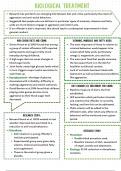
Biological Treatment
Research has pointed to an emerging link between diet and crime, particularly the onset of
aggression and anti-social behaviour.
Suggested that people who are deficient in particular types of minerals, vitamins and fatty
acids are more likely to engage in aggressive and violent acts.
If an offender’s diet is improved, this should lead to a subsequent improvement in their
general conduct.
high sugar diets and crime: vitamins, minerals and fatty acids:
Simon Moore et al 2009 found that among The most important of these in relation to
a group of violent offenders, 69% reported criminal behaviour would appear to be
eating sweets and sugar pretty much unsaturated fatty acids, particularly
everyday during childhood. omega 3, magnesium, zinc and iron.
A high sugar diet can cause changes in The more junk food that people consume,
blood sugar levels. the less space there is in the diet for
Junk foods create high glucose levels which healthier nutritional content.
in turn triggers major insulin secretions to Lack of nutrients has been linked with
soak these up. depression as well as behavioural problems
Hypoglycaemia - shortage of glucose. like aggression.
Associated with irritability, difficulty in
making judgements and violent outbursts.
diet changes as treatment for crime:
David Benton et al 1996 found that children
Baseline measure of diet is the first
playing video games become more
established,
aggressive as their blood sugar level
Will ascertain which particular minerals
decreased.
and vitamins the offender is currently
lacking, and how this can be addressed.
Multi-vitamin will be added to the
offender’s diet, after which any effects on
research study: behaviour will be monitored over a given
Bernard Gesch et al 2002 wanted to test period.
whether improved diet was linked to a
reduction in anti-social behaviour.
Procedure: research study:
231 inmates in a young offender’s Procedure:
institute participated. Double-blind procedure used.
Experimental group were given daily Baseline measure of diet, assessment
vitamin, mineral and essential fatty of anger, anxiety and depression.
acid supplement. Findings: 31.5% reduction in disciplinary
Those in the control group given a incidents.
placebo.
Research has pointed to an emerging link between diet and crime, particularly the onset of
aggression and anti-social behaviour.
Suggested that people who are deficient in particular types of minerals, vitamins and fatty
acids are more likely to engage in aggressive and violent acts.
If an offender’s diet is improved, this should lead to a subsequent improvement in their
general conduct.
high sugar diets and crime: vitamins, minerals and fatty acids:
Simon Moore et al 2009 found that among The most important of these in relation to
a group of violent offenders, 69% reported criminal behaviour would appear to be
eating sweets and sugar pretty much unsaturated fatty acids, particularly
everyday during childhood. omega 3, magnesium, zinc and iron.
A high sugar diet can cause changes in The more junk food that people consume,
blood sugar levels. the less space there is in the diet for
Junk foods create high glucose levels which healthier nutritional content.
in turn triggers major insulin secretions to Lack of nutrients has been linked with
soak these up. depression as well as behavioural problems
Hypoglycaemia - shortage of glucose. like aggression.
Associated with irritability, difficulty in
making judgements and violent outbursts.
diet changes as treatment for crime:
David Benton et al 1996 found that children
Baseline measure of diet is the first
playing video games become more
established,
aggressive as their blood sugar level
Will ascertain which particular minerals
decreased.
and vitamins the offender is currently
lacking, and how this can be addressed.
Multi-vitamin will be added to the
offender’s diet, after which any effects on
research study: behaviour will be monitored over a given
Bernard Gesch et al 2002 wanted to test period.
whether improved diet was linked to a
reduction in anti-social behaviour.
Procedure: research study:
231 inmates in a young offender’s Procedure:
institute participated. Double-blind procedure used.
Experimental group were given daily Baseline measure of diet, assessment
vitamin, mineral and essential fatty of anger, anxiety and depression.
acid supplement. Findings: 31.5% reduction in disciplinary
Those in the control group given a incidents.
placebo.


