100% satisfaction guarantee Immediately available after payment Both online and in PDF No strings attached 4.2 TrustPilot
logo-home
Exam (elaborations)

WGU C224 Research Foundations OA ACTUAL EXAM 2025/2026 COMPLETE QUESTIONS WITH CORRECT DETAILED ANSWERS || 100% GUARANTEED PASS <BRAND NEW VERSION>

Rating
-
Sold
2
Pages
123
Grade
A+
Uploaded on
11-06-2025
Written in
2024/2025

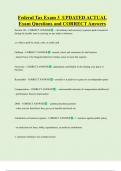
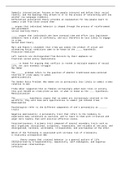
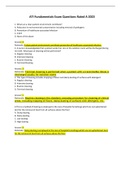
WGU C224 Research Foundations OA ACTUAL EXAM 2025/2026 COMPLETE QUESTIONS WITH CORRECT DETAILED ANSWERS || 100% GUARANTEED PASS &lt;BRAND NEW VERSION&gt; 1. Research Literature - ANSWER the set of published research studies on a particular topic 2. Abstract - ANSWER a brief summary of what is included in the article. *provide a concise breakdown of article goals, methods, and tentative results. 3. Understanding - ANSWER attempting to learn about and generate ideas about specific and unique phenomena. *important in early stages of research *little previously known *without preconceived notions *"discover" important factors 4. Metacognition - ANSWER thinking about thinking s the task ate strengths and weaknesses an approach 4. apply strategies and monitor your performance 5. reflect and adjust as needed Repeat the steps as a cycle. 5. Causal Research Questions - ANSWER compare different variations of some phenomenon to identify the cause of something 6. Causal research question format - ANSWER Does variation (or change) in (independent variable) produce changes (or an increase or decrease) in (a dependent variable)? Ex. Does variation in amount of homework assigned produce a change in students' test performance? 7. Ontology - ANSWER the research's inherent understanding of reality and truth as perceived by the researchers themselves 8. determinism - ANSWER all events are fully determined by one or more causes 9. sampling - ANSWER the process of drawing a sample from a population *we study the characteristics of a subset (the sample) selected from a larger group (the population) in order to understand the characteristics of the larger group (population).* 10. equal probability of selection method (EPSEM) - ANSWER each individual in the population has an equal chance of being included in the sample *a representative sample resembles the population that it came from on all characteristics (proportions of male/female, teachers/non-teachers, young/old, etc.) except in total size.* 11. Biased Samples - ANSWER nonrandom sample that are almost always systematically different from the population on certain characteristics 12. Six most common methods of data collection - ANSWER 1. tests 2. questionnaires 3. interviews 4. focus groups 5. observation 6. constructed and secondary or existing data 13. quantitative observation - ANSWER involves the standardization of observational procedures in order to obtain reliable quantitative data, such as counts or frequencies and percentages 14. experimental research - ANSWER manipulating variables in a controlled environment to isolate the causal effects of a particular variable or set of variables 15. enables researchers to identify causal relationships because it allows researchers to observe, under controlled conditions, the effects of systematically changing one or more variables. *experimental or quasi-experimental* 16. non-experimental research - ANSWER correlational, predictive, and causal comparative methods *generally can describe relationships or patterns of relationships, but do not easily allow for causal inferences* 17. quality criteria - ANSWER 1. independent variable (IV) must occur before the dependent variable (DV), IV and DV must be related statistically, must rule out other causes through either experimental or statistical control 2. design to control for internal validity. (statistical conclusion validity) 3. design to control for external validity. does your population represent with real world population? Can the study be replicated? 18. estimation - ANSWER inferential statistics *estimate the characteristics of populations based on their sample data* to make valid statistical estimations about populations, they use random samples 19. hypothesis testing - ANSWER inferential statistics *test specific hypotheses about populations based on their sample data* 20. seven major sections of a quantitative research report - ANSWER 1.Title Page 2.Abstract 3.Introduction 4.Method 5.Results 6.Discussion 7.References 21. variable - ANSWER a condition or characteristic that can take on different values or categories such as age, gpa, test scores, and gender *opposite of constant* 22. Constant - ANSWER something that does not change, but takes on a single value *opposite of variable* 23. Categorical variable - ANSWER a variable that is made up of *different types or categories* of a phenomenon different groups 24. Quantitative Variable - ANSWER a variable that varies in *degree or amount* of phenomenon usually provided in numerical form 25. Independent Variable (IV) - ANSWER -presume to cause changes to occur in another variable -ex. amount of studying (IV) affects test scores (DV) 26. Dependent Variable (DV) - ANSWER -changes effected by another variable -t of studying (IV) affects test scores (DV). 27. Mediating (intervening) Variable - ANSWER - comes in between other variables -ex. Amount of studying (IV) leads to organization of knowledge in long term memory (Mediating Variable), which affects test scores (DV). 28. Moderator Variable - ANSWER -How relationship changes under different conditions -ex. Relationship between studying (IV) and test scores (DV) changes according to the different levels of use of drug such as Ritalin (moderator) 29. Extraneous Variable - ANSWER -May compete with the independent variable in explaining an outcome -ex. Perhaps an observed relationship between coffee drinking (IV) and cancer (DV) is actually due to smoking cigarettes. 30. manipulation - ANSWER intervention studied by an experimentor 31. epistemology - ANSWER the theory of knowledge and its justification. 32. *involves studying knowledge itself - including its nature, process of generation, how it is necessary, and the standards that are used to judge its adequacy* 33. Sources of knowledge - ANSWER Experience - which leads to empiricism 34. *Reasoning - which leads to rationalism, deductive reasoning, and inductive reasoning* 35. empiricism - ANSWER the idea that all knowledge comes from experience 36. empirical statement - ANSWER a statement based on observation, experiment, or experience *capable of being verified or disproved* 37. Reasoning or Rationalism - ANSWER philosophical idea that reason is the primary source of knowledge *two major types are deductive and inductive* 38. deductive reasoning - ANSWER process of drawing a conclusion that is essentially true if the underlying premises are true. *syllogism* 39. inductive reasoning - ANSWER holds that the foundational premises act as helpful, but not decisive reasons towards acceptance of a conclusion *probabilistic* 40. probabilistic - ANSWER stating what is probably to occur, not what will necessarily occur, thereby opening himself up to a risk of being wrong 41. problem of induction - ANSWER the future might not resemble the past 42. science - ANSWER an approach to the generation of knowledge holding empirical data in high regard and follows certain norms and practices that developed over time, because of their usefullness 43. psychological factors - ANSWER characteristics of individuals and individual-level phenomena. *example - learning disabilities* 44. Social psychological factors - ANSWER examine how individuals interact and relate to one another and how groups and individuals affect one another. *example: middle school cliques* 45. Sociological factors - ANSWER examine how groups form and change; documenting the characteristics of groups; studying intergroup relations; and studying group-level phenomena, such as cultural, social, political, familial, and economic institutions. *example: high school government relations* 46. Features of Science Research - ANSWER 1. make empirical observations 2. generate and test hypotheses 3. generate and test theories 4. attempt to predict and positively influence the world 47. Exploratory Research - ANSWER *bottom Up* 1. make observations 2. search for patterns 3. write a theory *also called inductive method* moves from particular to the general 48. Confirmatory Research - ANSWER *Top Down* 1. write theory 2. state a hypothesis to test 3. collect data to test hypothesis *also called deductive method* moves from general to the particular 49. reliability - ANSWER refers to the consistency or stability of the test scores 50. validity - ANSWER refers to the accuracy of the inferences or interpretations made by an observer from the test scores 51. reliability coefficient - ANSWER +1.00 stands for perfect reliability; 0 stands for no reliability 52. the 4 major types of reliability - ANSWER 1.) test-retest 2.) equivalent forms 3.) internal consistency 4.) interscorer 53. test-retest reliability - ANSWER consistency of test scores over time; 54. correlate test scores obtained at one point in time with scores obtained at a later point in time for a group of people 55. equivalent forms reliability - ANSWER consistency of test scores obtained on two equivalent forms of test measuring the same thing; 56. give two forms of test to group and correlated scores 57. internal consistency reliablity - ANSWER consistency that items measure single construct; 58. used to estimate reliability of homogeneous test (test that measure one construct) or to estimate reliability of dimensions on multidimensional test 59. interscorer reliability - ANSWER consistency or degree of agreement between two or more judges or raters 60. validity evidence - ANSWER the empirical evidence and theoretical rationales that support the interpretations and actions that taken on the basis of the score(s) obtained from an assessment procedure 61. validation - ANSWER the inquiry process of gathering validity evidence that supports score interpretations or inferences; best rule is to collect multiple sources of evidence 62. evidence based on content - ANSWER Does the content adequately represent the construct? 63. evidence based on internal structure - ANSWER Does the test measure the number of dimensions it is supposed to measure? 64. evidence based on relation to other variables - ANSWER Is the test related to other measures of the construct? Is it unrelated to different constructs? Can it be used to predict future performance on important criteria? Do groups that are known to differ on the construct get different scores on the test in the hypothesized direction? 65. research approach(es) - ANSWER methods to help researchers decide on a research design and a research strategy that will allow them to answer their research questions 66. data collection method: test - ANSWER measure attitudes, personality, self-perceptions, aptitude and performance ie: standardized intelligence, achievement, preschool, aptitude, diagnostic, experimental 67. data collection method: questionnaires - ANSWER obtain information about the thoughts, feelings, attitudes, beliefs, values, perceptions, personality, and behavioral intentions ie: in-person, over the phone 68. data collection method: interviews - ANSWER interviewer impartially collects the data from the interviewee, who provides the data ie: quantitative (closed) and qualitative (open-ended, interview guide approach, informal conversation) 69. data collection method: focus groups - ANSWER examine, in detail, how the group members think and feel about a topic ie: two to four homogeneous groups of 6-12 participants per research study, researcher may include some heterogeneity 70. data collection method: observation - ANSWER obtain information about the phenomenon by watching behavioral patterns of people in certain situations; ie: quantitative (structured) - standardization of all observational procedures; qualitative (naturalistic) - exploratory without advance specification 71. data collection method: constructed and secondary or existing data - ANSWER constructed - information produced by your research participants during the research study; secondary/existing- information collected, recorded, or left behind at an earlier time, usually by a different person and often for an entirely different purpose ie: constructed (drawings, diaries, recordings, videos, newly produced personal documents) secondary/existing (personal documents, official documents, physical data, archived research data) 72. statistic - ANSWER a numerical characteristic of a sample 73. parameter - ANSWER a numerical characteristic of a population 74. random selection - ANSWER another term that means random sampling; 3 types: systematic, stratified, and cluster; the purpose is to make generalizations from a sample to a population 75. random assignment - ANSWER involves taking a particular set of people and randomly assigning them to the groups to be studied in an experiment; 76. the purpose is to produce comparison groups that are similar on "all possible factors" at the beginning of the experiment 77. Observation and questionnaires are both examples of &lt;answer&gt; methods. - ANSWER Data collection 78. Aptitude and diagnostic are examples of what kind of data collection method? - ANSWER Tests 79. Which data collection type can be performed in person or over the phone? - ANSWER Interviews 80. Systematic, stratified and &lt;answer&gt; sampling are all varieties of simple random sampling. - ANSWER Cluster 81. The purpose of random assignment is to produce &lt;answer&gt; similar to each other at the beginning of the experiment. - ANSWER Comparison groups 82. &lt;answer&gt; is a data collection method that examines how a cluster of research participants thinks and feels about a topic. - ANSWER Focus groups 83. Statistics are &lt;answer&gt; characteristics of research samples. - ANSWER numerical 84. If a researcher conducts an observation of study participants without advance specification of techniques, this is reflective of &lt;answer&gt; observation. - ANSWER Qualitative

Show more Read less
Institution
WGU C224 Research Foundations
Module
WGU C224 Research Foundations


Whoops! We can’t load your doc right now. Try again or contact support.

Written for

Institution
WGU C224 Research Foundations
Module
WGU C224 Research Foundations

Document information

Uploaded on
June 11, 2025
Number of pages
123
Written in
2024/2025
Type
Exam (elaborations)
Contains
Questions & answers

Subjects

Content preview

WGU C224 Research Foundations OA
ACTUAL EXAM 2025/2026 COMPLETE
QUESTIONS WITH CORRECT DETAILED
ANSWERS || 100% GUARANTEED PASS
<BRAND NEW VERSION>


1. Research Literature - ANSWER ✓ the set of published research studies on a
particular topic

2. Abstract - ANSWER ✓ a brief summary of what is included in the article.
*provide a concise breakdown of article goals, methods, and tentative
results.

3. Understanding - ANSWER ✓ attempting to learn about and generate ideas
about specific and unique phenomena.
*important in early stages of research
*little previously known
*without preconceived notions
*"discover" important factors

4. Metacognition - ANSWER ✓ thinking about thinking
1.assess the task
2.evaluate strengths and weaknesses
3.plan an approach
4. apply strategies and monitor your performance
5. reflect and adjust as needed
Repeat the steps as a cycle.

,5. Causal Research Questions - ANSWER ✓ compare different variations of
some phenomenon to identify the cause of something

6. Causal research question format - ANSWER ✓ Does variation (or change)
in (independent variable) produce changes (or an increase or decrease) in (a
dependent variable)?
Ex. Does variation in amount of homework assigned produce a change in
students' test performance?

7. Ontology - ANSWER ✓ the research's inherent understanding of reality and
truth as perceived by the researchers themselves

8. determinism - ANSWER ✓ all events are fully determined by one or more
causes

9. sampling - ANSWER ✓ the process of drawing a sample from a population
*we study the characteristics of a subset (the sample) selected from a larger
group (the population) in order to understand the characteristics of the larger
group (population).*

10.equal probability of selection method (EPSEM) - ANSWER ✓ each
individual in the population has an equal chance of being included in the
sample
*a representative sample resembles the population that it came from on all
characteristics (proportions of male/female, teachers/non-teachers,
young/old, etc.) except in total size.*

11.Biased Samples - ANSWER ✓ nonrandom sample that are almost always
systematically different from the population on certain characteristics

12.Six most common methods of data collection - ANSWER ✓ 1. tests
2. questionnaires
3. interviews
4. focus groups
5. observation
6. constructed and secondary or existing data

,13.quantitative observation - ANSWER ✓ involves the standardization of
observational procedures in order to obtain reliable quantitative data, such as
counts or frequencies and percentages

14.experimental research - ANSWER ✓ manipulating variables in a controlled
environment to isolate the causal effects of a particular variable or set of
variables

15.enables researchers to identify causal relationships because it allows
researchers to observe, under controlled conditions, the effects of
systematically changing one or more variables.
*experimental or quasi-experimental*

16.non-experimental research - ANSWER ✓ correlational, predictive, and
causal comparative methods
*generally can describe relationships or patterns of relationships, but do not
easily allow for causal inferences*

17.quality criteria - ANSWER ✓ 1. independent variable (IV) must occur
before the dependent variable (DV), IV and DV must be related statistically,
must rule out other causes through either experimental or statistical control
2. design to control for internal validity. (statistical conclusion validity)
3. design to control for external validity. does your population represent with
real world population?
Can the study be replicated?

18.estimation - ANSWER ✓ inferential statistics
*estimate the characteristics of populations based on their sample data*
to make valid statistical estimations about populations, they use random
samples

19.hypothesis testing - ANSWER ✓ inferential statistics
*test specific hypotheses about populations based on their sample data*

20.seven major sections of a quantitative research report - ANSWER ✓ 1.Title
Page
2.Abstract
3.Introduction
4.Method

, 5.Results
6.Discussion
7.References

21.variable - ANSWER ✓ a condition or characteristic that can take on
different values or categories such as age, gpa, test scores, and gender
*opposite of constant*

22.Constant - ANSWER ✓ something that does not change, but takes on a
single value
*opposite of variable*

23.Categorical variable - ANSWER ✓ a variable that is made up of *different
types or categories* of a phenomenon
different groups

24.Quantitative Variable - ANSWER ✓ a variable that varies in *degree or
amount* of phenomenon
usually provided in numerical form

25.Independent Variable (IV) - ANSWER ✓ -presume to cause changes to
occur in another variable
-ex. amount of studying (IV) affects test scores (DV)

26.Dependent Variable (DV) - ANSWER ✓ -changes effected by another
variable
-ex.amount of studying (IV) affects test scores (DV).

27.Mediating (intervening) Variable - ANSWER ✓ - comes in between other
variables
-ex. Amount of studying (IV) leads to organization of knowledge in long-
term memory (Mediating Variable), which affects test scores (DV).

28.Moderator Variable - ANSWER ✓ -How relationship changes under
different conditions
-ex. Relationship between studying (IV) and test scores (DV) changes
according to the different levels of use of drug such as Ritalin (moderator)

Get to know the seller

Seller avatar
Reputation scores are based on the amount of documents a seller has sold for a fee and the reviews they have received for those documents. There are three levels: Bronze, Silver and Gold. The better the reputation, the more your can rely on the quality of the sellers work.
ProfBenjamin Havard School
Follow You need to be logged in order to follow users or courses
Sold
413
Member since
1 year
Number of followers
14
Documents
2901
Last sold
1 day ago
EXCELLENT ACHIEVERS LIBRARY

As a professional tutor, I provide exceptional assistance with homework, quizzes, and exams across various subjects, including Psychology, Nursing, Biological Sciences, Business, Engineering, Human Resource Management, and Mathematics. I am dedicated to offering high-quality support and ensuring that all work meets scholarly standards. To enhance the effectiveness of our services, I work with a team of experienced tutors to create comprehensive and effective revision materials. Together, we are committed to helping students achieve excellent grades through our collaborative efforts and expertise.

Read more Read less
3.9

76 reviews

5
35
4
12
3
21
2
4
1
4

Recently viewed by you

Why students choose Stuvia

Created by fellow students, verified by reviews

Quality you can trust: written by students who passed their exams and reviewed by others who've used these revision notes.

Didn't get what you expected? Choose another document

No problem! You can straightaway pick a different document that better suits what you're after.

Pay as you like, start learning straight away

No subscription, no commitments. Pay the way you're used to via credit card and download your PDF document instantly.

Student with book image

“Bought, downloaded, and smashed it. It really can be that simple.”

Alisha Student

Frequently asked questions