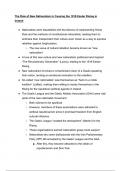
The Role of New Nationalism in Causing the 1916 Easter Rising in
Ireland
● Nationalists were dissatisfied with the failures of implementing Home
Rule and the methods of constitutional nationalists, leading them to
embrace their independent Irish culture even closer as a way to express
rebellion against Anglicisation.
○ The new wave of cultural rebellion became known as “new
nationalism”
● A love of this new culture and new nationalism politicised and inspired
“The Revolutionary Generation” (Lyons), leading to the 1916 Easter
Rising
● New nationalism involved a romanticised vision of a Gaelic-speaking
Irish nation, lending an emotional motivation to the rebellion.
● So-called “new nationalists” saw themselves as “heirs to a noble
tradition” (Laffan), making them willing to martyr themselves in the
Rising for the republican political agenda in Ireland
● The Gaelic League and the Gaelic Athletic Association (GAA) were vital
parts of the new nationalist movement.
○ Both claimed to be apolitical
○ However, members of these associations were attracted to
political republicanism since it promised freedom from English
cultural influence.
○ The Gaelic League “created the atmosphere” (Martin) for the
Rising
○ These organisations earned nationalism grass-roots support
○ Nationalists who were disillusioned with the Irish Parliamentary
Party (IPP) felt accepted by the Gaelic League and the GAA
■ After this, they became attracted to the ideals of
republicanism and Sinn Fein
Ireland
● Nationalists were dissatisfied with the failures of implementing Home
Rule and the methods of constitutional nationalists, leading them to
embrace their independent Irish culture even closer as a way to express
rebellion against Anglicisation.
○ The new wave of cultural rebellion became known as “new
nationalism”
● A love of this new culture and new nationalism politicised and inspired
“The Revolutionary Generation” (Lyons), leading to the 1916 Easter
Rising
● New nationalism involved a romanticised vision of a Gaelic-speaking
Irish nation, lending an emotional motivation to the rebellion.
● So-called “new nationalists” saw themselves as “heirs to a noble
tradition” (Laffan), making them willing to martyr themselves in the
Rising for the republican political agenda in Ireland
● The Gaelic League and the Gaelic Athletic Association (GAA) were vital
parts of the new nationalist movement.
○ Both claimed to be apolitical
○ However, members of these associations were attracted to
political republicanism since it promised freedom from English
cultural influence.
○ The Gaelic League “created the atmosphere” (Martin) for the
Rising
○ These organisations earned nationalism grass-roots support
○ Nationalists who were disillusioned with the Irish Parliamentary
Party (IPP) felt accepted by the Gaelic League and the GAA
■ After this, they became attracted to the ideals of
republicanism and Sinn Fein