D753– OA Study Guide notes from the course material
2025-2026 Western Governors University
Behavioral Intervention Strategies and Applied Behavior
Analysis
WGU D753 Study Guide
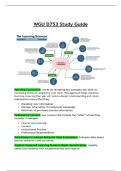
Spiraling Curriculum: works by revisiting key concepts and skills at increasing
levels of complexity over time. This approach helps reinforce learning, ensuring that
,you will build a deeper understanding and retain information more effectively
• Encoding: new information
• Storage: information for long-term knowledge
• Retrieval: of previously learned information
Pedagogical Content: Are courses that include the “what” of teaching. Includes 4
concepts
• Learner and Learning:
• Content
• Instructional Practice
• Professional Responsibilities
Data Analysis Learner Behavior Data Evaluation: Evaluate data about learner
behaviors and outcomes.
Student-Centered Learning Student Needs Identification: Identify needs that
students with exceptionalities may require.
, Student Engagement Select SEL Strategies: Select strategies to meet learners'
social and emotional needs.
Neurodiversity: refers to the natural variation in how individuals think, learn, and
process information.
• Educational strategies that offer multiple means of representation and
engagement can be particularly beneficial.
• Includes conditions such as autism, ADHD, dyslexia
• many neurodivergent students have challenges with executive function,
which includes skills like planning, decision-making, and staying focused
on tasks.
• Working memory is another area where neurodivergent students may face
difficulties. (remembering instructions that a teacher just gave them for a
task)
Aspects of Neurodiversity and classroom behavior impact
Emotional Regulation Executive Function Working Memory
Explanation: Emotional Explanation: includes skills Explanation: is the ability to
regulation involves like planning, decision hold and use information
controlling and expressing making and maintaining temporarily.
emotions in a balanced focus.
way. Behavior Impact: can cause
Behavior Impact: may have students to forget
Behavior Impact: Might difficulty organizing tasks, instructions, lose their place
struggle with intense following through on in tasks or struggle with
emotions, leading to assignments or staying multi step directions.
frustration, anxiety or focused. Can result in
sudden outbursts. Hard for procrastination, incomplete Support Tip: Reinforce
them to stay calm and work and frequent instructions with visuals or
focused on lessons. distractions. provide written steps to aid
memory retention.
Support Tip: Teachers can Support Tip: Breaking tasks
provide a calming space to into smaller steps and
teach coping strategies to providing visual schedules
help students manage can help students stay on
their emotions better. track.
How to create a Neurodivergence affirming classroom:
Give multiple ways to consume information (example: giving directions verbally
and write it on the board. Model it out as well)
Offer choices (example: what materials they use, where they sit, who they work
with, work setting)
Allow breaks (teach students to ask for a break when they get overwhelmed
triggers)
2025-2026 Western Governors University
Behavioral Intervention Strategies and Applied Behavior
Analysis
WGU D753 Study Guide
Spiraling Curriculum: works by revisiting key concepts and skills at increasing
levels of complexity over time. This approach helps reinforce learning, ensuring that
,you will build a deeper understanding and retain information more effectively
• Encoding: new information
• Storage: information for long-term knowledge
• Retrieval: of previously learned information
Pedagogical Content: Are courses that include the “what” of teaching. Includes 4
concepts
• Learner and Learning:
• Content
• Instructional Practice
• Professional Responsibilities
Data Analysis Learner Behavior Data Evaluation: Evaluate data about learner
behaviors and outcomes.
Student-Centered Learning Student Needs Identification: Identify needs that
students with exceptionalities may require.
, Student Engagement Select SEL Strategies: Select strategies to meet learners'
social and emotional needs.
Neurodiversity: refers to the natural variation in how individuals think, learn, and
process information.
• Educational strategies that offer multiple means of representation and
engagement can be particularly beneficial.
• Includes conditions such as autism, ADHD, dyslexia
• many neurodivergent students have challenges with executive function,
which includes skills like planning, decision-making, and staying focused
on tasks.
• Working memory is another area where neurodivergent students may face
difficulties. (remembering instructions that a teacher just gave them for a
task)
Aspects of Neurodiversity and classroom behavior impact
Emotional Regulation Executive Function Working Memory
Explanation: Emotional Explanation: includes skills Explanation: is the ability to
regulation involves like planning, decision hold and use information
controlling and expressing making and maintaining temporarily.
emotions in a balanced focus.
way. Behavior Impact: can cause
Behavior Impact: may have students to forget
Behavior Impact: Might difficulty organizing tasks, instructions, lose their place
struggle with intense following through on in tasks or struggle with
emotions, leading to assignments or staying multi step directions.
frustration, anxiety or focused. Can result in
sudden outbursts. Hard for procrastination, incomplete Support Tip: Reinforce
them to stay calm and work and frequent instructions with visuals or
focused on lessons. distractions. provide written steps to aid
memory retention.
Support Tip: Teachers can Support Tip: Breaking tasks
provide a calming space to into smaller steps and
teach coping strategies to providing visual schedules
help students manage can help students stay on
their emotions better. track.
How to create a Neurodivergence affirming classroom:
Give multiple ways to consume information (example: giving directions verbally
and write it on the board. Model it out as well)
Offer choices (example: what materials they use, where they sit, who they work
with, work setting)
Allow breaks (teach students to ask for a break when they get overwhelmed
triggers)