

Chapter 23 - Test Bank STATEMENT OF CASH FLOWS
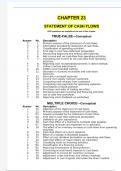
Here are the best resources to pass ACCOUNTING 222. Find ACCOUNTING 222 study guides, notes, assignments, and much moreQuickly navigate to Preview Exam (elaborations) Chapter 23 - Test Bank STATEMENT OF CASH FLOWS 0 purchase Course ACCOUNTING 222 (ACCOUNTING222) Institution New York University CHAPTER 23 STATEMENT OF CASH FLOWS IFRS questions are available at the end of this chapter. TRUE-FALSE—Conceptual Answer No. Description 1. Primary purpose of the statement of cash flows. 2. Information provided by statement of cash flows. 3. Classification of operating activities. 4. First step in cash flow statement preparation. 5. Reconciling beginning and ending cash balances. 6. Net income and net cash flow from operating activities. 7. Converting net income to net cash flow from operating activities. 8. Reporting cash receipts/disbursements in direct method. 9. Indirect method adjustments. 10. FASB’s recommended method. 11. Decrease in accounts receivable and cash-basis revenues. 12. Decrease in prepaid expenses. 13. Income from equity method investment. 14. Computing cash receipts from customers. 15. Computing cash payments for operating expenses. 16. Amortization of bond premium. 17. Purchases and sales of trading securities. 18. Disclosing noncash investing and financing activities. 19. Use of cash flow worksheet. 20. Reporting stock dividends on worksheet. MULTIPLE CHOICE—Conceptual Answer No. Description 21. Objective of the statement of cash flows. 22. Primary purpose of the statement of cash flows. S23. Answers provided by the statement of cash flows. S24. First step in cash flow statement preparation. 25. Definition of cash equivalents. 26. Cash flow effect of a short-term nontrade note payable. S27. Reporting revenues and expenses on a cash basis. 28. The effect of an inventory increase on cash flows from operating activities. 29. Cash flow effects of a stock dividend. 30. Effect of a change in dividends payable. 31. Effect of cash dividend declaration on operating cash flows. 32. Cash flow effects of major repairs on machinery. P33. Classifying items as investing activities. P34. Classification of a financing activity. S35. Reporting amortization of bond premium. S36. Converting accrual based expense to cash basis. 37. Adjustment to income for inventory increase. 38. Adjustment under the direct and indirect methods. 39. Adjustment to cost of goods sold under the direct method. MULTIPLE CHOICE—Conceptual (cont.) Answer No. Description 40. Adjustment for an increase in accounts payable. 41. Adjustment for a decrease in prepaid insurance. 42. Direct method vs. indirect method. 43. Direct method vs. indirect method. 44. Addition to net income under indirect method. 45. Deduction from net income under indirect method. 46. Statement of cash flows information. 47. Adjustment for equity method investment income. 48. Reporting extraordinary transactions. 49. Events not shown on statement of cash flows. S50. Reporting significant noncash transactions. P These questions also appear in the Problem-Solving Survival Guide. S These questions also appear in the Study Guide. MULTIPLE CHOICE—Computational Answer No. Description 51. Determine net cash flow from investing activities. 52. Determine net cash flow from financing activities. 53. Determine net cash flow from operating activities. 54. Determine net cash flow from investing activities. 55. Determine net cash flow from financing activities. 56. Determine cash flows from investing activities. 57. Determine cash flows from financing activities. 58. Determine net cash flow from operating activities. 59. Determine net cash flow from investing activities. 60. Determine cash received from customers (direct method). 61. Determine taxes paid (direct method). 62. Determine net cash flow from financing activities. 63. Compute net cash used in financing activities. 64. Sale of fixed assets at a gain/cash flow effects. 65. Analysis of plant asset account/cash flow presentation. 66. Sale of equipment at a gain/cash flow effects. 67. Determine depreciation expense for the year. 68. Determine depreciation expense for the year. 69. Calculate equipment purchased during the year. 70. Calculate cost of equipment sold. 71. Determine book value of equipment at end of year. 72. Determine ending balance of accounts payable. 73. Determine ending balance of retained earnings. 74. Determine ending balance of capital stock. 75. Determine the amount of a cash dividend. 76. Reporting a stock dividend. 77. Compute proceeds from issuance of bonds payable. 78. Compute net cash provided by operating activities. 79. Determine net income for period. 80. Compute net cash provided by operating activities. 81. Compute net cash provided by operating activities. MULTIPLE CHOICE—Computational (cont.) Answer No. Description 82. Compute cash flow from investing activities. 83. Compute cash flow from financing activities. 84. Compute cash provided by operating activities. 85. Compute cash provided by investing activities. 86. Compute cash used by financing activities. 87. Compute net cash provided by operating activities. 88. Compute net cash provided by operating activities. 89. Determine net income for period. 90. Compute cash payments for operating expenses. 91. Compute cash payments to suppliers. 92. Compute cash collections from customers. 93. Compute cash payments to suppliers. 94. Determine cash collected from accounts receivable. 95. Determine cash paid on accounts payable to suppliers. 96. Compute net cash provided by investing activities. 97. Compute net cash provided by financing activities. 98. Compute net cash flow from investing activities. 99. Compute net cash flow from financing activities. 100. Determine net income for period. 101. Adjust net income for bad debt provision. 102. Reporting insurance proceeds from a flood loss. 103. Reporting a flood loss. 104. Determine net cash flow from operating activities. 105. Determine net cash flow from operating activities. MULTIPLE CHOICE—CPA Adapted Answer No. Description 106. Determine cash flow from investing activities. 107. Determine cash flow from financing activities. 108. Determine net cash used in investing activities. 109. Determine net cash used in financing activities. 110. Determine net cash provided by investing activities. 111. Determine net cash provided by financing activities. 112. Determine net cash provided by operating activities. 113. Determine net cash used by investing activities. 114. Determine net cash provided by financing activities. 115. Determine depreciation charged to operations. 116. Cash disbursements for insurance (direct method). Item Description EXERCISES E23-117 Direct and indirect methods (essay). E23-118 Classification of cash flows. E23-119 Classification of cash flows and transactions. E23-120 Effects of transactions on statement of cash flows. E23-121 Effects of transactions on statement of cash flows. E23-122 Effects of transactions on statement of cash flows. E23-123 Calculations for statement of cash flows. E23-124 Calculations for statement of cash flows. E23-125 Cash flows from operating activities (direct/indirect). E23-126 Statement of cash flows (indirect method). E23-127 Preparation of statement of cash flows (format provided). ................................................continued......................................................
Document information
- Study
- Unknown
- Uploaded on
- May 28, 2025
- Number of pages
- 1
- Written in
- 2023/2024
- Type
- Exam (elaborations)
- Contains
- Questions & answers


