GENERAL CHEMISTRY 1
S.Y. ‘23 - ‘24 | SEM 2 Q4
b. Calculate the mass of product formed by
LIMITING REAGENT, THEORETICAL YIELD, performing a mass-mass problem for each
PERCENTAGE YIELD amount of reactant given.
c. Determine the limiting reactant: the reactant
that produces the smallest amount of product
DEFINITION is the limiting reagent
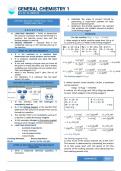
★ LIMITING REAGENT – limits or determines PROBLEMS:
the amount of product that can be formed in a
reaction; the reaction occurs only until the For the reaction: 𝑁𝑎2𝑂 + 𝐻2𝑂 → 2 𝑁𝑎𝑂𝐻
limiting reagent is used up. 1. What weight of NaOH could be made from 12.4 g of
★ EXCESS REAGENT – reactant that is not 𝑁𝑎2𝑂and 42.1 g of 𝐻2𝑂? What is the limiting reagent?
completely used up in the reaction.used up in
the reaction Na – 2 × 23 = 46 g Na – 1 × 23 = 23 g H – 1×2 = 2
0 – 1 × 16 = 16 g 0 – 1 × 16 = 16 g O – 1 × 16 =16
WHAT IS LIMITING REAGENT? = 62 g H–1×1= 1g = 18 g
● It is the reactant in a reaction that = 40 g
determines how much product can be made.
● It is whatever reactant you have the least
amount of.
● If you are making a bicycle and you have all
the parts to make 100 bikes, but only 4 wheels
available, how many bikes can you make? (Ans:
The Limit Reagent is 2.)
● What is the limiting “part”? (Ans: The no. of
wheel)
● For chemistry, it is whatever has the least The limiting reagent is 𝑁𝑎2𝑂
amount of moles.
LIMITING REAGENT and EXCESS REAGENT 2. Methyl alcohol (wood alcohol), CH3OH, is produced
via the reaction:
CO(g) + 2 H2(g) → CH3OH(l)
A mixture of 1.20 g H2(g) and 7.45 g CO(g) are allowed
to react. Which reagent is the limiting reagent?
C – 1 × 12 = 12 C – 1 × 12 = 12
● In this reaction, only the hydrogen is H–4×1=4 O – 1 × 16 = 16
completely used up. O – 1 × 16 = 16 = 28 g
● H2 is the limiting reagent, or the reactant that Total: 32 g
determines the amount of product that can be
formed by a reaction.
● The reactant that is not completely used up in
a reaction is called the excess reagent.
● In this example, nitrogen is the excess reagent
because some nitrogen remains unreacted.
★ LIMITING REACTANTS
○ Available Ingredients
○ 4 slices of bread
○ 1 jar of peanut butter
○ 1/2 jar of jelly
Limiting Reactant: Excess Reactants: The limiting reagent is CO.
Bread peanut butter and jelly 2.1 How much of the excess reactant (H2) is left over?
This amount is determined by calculating the amount
STEPS IN SOLVING LIMITING REACTANTS
of H2 that would react with 7.45 grams of CO (The
PROBLEMS
amount of the limiting reactant.) and subtracting this
a. Write a balanced chemical equation, if from starting amount of H2.
necessary.
CHEM NOTES PAGE 1
, GENERAL CHEMISTRY 1
S.Y. ‘23 - ‘24 | SEM 2 Q4
● Start with the initial mass of the limiting
reactant and do a mass to mass with the other
reactant.
3. Rust forms when iron, oxygen, and water react. One 2. In a laboratory preparation of ClF3 , 0.750 mol of
chemical equation for the formation of rust is 2Fe + 𝑂2 reacts Cl2 with 3.00 mol of F2. What is the limiting
+ 2𝐻2O → 2Fe(OH)2 reagent and excess reagent?
● If 7.0 g of iron and 9.0 g of water are available
to react, which is the limiting reagent?
● Rust forms when iron, oxygen, and water react.
One chemical equation for the formation of
rust is
2Fe + O2 + 2H2O →2Fe(OH)2
● If 7.0 g of iron and 9.0 g of water are available
to react, which is the limiting reagent? How The Limiting reagent is CL2, while the excess reagent is
much Fe(OH)2 will be produced? F2.
THEORETICAL YIELD, ACTUAL YIELD, PERCENT YIELD
DEFINITION
★ Theoretical yield: the maximum amount of
product that could be formed from given
amounts of reactants.
★ Actual yield: the product that actually forms
when the reaction is carried out in the
PROBLEMS: laboratory; the actual yield is often always less
1. What mass of hydrogen gas at STP is produced from than the theoretical yield.
the reaction of 50.0g of Mg and 75.0 grams of HCl? ★ Percent yield: the ratio of the actual yield to
the theoretical yield expressed as a percent.
What is the limiting reagent? How much of the
The percent yield measures the efficiency of
excess reagent is left over (in grams)? the reaction.
Mg(s) + 2HCl(aq) MgCl2(s) + H2(g)
Do a standard mass to mass problem starting with PERCENT YIELD
each reactant ● The percent yield is the ratio of the actual yield
to the theoretical yield expressed as a percent.
H–1 Mg – 24 g
Cl – 35
= 36 g
● Because the actual yield of a chemical reaction
is often less than the theoretical yield, the
percent yield is often less than 100%.
● The percent yield is a measure of the efficiency
of a reaction carried out in the laboratory.
The mass of the reactant is measured → The reactant is
heated → The mass of one of the products, the actual
yield, is measured. The percent yield is calculated.
How much of the excess reactant is left over?
CHEM NOTES PAGE 2
S.Y. ‘23 - ‘24 | SEM 2 Q4
b. Calculate the mass of product formed by
LIMITING REAGENT, THEORETICAL YIELD, performing a mass-mass problem for each
PERCENTAGE YIELD amount of reactant given.
c. Determine the limiting reactant: the reactant
that produces the smallest amount of product
DEFINITION is the limiting reagent
★ LIMITING REAGENT – limits or determines PROBLEMS:
the amount of product that can be formed in a
reaction; the reaction occurs only until the For the reaction: 𝑁𝑎2𝑂 + 𝐻2𝑂 → 2 𝑁𝑎𝑂𝐻
limiting reagent is used up. 1. What weight of NaOH could be made from 12.4 g of
★ EXCESS REAGENT – reactant that is not 𝑁𝑎2𝑂and 42.1 g of 𝐻2𝑂? What is the limiting reagent?
completely used up in the reaction.used up in
the reaction Na – 2 × 23 = 46 g Na – 1 × 23 = 23 g H – 1×2 = 2
0 – 1 × 16 = 16 g 0 – 1 × 16 = 16 g O – 1 × 16 =16
WHAT IS LIMITING REAGENT? = 62 g H–1×1= 1g = 18 g
● It is the reactant in a reaction that = 40 g
determines how much product can be made.
● It is whatever reactant you have the least
amount of.
● If you are making a bicycle and you have all
the parts to make 100 bikes, but only 4 wheels
available, how many bikes can you make? (Ans:
The Limit Reagent is 2.)
● What is the limiting “part”? (Ans: The no. of
wheel)
● For chemistry, it is whatever has the least The limiting reagent is 𝑁𝑎2𝑂
amount of moles.
LIMITING REAGENT and EXCESS REAGENT 2. Methyl alcohol (wood alcohol), CH3OH, is produced
via the reaction:
CO(g) + 2 H2(g) → CH3OH(l)
A mixture of 1.20 g H2(g) and 7.45 g CO(g) are allowed
to react. Which reagent is the limiting reagent?
C – 1 × 12 = 12 C – 1 × 12 = 12
● In this reaction, only the hydrogen is H–4×1=4 O – 1 × 16 = 16
completely used up. O – 1 × 16 = 16 = 28 g
● H2 is the limiting reagent, or the reactant that Total: 32 g
determines the amount of product that can be
formed by a reaction.
● The reactant that is not completely used up in
a reaction is called the excess reagent.
● In this example, nitrogen is the excess reagent
because some nitrogen remains unreacted.
★ LIMITING REACTANTS
○ Available Ingredients
○ 4 slices of bread
○ 1 jar of peanut butter
○ 1/2 jar of jelly
Limiting Reactant: Excess Reactants: The limiting reagent is CO.
Bread peanut butter and jelly 2.1 How much of the excess reactant (H2) is left over?
This amount is determined by calculating the amount
STEPS IN SOLVING LIMITING REACTANTS
of H2 that would react with 7.45 grams of CO (The
PROBLEMS
amount of the limiting reactant.) and subtracting this
a. Write a balanced chemical equation, if from starting amount of H2.
necessary.
CHEM NOTES PAGE 1
, GENERAL CHEMISTRY 1
S.Y. ‘23 - ‘24 | SEM 2 Q4
● Start with the initial mass of the limiting
reactant and do a mass to mass with the other
reactant.
3. Rust forms when iron, oxygen, and water react. One 2. In a laboratory preparation of ClF3 , 0.750 mol of
chemical equation for the formation of rust is 2Fe + 𝑂2 reacts Cl2 with 3.00 mol of F2. What is the limiting
+ 2𝐻2O → 2Fe(OH)2 reagent and excess reagent?
● If 7.0 g of iron and 9.0 g of water are available
to react, which is the limiting reagent?
● Rust forms when iron, oxygen, and water react.
One chemical equation for the formation of
rust is
2Fe + O2 + 2H2O →2Fe(OH)2
● If 7.0 g of iron and 9.0 g of water are available
to react, which is the limiting reagent? How The Limiting reagent is CL2, while the excess reagent is
much Fe(OH)2 will be produced? F2.
THEORETICAL YIELD, ACTUAL YIELD, PERCENT YIELD
DEFINITION
★ Theoretical yield: the maximum amount of
product that could be formed from given
amounts of reactants.
★ Actual yield: the product that actually forms
when the reaction is carried out in the
PROBLEMS: laboratory; the actual yield is often always less
1. What mass of hydrogen gas at STP is produced from than the theoretical yield.
the reaction of 50.0g of Mg and 75.0 grams of HCl? ★ Percent yield: the ratio of the actual yield to
the theoretical yield expressed as a percent.
What is the limiting reagent? How much of the
The percent yield measures the efficiency of
excess reagent is left over (in grams)? the reaction.
Mg(s) + 2HCl(aq) MgCl2(s) + H2(g)
Do a standard mass to mass problem starting with PERCENT YIELD
each reactant ● The percent yield is the ratio of the actual yield
to the theoretical yield expressed as a percent.
H–1 Mg – 24 g
Cl – 35
= 36 g
● Because the actual yield of a chemical reaction
is often less than the theoretical yield, the
percent yield is often less than 100%.
● The percent yield is a measure of the efficiency
of a reaction carried out in the laboratory.
The mass of the reactant is measured → The reactant is
heated → The mass of one of the products, the actual
yield, is measured. The percent yield is calculated.
How much of the excess reactant is left over?
CHEM NOTES PAGE 2