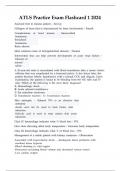
ATLS Practice Exam Flashcard 1 2024
ll ll ll ll ll ll
ll
Assessed llfirst llin lltrauma llpatient ll- llAirway ll
ll
(*)Degree llof llburn llthat llis llcharacterized llby llbone llinvolvement ll- llFourth ll
ll
Complications llof head
ll trauma
ll -
ll Intracerebral
ll
llhematoma
ll
Extradural
llhematoma
ll
Brain llabscess
ll
Most llcommon llcause llof lllaryngotracheal llstenosis ll- llTrauma ll
ll
Intervention llthat llcan llhelp llprevent lldevelopment llof llacute llrenal llfailure ll-
llInfusion llof ll
ll
normal
llsaline
ll
A ll26-year-old llmale llis llresuscitated llwith llblood lltransfusion llafter lla llmotor llvehicle
llcollision llthat llwas llcomplicated llby lla llfractured llpelvis. llA llfew llhours lllater, llthe
llpatient llbecomes llfebrile, llhypotensive llwith lla llnormal llCVP, lland lloliguric. llUpon
llexamination, llthe llpatient llis llfound llto llbe llbleeding llfrom llthe llNG lltube lland llIV
llsites. llWhich llof ll the llfollowing llis llthe llmost lllikely lldiagnosis? ll
A. Hemorrhagic llshock ll
B. Acute lladrenal llinsufficiency ll
C. Fat llembolism llsyndrome ll
D. Transfusion llreaction ll- llD. llTransfusion llreaction ll
ll
Skin llantiseptic ll- ll-Ethanol ll70% llis llan lleffective llskin
llantiseptic
ll
-Acetic llacid llcan llbe llused llto lltreat llGram- llskin
llinfections
ll
-Salicylic llacid llis llused llto lltreat llcertain llskin llyeast
llinfections
ll
Class llIV llhemorrhage llindicates llwhat ll% llblood llloss ll- ll55% ll
ll
How lldoes llshivering llaffect llbody lltemperature ll- llIncreases llbody lltemperature ll
ll
Class llIII llhemorrhage llindicates llwhat ll% llof llblood llloss ll- ll35% ll
ll
Management llof lla llstable llpatient llwith llkidney llcontusion ll- llObservation ll
ll
Associated llwith llhypovolemic llshock ll- ll-Inadequate lltissue llperfusion llwith
llresultant lltissue llhypoxia ll
-Blood llshunting llto llvital llorgans ll
-Decreased llcirculating llblood llvolume lland lldecreased llvenous llreturn ll
-Low llcardiac lloutput ll
,-Loss llof llless llthan ll20% llof llthe llblood llvolume llis llusually llwithout llsymptom llexcept
llfor llmild lltachycardia ll ll
-Patients llbecome llorthostatic llwith lllosses llbetween ll20 lland ll40% ll ll
-Shock llis llevidenced llby lltachycardia, llhypotension, lloliguria, llflat llneck llveins ll
ll
The llmost lleffective llmethod llof llmonitoring llthe llsuccess llof llresuscitation llduring
llCPR? ll-
ll
Reactivity llof llpupils llto
lllight
Used llto llensure llcorrect llplacement llof llendotracheal lltube ll- ll-Ultrasound ll ll
-Bilateral llbreath llsounds ll
-Sustained llend-tidal llCO2 ll
ll
Total llbody llsurface llarea llinvolved llin lla llburn llin llan lladult llto llthe llanterior
llchest lland ll
ll
abdomen ll-
ll18%
ll
What llis lloften llcaused llby llcarotid llmassage? ll- llBradycardia ll
ll
Step llin lla llpatient lldiagnosed llwith lltension llpneumothorax ll- ll1. llNeedle
lldecompression/ llthoracotomy ll2. ll Chest lltube ll
ll
True llstatements llregarding lldiaphragmatic llinjuries ll- ll-Blunt lldiaphragmatic
llinjuries llare ll
ll ll
usually llassociated llwith llskeletal
lltrauma
ll
-Penetrating lldiaphragmatic llinjuries llmay llbe
llmissed
ll
-Repair llof lltraumatic lldiaphragmatic llinjuries llusually lldoes llnot llrequire
llprosthetic
ll
material
ll
First llpriority llin llthe lltreatment llof llan llunconscious llpatient ll- llChecking llthe llpulse ll
ll
A llpatient llinvolved llin lla llroad llaccident llis llbrought llto llthe llemergency lldepartment
llin llan llunconscious llstate. llOn llarrival, llher llvitals llshow lla lltemperature ll of ll96.4
lldegrees llFahrenheit, lla llrespiration llrate llof ll24 llbreaths llper llminute, lla llheart llrate llof
ll140 llbeats llper llminute, lland lla llblood llpressure llof ll80/40 llmm llHg. llShe llis llcold,
llshivering, lland llperspiring llprofusely. llShe llhas llbilateral llreactive llpupils llbut llshe
lldoes llnot llrespond ll to llpain. llOn llphysical llexamination, llshe llhas llno llobvious ll sign llof
llexternal llbleeding. llWhich llof llthe llfollowing llcannot llbe llthe llcause llof llhypotension
llin llthis llpatient? ll
A. Pelvic llfracture ll
B. Fracture llof llfemur ll
C. Intracranial llhemorrhage ll
D. Hemothorax ll- llC. llIntracranial llhemorrhage ll
,ll
A llpatient llsuffered lla llslash llto llhis llright llneck. llThe llwound llis llover llthe llmid-portion
llof llthe ll sternocleidomastoid. llThere llis lla lllarge llhematoma lland llbrisk llbleeding
llwhen lluncovered. llHe llis llstable. llWhat llis llthe llnext llstep llin llmanagement? ll
A. Get llan llangiogram ll
B. Close llthe llwound llin llthe llER ll
C. Take llhim llto llthe lloperating llroom ll
D. CT llscan llto llevaluate llneck llstructure ll- llC. llTake llhim llto llthe llOR ll
ll
After llabdominal llinjury, llwhich llof llthe llfollowing llurinalysis llfindings llwould llbe llan
llindication llfor llfurther lltesting? ll
A. 0-5 llcasts/HPF ll
B. 5-10 llWBC/HPF ll
C. 10-20 llRBC/HPF ll
D. Gross llhematuria ll- llD. llGross llhematuria ll
ll
A lllaceration llof llthe llneck llsuperficial llto llthe lldeep llcervical llfascia llalong llthe
llsternocleidomastoid llmuscle llat llits ll midpoint llwould llcause llbleeding llfrom llwhich
llstructure? ll- llExternal lljugular llvein ll
ll
Clinical llfeatures llassociated llwith lltension llpneumothorax ll- llUnilateral
lldecrease llin llbreath llsounds llHyperresonance ll
Respiratory lldistress ll
Tachycardia ll
Tracheal llshift ll
Desatruation ll
Decreased llbreath llsounds ll
Decreased llcompliance ll
Asymmetric llchest llmovement ll
ll
NOT llhypertension, llaudible llbronchial llsounds ll
ll
Not llrecommended llas lla llmode llof llventilation llfor lla llpatient llwith lla lldiaphragmatic
llhernia
ll
A. llBag lland
llmask
ll
B.
llLMA
ll
C. llEndotracheal
llintubation
ll
D. llJet llventilation ll- llA. llBag lland
llmask
ll
What llis llthe llnext llstep llin llthe llassessment llof lla lltraumatic llpatient llafter
llairway llis ll
ll
established? ll-
llBreathing
, ll
Blood llgroup llthat llis llconsidered lla lluniversal lldonor ll- llO ll
ll
A llprovider llis llexamining lla llpatient llwho llsustained lla llsevere lltraumatic llhead
llinjury. llHe ll
ll
documents llno llDoll's lleyes. llWhat lldoes llthis llsignify? ll- llBrainstem
llinjury
ll
Which llof llthe llfollowing llis llthe llleast llpreferred llmethod llof lladministering llIV
llfluids? ll
A. Cubital llveins ll
B. Cephalic llveins ll
C. Subclavian llveins ll
D. Saphenous llvein ll- llSubclavian llveins ll
ll
Dermatome lllevel llfor llnipple llsensation ll
ll
Dermatome lllevel llfor llumbilicus ll- llT4 ll
ll
T10 ll
ll
At llwhich lltemperature llwould lla llhypothermic llpatient llstop llshivering? ll- ll88
lldegrees llF ll
ll
What llis llthe llenergy llrecommendation llfor llthe llfirst lldefibrillation llin llan lladult ll(*) ll-
ll300 llJ ll
ll
Pharmacologic lleffects llof Morphine
ll -
ll ll Behavioral
llchanges
ll
Analgesia
ll
Respiratory
lldepression
NOT lldiarrhea ll
ll
A llpatient llwith llwhich llcondition llshould llbe lltriaged llto llreceive llmedical llattention
llfirst? ll
A. Choking ll
B. Dizziness ll ll
C. Leg llcramp ll ll
D. Vomiting ll- llA. llChoking ll
ll
For llpediatric llpatients, llwhat llvolume llof llfluid llresuscitation llshould llbe llgiven
llinitially llin ll
ll
the llsetting llof
llshock?
ll ll
A. ll750 llmL llof llsaline
lluniformly
ll ll
B. ll1 llliter llof
llsaline
ll ll ll ll ll ll
ll
Assessed llfirst llin lltrauma llpatient ll- llAirway ll
ll
(*)Degree llof llburn llthat llis llcharacterized llby llbone llinvolvement ll- llFourth ll
ll
Complications llof head
ll trauma
ll -
ll Intracerebral
ll
llhematoma
ll
Extradural
llhematoma
ll
Brain llabscess
ll
Most llcommon llcause llof lllaryngotracheal llstenosis ll- llTrauma ll
ll
Intervention llthat llcan llhelp llprevent lldevelopment llof llacute llrenal llfailure ll-
llInfusion llof ll
ll
normal
llsaline
ll
A ll26-year-old llmale llis llresuscitated llwith llblood lltransfusion llafter lla llmotor llvehicle
llcollision llthat llwas llcomplicated llby lla llfractured llpelvis. llA llfew llhours lllater, llthe
llpatient llbecomes llfebrile, llhypotensive llwith lla llnormal llCVP, lland lloliguric. llUpon
llexamination, llthe llpatient llis llfound llto llbe llbleeding llfrom llthe llNG lltube lland llIV
llsites. llWhich llof ll the llfollowing llis llthe llmost lllikely lldiagnosis? ll
A. Hemorrhagic llshock ll
B. Acute lladrenal llinsufficiency ll
C. Fat llembolism llsyndrome ll
D. Transfusion llreaction ll- llD. llTransfusion llreaction ll
ll
Skin llantiseptic ll- ll-Ethanol ll70% llis llan lleffective llskin
llantiseptic
ll
-Acetic llacid llcan llbe llused llto lltreat llGram- llskin
llinfections
ll
-Salicylic llacid llis llused llto lltreat llcertain llskin llyeast
llinfections
ll
Class llIV llhemorrhage llindicates llwhat ll% llblood llloss ll- ll55% ll
ll
How lldoes llshivering llaffect llbody lltemperature ll- llIncreases llbody lltemperature ll
ll
Class llIII llhemorrhage llindicates llwhat ll% llof llblood llloss ll- ll35% ll
ll
Management llof lla llstable llpatient llwith llkidney llcontusion ll- llObservation ll
ll
Associated llwith llhypovolemic llshock ll- ll-Inadequate lltissue llperfusion llwith
llresultant lltissue llhypoxia ll
-Blood llshunting llto llvital llorgans ll
-Decreased llcirculating llblood llvolume lland lldecreased llvenous llreturn ll
-Low llcardiac lloutput ll
,-Loss llof llless llthan ll20% llof llthe llblood llvolume llis llusually llwithout llsymptom llexcept
llfor llmild lltachycardia ll ll
-Patients llbecome llorthostatic llwith lllosses llbetween ll20 lland ll40% ll ll
-Shock llis llevidenced llby lltachycardia, llhypotension, lloliguria, llflat llneck llveins ll
ll
The llmost lleffective llmethod llof llmonitoring llthe llsuccess llof llresuscitation llduring
llCPR? ll-
ll
Reactivity llof llpupils llto
lllight
Used llto llensure llcorrect llplacement llof llendotracheal lltube ll- ll-Ultrasound ll ll
-Bilateral llbreath llsounds ll
-Sustained llend-tidal llCO2 ll
ll
Total llbody llsurface llarea llinvolved llin lla llburn llin llan lladult llto llthe llanterior
llchest lland ll
ll
abdomen ll-
ll18%
ll
What llis lloften llcaused llby llcarotid llmassage? ll- llBradycardia ll
ll
Step llin lla llpatient lldiagnosed llwith lltension llpneumothorax ll- ll1. llNeedle
lldecompression/ llthoracotomy ll2. ll Chest lltube ll
ll
True llstatements llregarding lldiaphragmatic llinjuries ll- ll-Blunt lldiaphragmatic
llinjuries llare ll
ll ll
usually llassociated llwith llskeletal
lltrauma
ll
-Penetrating lldiaphragmatic llinjuries llmay llbe
llmissed
ll
-Repair llof lltraumatic lldiaphragmatic llinjuries llusually lldoes llnot llrequire
llprosthetic
ll
material
ll
First llpriority llin llthe lltreatment llof llan llunconscious llpatient ll- llChecking llthe llpulse ll
ll
A llpatient llinvolved llin lla llroad llaccident llis llbrought llto llthe llemergency lldepartment
llin llan llunconscious llstate. llOn llarrival, llher llvitals llshow lla lltemperature ll of ll96.4
lldegrees llFahrenheit, lla llrespiration llrate llof ll24 llbreaths llper llminute, lla llheart llrate llof
ll140 llbeats llper llminute, lland lla llblood llpressure llof ll80/40 llmm llHg. llShe llis llcold,
llshivering, lland llperspiring llprofusely. llShe llhas llbilateral llreactive llpupils llbut llshe
lldoes llnot llrespond ll to llpain. llOn llphysical llexamination, llshe llhas llno llobvious ll sign llof
llexternal llbleeding. llWhich llof llthe llfollowing llcannot llbe llthe llcause llof llhypotension
llin llthis llpatient? ll
A. Pelvic llfracture ll
B. Fracture llof llfemur ll
C. Intracranial llhemorrhage ll
D. Hemothorax ll- llC. llIntracranial llhemorrhage ll
,ll
A llpatient llsuffered lla llslash llto llhis llright llneck. llThe llwound llis llover llthe llmid-portion
llof llthe ll sternocleidomastoid. llThere llis lla lllarge llhematoma lland llbrisk llbleeding
llwhen lluncovered. llHe llis llstable. llWhat llis llthe llnext llstep llin llmanagement? ll
A. Get llan llangiogram ll
B. Close llthe llwound llin llthe llER ll
C. Take llhim llto llthe lloperating llroom ll
D. CT llscan llto llevaluate llneck llstructure ll- llC. llTake llhim llto llthe llOR ll
ll
After llabdominal llinjury, llwhich llof llthe llfollowing llurinalysis llfindings llwould llbe llan
llindication llfor llfurther lltesting? ll
A. 0-5 llcasts/HPF ll
B. 5-10 llWBC/HPF ll
C. 10-20 llRBC/HPF ll
D. Gross llhematuria ll- llD. llGross llhematuria ll
ll
A lllaceration llof llthe llneck llsuperficial llto llthe lldeep llcervical llfascia llalong llthe
llsternocleidomastoid llmuscle llat llits ll midpoint llwould llcause llbleeding llfrom llwhich
llstructure? ll- llExternal lljugular llvein ll
ll
Clinical llfeatures llassociated llwith lltension llpneumothorax ll- llUnilateral
lldecrease llin llbreath llsounds llHyperresonance ll
Respiratory lldistress ll
Tachycardia ll
Tracheal llshift ll
Desatruation ll
Decreased llbreath llsounds ll
Decreased llcompliance ll
Asymmetric llchest llmovement ll
ll
NOT llhypertension, llaudible llbronchial llsounds ll
ll
Not llrecommended llas lla llmode llof llventilation llfor lla llpatient llwith lla lldiaphragmatic
llhernia
ll
A. llBag lland
llmask
ll
B.
llLMA
ll
C. llEndotracheal
llintubation
ll
D. llJet llventilation ll- llA. llBag lland
llmask
ll
What llis llthe llnext llstep llin llthe llassessment llof lla lltraumatic llpatient llafter
llairway llis ll
ll
established? ll-
llBreathing
, ll
Blood llgroup llthat llis llconsidered lla lluniversal lldonor ll- llO ll
ll
A llprovider llis llexamining lla llpatient llwho llsustained lla llsevere lltraumatic llhead
llinjury. llHe ll
ll
documents llno llDoll's lleyes. llWhat lldoes llthis llsignify? ll- llBrainstem
llinjury
ll
Which llof llthe llfollowing llis llthe llleast llpreferred llmethod llof lladministering llIV
llfluids? ll
A. Cubital llveins ll
B. Cephalic llveins ll
C. Subclavian llveins ll
D. Saphenous llvein ll- llSubclavian llveins ll
ll
Dermatome lllevel llfor llnipple llsensation ll
ll
Dermatome lllevel llfor llumbilicus ll- llT4 ll
ll
T10 ll
ll
At llwhich lltemperature llwould lla llhypothermic llpatient llstop llshivering? ll- ll88
lldegrees llF ll
ll
What llis llthe llenergy llrecommendation llfor llthe llfirst lldefibrillation llin llan lladult ll(*) ll-
ll300 llJ ll
ll
Pharmacologic lleffects llof Morphine
ll -
ll ll Behavioral
llchanges
ll
Analgesia
ll
Respiratory
lldepression
NOT lldiarrhea ll
ll
A llpatient llwith llwhich llcondition llshould llbe lltriaged llto llreceive llmedical llattention
llfirst? ll
A. Choking ll
B. Dizziness ll ll
C. Leg llcramp ll ll
D. Vomiting ll- llA. llChoking ll
ll
For llpediatric llpatients, llwhat llvolume llof llfluid llresuscitation llshould llbe llgiven
llinitially llin ll
ll
the llsetting llof
llshock?
ll ll
A. ll750 llmL llof llsaline
lluniformly
ll ll
B. ll1 llliter llof
llsaline