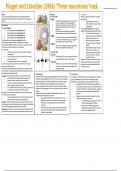
Piaget and Inhelder (1956) ‘Three mountains’ task
Aims: Results: Strengths:
To study the perspectives of children and investigate relationships 4 to 6 year olds: There was a great deal of detail in procedures
between the child’s viewpoint and their perception of the viewpoint of Trial one and the results
others ● The children rearrange the boards but the outcome ● Qualitative data that was rich in
is their own viewpoint of the three mountains
detail and depth was given on each
Procedure: ● Children towards 6 years old show an attempt to
individual child
represent the dolls, but often revert to their own
Sample: 100 children There was high reliability in the findings as
perspective
● 21 were aged between 4 and 6 years old ● The children were usually able to recollect and Piaget and Inhelder used experimental methods
● 30 were aged between 6 and 8 years old reproduce their previous viewpoints from memory ● This meant careful controls were in
● 33 were aged between 8 and 9 years old Trial two place, e.g. using the same model and
● 16 were aged between 9 and 12 years old ● The children select the picture that represents their questions for each child which
Children under 4 were considered too young for the task own viewpoint of the three mountains, or appear to
allowed comparisons to be made
A metre square model was made to represent three mountains randomly select any image of the model
Trial three between the results from different
There are four different viewpoints - A, B, C and D - and a doll is moved children
● The doll is mostly placed anywhere on the model, or
around the mountain model to each of the positions not moved from where it is already placed ● They repeated the study with many
The mountains: children, moving the doll using
● The lowest mountain was green, had a house, and a path 7 to 12 year olds: different ways of getting the child to
winding down it 7 to 9 years show what they saw or what they
● The next highest was brown, had a red cross on top with a ● The children aged 7 to 9 years attempt to reflect the thought the doll saw
stream coming down it viewpoint of the doll, but this is not consistent Although it is thought that the situation was not
● The highest was grey, with a snow-covered top 9 to 12 years understood by the children, they were all from
The child was given 10 pictures of the mountains taken from various ● Between 9 to 12 years old, the children demonstrate Switzerland so would have been familiar with
positions around the model a mastery in the skill of viewing the model from the mountainous scenery
The child also had three pieces of board, shaped and coloured to match viewpoint of the doll
each mountain in the model of the three mountains, which they can move
and arrange to represent the model
Conclusions: Weaknesses:
Trial one: the child is seated in positions A, B, C and D one at a time
Children in Piaget’s pre-operational stage (stage 2) fail to see the viewpoint The sample was limited to children from Switzerland, giving the study a
● While seated, they arrange the boards to represent the
of the doll, instead regarding their own point of view as the only one possible lack of generalisability to other children from different countries
mountains they can see from their current position
(according to Piaget, this is due to the egocentrism of the child in stage 2) Other studies use more realistic scenarios gave different findings:
● Then the doll is placed in a different position and the child is
While the children are able to replicate their previous viewpoints from ● Helen Borke (1975) used a turntable and the puppet Grover
asked to represent what the doll can see
memory, they appear unable to predict other viewpoints of the mountains to test egocentrism; 3 year-olds correctly identified Grover’s
● This is repeated with the doll moving to all four positions (A, B,
(Piaget and Inhelder suggest this is due to the reasoning skills of children in viewpoint 79% of the time, and 4-year-olds 93%, suggesting
C and D), and the child moving to all four positions
stage 2) earlier development of perspective-taking than Piaget
During trial one, the child is also asked to reconstruct their boards from
Children in Piaget’s concrete operational stage (stage 3) begin to show proposed
one of their previous viewpoints
understanding of other people’s viewpoints ● Repacholi and Gopnik, found that children of 18 months
● E.g. when seated in position C they may be asked to recreate
● Young children initially chose a picture based on their own could show non-egocentric behaviour
what they could see when they were in position A
perspective but turned it toward the doll, showing the early ○ 14 month children passed the experimenter the
Trial two: the child and doll are again moved around the mountains in the
development of understanding that others have different food they themselves liked, indicating
same manner, but the child is asked to select the viewpoint of the doll from
viewpoints. egocentrism, but children aged 18 months
the ten photographs presented to them at the same time
● By the end of this stage, children could alter their boards and passed the broccoli because that is what they
Trial three: the child selects a picture and decides where to palace the doll
select pictures that represented the doll, demonstrating that believed the experimenter liked
on the model in order to be able to see the view that matches the picture
egocentrism had subsided
Aims: Results: Strengths:
To study the perspectives of children and investigate relationships 4 to 6 year olds: There was a great deal of detail in procedures
between the child’s viewpoint and their perception of the viewpoint of Trial one and the results
others ● The children rearrange the boards but the outcome ● Qualitative data that was rich in
is their own viewpoint of the three mountains
detail and depth was given on each
Procedure: ● Children towards 6 years old show an attempt to
individual child
represent the dolls, but often revert to their own
Sample: 100 children There was high reliability in the findings as
perspective
● 21 were aged between 4 and 6 years old ● The children were usually able to recollect and Piaget and Inhelder used experimental methods
● 30 were aged between 6 and 8 years old reproduce their previous viewpoints from memory ● This meant careful controls were in
● 33 were aged between 8 and 9 years old Trial two place, e.g. using the same model and
● 16 were aged between 9 and 12 years old ● The children select the picture that represents their questions for each child which
Children under 4 were considered too young for the task own viewpoint of the three mountains, or appear to
allowed comparisons to be made
A metre square model was made to represent three mountains randomly select any image of the model
Trial three between the results from different
There are four different viewpoints - A, B, C and D - and a doll is moved children
● The doll is mostly placed anywhere on the model, or
around the mountain model to each of the positions not moved from where it is already placed ● They repeated the study with many
The mountains: children, moving the doll using
● The lowest mountain was green, had a house, and a path 7 to 12 year olds: different ways of getting the child to
winding down it 7 to 9 years show what they saw or what they
● The next highest was brown, had a red cross on top with a ● The children aged 7 to 9 years attempt to reflect the thought the doll saw
stream coming down it viewpoint of the doll, but this is not consistent Although it is thought that the situation was not
● The highest was grey, with a snow-covered top 9 to 12 years understood by the children, they were all from
The child was given 10 pictures of the mountains taken from various ● Between 9 to 12 years old, the children demonstrate Switzerland so would have been familiar with
positions around the model a mastery in the skill of viewing the model from the mountainous scenery
The child also had three pieces of board, shaped and coloured to match viewpoint of the doll
each mountain in the model of the three mountains, which they can move
and arrange to represent the model
Conclusions: Weaknesses:
Trial one: the child is seated in positions A, B, C and D one at a time
Children in Piaget’s pre-operational stage (stage 2) fail to see the viewpoint The sample was limited to children from Switzerland, giving the study a
● While seated, they arrange the boards to represent the
of the doll, instead regarding their own point of view as the only one possible lack of generalisability to other children from different countries
mountains they can see from their current position
(according to Piaget, this is due to the egocentrism of the child in stage 2) Other studies use more realistic scenarios gave different findings:
● Then the doll is placed in a different position and the child is
While the children are able to replicate their previous viewpoints from ● Helen Borke (1975) used a turntable and the puppet Grover
asked to represent what the doll can see
memory, they appear unable to predict other viewpoints of the mountains to test egocentrism; 3 year-olds correctly identified Grover’s
● This is repeated with the doll moving to all four positions (A, B,
(Piaget and Inhelder suggest this is due to the reasoning skills of children in viewpoint 79% of the time, and 4-year-olds 93%, suggesting
C and D), and the child moving to all four positions
stage 2) earlier development of perspective-taking than Piaget
During trial one, the child is also asked to reconstruct their boards from
Children in Piaget’s concrete operational stage (stage 3) begin to show proposed
one of their previous viewpoints
understanding of other people’s viewpoints ● Repacholi and Gopnik, found that children of 18 months
● E.g. when seated in position C they may be asked to recreate
● Young children initially chose a picture based on their own could show non-egocentric behaviour
what they could see when they were in position A
perspective but turned it toward the doll, showing the early ○ 14 month children passed the experimenter the
Trial two: the child and doll are again moved around the mountains in the
development of understanding that others have different food they themselves liked, indicating
same manner, but the child is asked to select the viewpoint of the doll from
viewpoints. egocentrism, but children aged 18 months
the ten photographs presented to them at the same time
● By the end of this stage, children could alter their boards and passed the broccoli because that is what they
Trial three: the child selects a picture and decides where to palace the doll
select pictures that represented the doll, demonstrating that believed the experimenter liked
on the model in order to be able to see the view that matches the picture
egocentrism had subsided