A+ CPA PRACTICE EXAM QUESTIONS AND ANSWERS
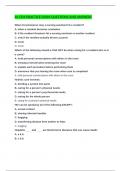
What circumstances may a nursing assistant hit a resident?
A. when a resident becomes combative
B. if the resident threatens hit a nursing assistant or another resident
C. only if the resident actually throws a punch
D. never
D. never
Which of the following should a CNA NOT do when caring for a resident who is in
a coma?
A. hold personal conversations with others in the room
B. introduce herself when entering the room
C. explain each procedure before performing them
D. announce that you leaving the room when care is completed
A. hold personal conversations with others in the room
Holistic care involves:
A. dividing a system into parts
B. caring for a person's physical needs
C. caring for a person's psychosocial needs
D. caring for the whole person
B. caring for a person's physical needs
HIV can be spread by all of the following EXCEPT:
A. sexual contact
B. sharing infected needles
C. hugging
D. transferring disease from mother to fetus
C. hugging
Hepatitis ____ and ____ are blood borne diseases that can cause death:
A. a & b
B. c & b
,C. d & c
D. a &c
C. d & c
All of the following are potential negative effects of restraint use EXPECT:
A. increased blood circulation
B. pressure sores
C. loss of self-esteem
D. death
A. increased blood circulation
All of the following information should be included in an incident report EXCEPT:
A. signs and symptoms observed by CNA
B. actions taken
C. the time and date the incident occurred
D. what the CNA thinks may have happened
D. what the CNA thinks may have happened
The call light must always be kept:
A. within the resident's reach
B. near the door
C. on the bedside stand
D. on the over bed table
A. within the resident's reach
Aspiration is:
A. a crust that appears on the lips of people who are unconscious
B. a cause of unconsciousness
C. inhalation of food or drinks into lungs
D. a substance that forms on teeth
C. inhalation of food or drinks into lungs
Serve sub-normal body temperature is called:
A. circadian rhythm
B. hypothalamus
, C. hypothermia
D. fever
C. hypothermia
Signs and symptoms of a fever include all of the following EXPECT:
A. pale skin
B. headache
C. fatigue
D. chills
A. pale skin
Signs of dysphagia include all of the following EXPECT:
A. eating very rapidly
B. avoidance of eating
C. swallowing several times when eating a single bite
D. coughing during or after meals
A. eating very rapidly
Dementia is:
A. the ability to think clearly and logically
B. a normal change of aging in the brain
C. a serious loss of mental abilities that interferes with normal functioning
D. an increase in cognitive ability
C. a serious loss of mental abilities that interferes with normal functioning
Walking aids include all of the following EXCEPT:
A. wheelchair
B. cane
C. walker
D. crutches
A. wheelchair
The knowledge of right and wrong are:
A. ethics
B. civil laws
What circumstances may a nursing assistant hit a resident?
A. when a resident becomes combative
B. if the resident threatens hit a nursing assistant or another resident
C. only if the resident actually throws a punch
D. never
D. never
Which of the following should a CNA NOT do when caring for a resident who is in
a coma?
A. hold personal conversations with others in the room
B. introduce herself when entering the room
C. explain each procedure before performing them
D. announce that you leaving the room when care is completed
A. hold personal conversations with others in the room
Holistic care involves:
A. dividing a system into parts
B. caring for a person's physical needs
C. caring for a person's psychosocial needs
D. caring for the whole person
B. caring for a person's physical needs
HIV can be spread by all of the following EXCEPT:
A. sexual contact
B. sharing infected needles
C. hugging
D. transferring disease from mother to fetus
C. hugging
Hepatitis ____ and ____ are blood borne diseases that can cause death:
A. a & b
B. c & b
,C. d & c
D. a &c
C. d & c
All of the following are potential negative effects of restraint use EXPECT:
A. increased blood circulation
B. pressure sores
C. loss of self-esteem
D. death
A. increased blood circulation
All of the following information should be included in an incident report EXCEPT:
A. signs and symptoms observed by CNA
B. actions taken
C. the time and date the incident occurred
D. what the CNA thinks may have happened
D. what the CNA thinks may have happened
The call light must always be kept:
A. within the resident's reach
B. near the door
C. on the bedside stand
D. on the over bed table
A. within the resident's reach
Aspiration is:
A. a crust that appears on the lips of people who are unconscious
B. a cause of unconsciousness
C. inhalation of food or drinks into lungs
D. a substance that forms on teeth
C. inhalation of food or drinks into lungs
Serve sub-normal body temperature is called:
A. circadian rhythm
B. hypothalamus
, C. hypothermia
D. fever
C. hypothermia
Signs and symptoms of a fever include all of the following EXPECT:
A. pale skin
B. headache
C. fatigue
D. chills
A. pale skin
Signs of dysphagia include all of the following EXPECT:
A. eating very rapidly
B. avoidance of eating
C. swallowing several times when eating a single bite
D. coughing during or after meals
A. eating very rapidly
Dementia is:
A. the ability to think clearly and logically
B. a normal change of aging in the brain
C. a serious loss of mental abilities that interferes with normal functioning
D. an increase in cognitive ability
C. a serious loss of mental abilities that interferes with normal functioning
Walking aids include all of the following EXCEPT:
A. wheelchair
B. cane
C. walker
D. crutches
A. wheelchair
The knowledge of right and wrong are:
A. ethics
B. civil laws