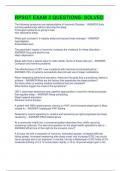
RPSGT EXAM 3 QUESTIONS- SOLVED
The following symptoms are representative of Insomnia Disorder: - ANSWER-Early
morning awakenings without returning the sleep,
Prolonged resistance to going to bed,
Non-restorative sleep.
When pain is present, it impacts sleep and causes these changes: - ANSWER-
hyperalgesia,
Exacerbated pain
The psychiatric impact of insomnia increases the incidence for these disorders: -
ANSWER-Drug and alcohol use,
Major depression.
Sleep aids have a special risks for older adults. Some of these risks are: - ANSWER-
Confusion and memory problems
The effectiveness of CBT-I use in patients with insomnia is characterized by: -
ANSWER-78% of patients successfully discontinued use of sleep medications
When integrating behavioral education, these are the goals that a practitioner seeks to
achieve: - ANSWER-What are the factors that perpetuate the sleep problem?
Are there other co-existing medical conditions that are untreated?
What factors trigger the onset of the symptoms?
CBT-I uses these behavioral and cognitive approaches to reset the mental processes
that regulate sleep: - ANSWER-Sleep scheduling,
Sleep hygiene education,
Stimulus control therapy.
A patient with REM related apnea, snoring on PAP, and increased weight gain is likely
related to: - ANSWER-Inadequate PAP Setting
Respiratory events appearing in clusters and worsening as night progresses are likely
caused by: - ANSWER-REM related apnea
At a community health fair, a concerned patient describes their child's recurring
screaming outbursts. The best next question for the sleep health specialist to ask is: -
ANSWER-What time of the night do the screams occur?
A 43-year-old with a complaint of insomnia, witnessed apneas, increased difficulty
falling asleep, increased awakening after sleep onset, and increased EDS, has ocular
nerve damage due to an explosion in combat. He has a Mallampati of II/IV hottie of 2/5,
moderate drinking of 2-3 12 ounce beers nightly, a 15 to 18 pound weight gain in the
, past five years and twitching of the lower limbs during the day. The twitching started two
years ago. Which tests would best evaluate the patient? - ANSWER-Full lead EEG
during the PSG
During the sleep study, what tools would you use to communicate with the patient? -
ANSWER-Audiotape of instructions and questionnaires
A 38-year-old female with EDS has witnessed apneas and loud snoring for five years.
Her sleep is fitful. She has gained 25-28 pounds in the past five years and has clinical
deafness due to a degenerative disease. She has a Mallampati III/IV with increased
blood pressure and rapid heart rate. Which is the best test order to monitor this patient?
- ANSWER-PSG
What safety concerns need to be addressed? - ANSWER-Risk for falling
What special equipment is required for the sleep study? - ANSWER-Video/audio
recording
An 01.40 hrs. the patient awakens and calls out to the tech. He has rapid, irregular HR,
the EEG rhythms are normal, the SaO2 is 97%. Tech enters the room and finds the
patient with a severe headache, nausea and shaky, sweating profusely, and heart is
beating fast.
What are the possible causes for the changes in condition? - ANSWER-Withdrawal
from alcohol causing a blood sugar change
The Center's Policy and procedure requires guidelines to protect patients. What are key
guidelines to have in the policy and procedure manual? - ANSWER-Criteria defining
when to contact the Medical Director of the Sleep Center,
Criteria to continue recording the sleep study during the emergency,
The type of observations that required, documentation in the medical record and on the
tech notes.
A 76-year-old is being recorded with a history of disruptive snoring, EDS, increased
fatigue, impaired concentration, poorly controlled hypertension despite medications and
adjustments of these medications. He had a new onset of AFib that was unresponsive
to a cardioversion two months before this time. Recently, the patient lost 10 pounds and
discontinued his cardiac medications. The physical exam shows: Weight: 138 pounds;
BP: 190/100; Pulse: 64 with rare premature contractions. An EKG showed abnormal
rhythms: AFib.
What are appropriate responses when recording this patient? - ANSWER-Call the
Center's Medical Director
What concerns for the patient's safety need to be addressed prior to starting the
recording? - ANSWER-Have an understanding of abnormal cardiac rhythms to
recognize them on the sleep study,
The following symptoms are representative of Insomnia Disorder: - ANSWER-Early
morning awakenings without returning the sleep,
Prolonged resistance to going to bed,
Non-restorative sleep.
When pain is present, it impacts sleep and causes these changes: - ANSWER-
hyperalgesia,
Exacerbated pain
The psychiatric impact of insomnia increases the incidence for these disorders: -
ANSWER-Drug and alcohol use,
Major depression.
Sleep aids have a special risks for older adults. Some of these risks are: - ANSWER-
Confusion and memory problems
The effectiveness of CBT-I use in patients with insomnia is characterized by: -
ANSWER-78% of patients successfully discontinued use of sleep medications
When integrating behavioral education, these are the goals that a practitioner seeks to
achieve: - ANSWER-What are the factors that perpetuate the sleep problem?
Are there other co-existing medical conditions that are untreated?
What factors trigger the onset of the symptoms?
CBT-I uses these behavioral and cognitive approaches to reset the mental processes
that regulate sleep: - ANSWER-Sleep scheduling,
Sleep hygiene education,
Stimulus control therapy.
A patient with REM related apnea, snoring on PAP, and increased weight gain is likely
related to: - ANSWER-Inadequate PAP Setting
Respiratory events appearing in clusters and worsening as night progresses are likely
caused by: - ANSWER-REM related apnea
At a community health fair, a concerned patient describes their child's recurring
screaming outbursts. The best next question for the sleep health specialist to ask is: -
ANSWER-What time of the night do the screams occur?
A 43-year-old with a complaint of insomnia, witnessed apneas, increased difficulty
falling asleep, increased awakening after sleep onset, and increased EDS, has ocular
nerve damage due to an explosion in combat. He has a Mallampati of II/IV hottie of 2/5,
moderate drinking of 2-3 12 ounce beers nightly, a 15 to 18 pound weight gain in the
, past five years and twitching of the lower limbs during the day. The twitching started two
years ago. Which tests would best evaluate the patient? - ANSWER-Full lead EEG
during the PSG
During the sleep study, what tools would you use to communicate with the patient? -
ANSWER-Audiotape of instructions and questionnaires
A 38-year-old female with EDS has witnessed apneas and loud snoring for five years.
Her sleep is fitful. She has gained 25-28 pounds in the past five years and has clinical
deafness due to a degenerative disease. She has a Mallampati III/IV with increased
blood pressure and rapid heart rate. Which is the best test order to monitor this patient?
- ANSWER-PSG
What safety concerns need to be addressed? - ANSWER-Risk for falling
What special equipment is required for the sleep study? - ANSWER-Video/audio
recording
An 01.40 hrs. the patient awakens and calls out to the tech. He has rapid, irregular HR,
the EEG rhythms are normal, the SaO2 is 97%. Tech enters the room and finds the
patient with a severe headache, nausea and shaky, sweating profusely, and heart is
beating fast.
What are the possible causes for the changes in condition? - ANSWER-Withdrawal
from alcohol causing a blood sugar change
The Center's Policy and procedure requires guidelines to protect patients. What are key
guidelines to have in the policy and procedure manual? - ANSWER-Criteria defining
when to contact the Medical Director of the Sleep Center,
Criteria to continue recording the sleep study during the emergency,
The type of observations that required, documentation in the medical record and on the
tech notes.
A 76-year-old is being recorded with a history of disruptive snoring, EDS, increased
fatigue, impaired concentration, poorly controlled hypertension despite medications and
adjustments of these medications. He had a new onset of AFib that was unresponsive
to a cardioversion two months before this time. Recently, the patient lost 10 pounds and
discontinued his cardiac medications. The physical exam shows: Weight: 138 pounds;
BP: 190/100; Pulse: 64 with rare premature contractions. An EKG showed abnormal
rhythms: AFib.
What are appropriate responses when recording this patient? - ANSWER-Call the
Center's Medical Director
What concerns for the patient's safety need to be addressed prior to starting the
recording? - ANSWER-Have an understanding of abnormal cardiac rhythms to
recognize them on the sleep study,