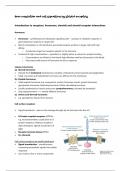
Gene regulation and ce/ signa/ing by st3oid recept5s
Introduction to receptors, hormones, steroids and steroid-receptor interactions
Hormones
• Hormones – synthesized and released by signalling cells ® produce a metabolic response or
gene expression response in target cells
• Bind to intracellular or cell membrane-associated receptor proteins in target cells with high
affinity
o A particular target has receptors specific to the hormone
• Produced at high concentrations – equivalent or slightly above Kd values for receptor binding
o Concentrations are diluted in the blood; high affinities need less [hormone] in the blood
o Only need small amount of hormones to elicit a response
Classes of hormones
(a) Steroid hormones
• Derived from cholesterol (testosterone, estradiol, cholesterol) and eicosanoids (prostaglandins)
• Small, non-polar and hydrophobic hormones can diffuse into the membrane
(b) Peptide hormones
• Small peptide hormones (e.g. vasopressin), protein hormones (insulin, growth hormone),
glycoprotein hormones (luteinizing hormone, follicle-stimulating hormone)
• Usually synthesized as inactive precursors (preprohormones), activated by proteolysis
• One preprohormone ®® several different hormones
(c) Amino acid-derived hormones
• e.g. epinephrine, derived from tyrosine
Cell surface receptors
• Signal transducers – pass on the message brought by the hormone into the cell
• G Protein-coupled receptors (GPCRs) –
e.g. neurotransmitters usually bind to G-
protein receptors/ olfactory receptors/
sight (rhodopsin, ligands are photons of
light)
• Receptor tyrosine kinases (RTKs)
• Ion channels
Cell surface receptors are signal transducers
• Signal transduction – overall process
converting extracellular signals into cellular
responses
• Can involve a few or many components
,• Hormone ® receptor ® transducer (passes the message into the cell) ® effector ® response
• Receptors – receive the extracellular signal (ligand)
o Ligand binding induces a conformational change ® triggers intracellular signal
transduction pathways ® modulate cellular metabolism, function or gene expression
• Transducers – relay the signal from the receptor to effector proteins ® cellular response
• Binding of first messengers (ligands) to cell surface receptors = transient increase or decrease in
the concentration of second messengers (intracellular signaling molecules)
Steroid receptors
Intracellular receptors – members of the nuclear receptor family
Mechanism of steroid receptor action
• Receptor resides in the cytoplasm in the absence of a hormone, in an inactivated form
o In a complex with a chaperone protein (heat shock protein), binds to a receptor to keep
in inactive conformation
• (1) Hormone binding triggers activation ® moving off of heat shock protein, dissociation ®
receptor undergoes a conformational change (activated nuclear hormone complex)
o All receptors binding to ligands undergo a conformational change that is triggered by the
ligand
o Conformational change allows binding ® exposes sights/ surface residues that were
previously sequestered, have the potential to interact with other substrates
• (2) Receptor binds to another receptor by dimerization ® translocation into nucleus
o Dimerized receptor behaves as a transcription factor (not part of initiation complex)
o Modulates rates of transcription initiation
• Dimer binds to a specific sequence of DNA = hormone response element (HRE)
• NR-DNA complex recruits other proteins responsible for transcription of DNA ® RNA ® change
in cell function
• Steroids are master regulators – cause global effects and are very potent; cause changes in the
expression of multiple genes
o Must have DNA binding sites in regulatory regions in a lot genes
o Receptors are potent modulators for transcription
, Important signaling molecules
Steroids are compounds containing four aliphatic rings, generally
hydrophobic
• Cholesterol – all hormones are synthesized from this precursor
o C17 is important in distinguishing between different steroids,
normally contains different a functional group
o Not a lot of differences, suggesting that receptors of structurally similar but have different
regions that are specific to the hormone
• Sex hormones – progesterone, testosterone, estrogen, progesterone
o Not found in all cell types
• Adrenocorticoid hormones – Cortisol, aldosterone, cortisone
o Regulate homeostasis, bone density etc.
Concepts of intracellular steroid receptors
• Ligand-activated TFs (multi-functional = receptor and transcription factor)
• Protein-ligand interactions – ligand selectivity and affinity, agonists, partial agonists
o Agonists – activate normal activity
o Antagonist – inhibits the action of receptor and prevent action of agonist
o Partial agonist – poor activation of receptor
• Protein-protein interactions
• Protein-DNA interactions – bind DNA sequence-specifically
• Phosphorylation (PTM) – removal of inhibitor protein, receptor turnover, chromatin remodeling,
glycosylation, ubiquitination (increase/ decrease in turnover)
Physiological function of steroids
• Glucocorticoids via Glucocorticoid receptor (GR) – immune function (inflammation, immune
response), homeostasis, metabolism, bone density, stress response
o Ubiquitous, knockout = lethal
• Mineralocorticoids (aldosterone) via mineralocorticoid receptor (MR) – blood pressure
• Estrogen via Estrogen receptor (ER) – all aspects of female reproduction (development,
menstrual cycle, pregnancy) and brain function
Androgen via androgen receptor – all aspects of male reproduction (development,
spermatogenesis) and metabolism
o Androgen is a generic term for hormones that bind
Endogenous EPA steroids
HPA axis
• Hypothalamic-pituitary-adrenal
• Brain coordinate signals (hypothalamus) ® stimulates CRH secretion by the PVN ® stimulates
ACTH secretion by the pituitary glands ® travels via blood (endocrine manner) ® mainly target
adrenal glands ® cortisol secretion (glucocorticoids) ® target tissue
o Target tissue: liver, bone marrow, thymus, brain, adrenal medulla, lung, immune function,
bone
Introduction to receptors, hormones, steroids and steroid-receptor interactions
Hormones
• Hormones – synthesized and released by signalling cells ® produce a metabolic response or
gene expression response in target cells
• Bind to intracellular or cell membrane-associated receptor proteins in target cells with high
affinity
o A particular target has receptors specific to the hormone
• Produced at high concentrations – equivalent or slightly above Kd values for receptor binding
o Concentrations are diluted in the blood; high affinities need less [hormone] in the blood
o Only need small amount of hormones to elicit a response
Classes of hormones
(a) Steroid hormones
• Derived from cholesterol (testosterone, estradiol, cholesterol) and eicosanoids (prostaglandins)
• Small, non-polar and hydrophobic hormones can diffuse into the membrane
(b) Peptide hormones
• Small peptide hormones (e.g. vasopressin), protein hormones (insulin, growth hormone),
glycoprotein hormones (luteinizing hormone, follicle-stimulating hormone)
• Usually synthesized as inactive precursors (preprohormones), activated by proteolysis
• One preprohormone ®® several different hormones
(c) Amino acid-derived hormones
• e.g. epinephrine, derived from tyrosine
Cell surface receptors
• Signal transducers – pass on the message brought by the hormone into the cell
• G Protein-coupled receptors (GPCRs) –
e.g. neurotransmitters usually bind to G-
protein receptors/ olfactory receptors/
sight (rhodopsin, ligands are photons of
light)
• Receptor tyrosine kinases (RTKs)
• Ion channels
Cell surface receptors are signal transducers
• Signal transduction – overall process
converting extracellular signals into cellular
responses
• Can involve a few or many components
,• Hormone ® receptor ® transducer (passes the message into the cell) ® effector ® response
• Receptors – receive the extracellular signal (ligand)
o Ligand binding induces a conformational change ® triggers intracellular signal
transduction pathways ® modulate cellular metabolism, function or gene expression
• Transducers – relay the signal from the receptor to effector proteins ® cellular response
• Binding of first messengers (ligands) to cell surface receptors = transient increase or decrease in
the concentration of second messengers (intracellular signaling molecules)
Steroid receptors
Intracellular receptors – members of the nuclear receptor family
Mechanism of steroid receptor action
• Receptor resides in the cytoplasm in the absence of a hormone, in an inactivated form
o In a complex with a chaperone protein (heat shock protein), binds to a receptor to keep
in inactive conformation
• (1) Hormone binding triggers activation ® moving off of heat shock protein, dissociation ®
receptor undergoes a conformational change (activated nuclear hormone complex)
o All receptors binding to ligands undergo a conformational change that is triggered by the
ligand
o Conformational change allows binding ® exposes sights/ surface residues that were
previously sequestered, have the potential to interact with other substrates
• (2) Receptor binds to another receptor by dimerization ® translocation into nucleus
o Dimerized receptor behaves as a transcription factor (not part of initiation complex)
o Modulates rates of transcription initiation
• Dimer binds to a specific sequence of DNA = hormone response element (HRE)
• NR-DNA complex recruits other proteins responsible for transcription of DNA ® RNA ® change
in cell function
• Steroids are master regulators – cause global effects and are very potent; cause changes in the
expression of multiple genes
o Must have DNA binding sites in regulatory regions in a lot genes
o Receptors are potent modulators for transcription
, Important signaling molecules
Steroids are compounds containing four aliphatic rings, generally
hydrophobic
• Cholesterol – all hormones are synthesized from this precursor
o C17 is important in distinguishing between different steroids,
normally contains different a functional group
o Not a lot of differences, suggesting that receptors of structurally similar but have different
regions that are specific to the hormone
• Sex hormones – progesterone, testosterone, estrogen, progesterone
o Not found in all cell types
• Adrenocorticoid hormones – Cortisol, aldosterone, cortisone
o Regulate homeostasis, bone density etc.
Concepts of intracellular steroid receptors
• Ligand-activated TFs (multi-functional = receptor and transcription factor)
• Protein-ligand interactions – ligand selectivity and affinity, agonists, partial agonists
o Agonists – activate normal activity
o Antagonist – inhibits the action of receptor and prevent action of agonist
o Partial agonist – poor activation of receptor
• Protein-protein interactions
• Protein-DNA interactions – bind DNA sequence-specifically
• Phosphorylation (PTM) – removal of inhibitor protein, receptor turnover, chromatin remodeling,
glycosylation, ubiquitination (increase/ decrease in turnover)
Physiological function of steroids
• Glucocorticoids via Glucocorticoid receptor (GR) – immune function (inflammation, immune
response), homeostasis, metabolism, bone density, stress response
o Ubiquitous, knockout = lethal
• Mineralocorticoids (aldosterone) via mineralocorticoid receptor (MR) – blood pressure
• Estrogen via Estrogen receptor (ER) – all aspects of female reproduction (development,
menstrual cycle, pregnancy) and brain function
Androgen via androgen receptor – all aspects of male reproduction (development,
spermatogenesis) and metabolism
o Androgen is a generic term for hormones that bind
Endogenous EPA steroids
HPA axis
• Hypothalamic-pituitary-adrenal
• Brain coordinate signals (hypothalamus) ® stimulates CRH secretion by the PVN ® stimulates
ACTH secretion by the pituitary glands ® travels via blood (endocrine manner) ® mainly target
adrenal glands ® cortisol secretion (glucocorticoids) ® target tissue
o Target tissue: liver, bone marrow, thymus, brain, adrenal medulla, lung, immune function,
bone