Bankruptcy Cost
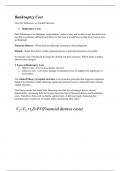
Non-Tax Influences on Capital Structure
1. Bankruptcy Costs
Debt Financing is an obligatory responsibility, where it may not be able to pay the debts if its
not able to generate sufficient cash flows in that case it would have to take more loan or may
go Bankrupt.
Financial Distress - When firm has difficulty meeting its debt obligations.
Default - When firm fails to make required interest or principal payments on its debt.
In extreme case of Financial leverage the default risk also increases. Which leads to higher
interest rates charged.
2 Types of Bankruptcy Cost -
1. Direct Costs - Fees to Accountant, lawyers
2. Indirect Costs - Lost Sales, damage to reputation, loss of suppliers & employees or
receivables.
The tradeoff theory of capital structure is an economic principle that suggests companies
balance the benefits of debt financing against the potential costs to determine their optimal
capital structure.
This theory posits that while debt financing can offer tax advantages due to interest
deductibility, increasing debt levels also raises the risk of financial distress and bankruptcy
costs. Therefore, firms seek to find an optimal mix of debt and equity financing that
minimizes the overall cost of capital while maximizing firm value.
Non-Tax Influences on Capital Structure
1. Bankruptcy Costs
Debt Financing is an obligatory responsibility, where it may not be able to pay the debts if its
not able to generate sufficient cash flows in that case it would have to take more loan or may
go Bankrupt.
Financial Distress - When firm has difficulty meeting its debt obligations.
Default - When firm fails to make required interest or principal payments on its debt.
In extreme case of Financial leverage the default risk also increases. Which leads to higher
interest rates charged.
2 Types of Bankruptcy Cost -
1. Direct Costs - Fees to Accountant, lawyers
2. Indirect Costs - Lost Sales, damage to reputation, loss of suppliers & employees or
receivables.
The tradeoff theory of capital structure is an economic principle that suggests companies
balance the benefits of debt financing against the potential costs to determine their optimal
capital structure.
This theory posits that while debt financing can offer tax advantages due to interest
deductibility, increasing debt levels also raises the risk of financial distress and bankruptcy
costs. Therefore, firms seek to find an optimal mix of debt and equity financing that
minimizes the overall cost of capital while maximizing firm value.