Crown and appeal court
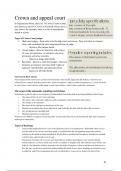
In England and Wales, there are 70 Crown Courts in total,
also known as circuits. Crowns will usually always have a
jury, unless, for example, there is a risk of intimidation
aimed at a juror.
Types of Crown Court judges
1. High court judges - those who sit in the high court and crowns. Wear red robes in criminal
cases, and considered the most experienced form of judge.
- Styled as Mrs Justice Smith
2. Circuit judges - these are barristers with at least
10 years of experience, or solicitors who have
previously served as recorders
- Known as Judge John Smith
3. Recorders - known as ‘part-time judges’, these are
barristers or solicitors who have held “rights of
audience” and therefore can represent clients
- Known as Mr John Smith
Lawyers in the Crowns
Prosecutions at the Crowns are conducted by barristers who usually appear for the defence. Barristers are
referred to as ‘counsel’ and they possess the “rights of audience” under certain circumstances. A court clerk sits
in each Crown Court in front of the judge to assist procedures, whilst Ushers assist the courtroom.
The scope of the automatic reporting restrictions
Restrictions result in only seven categories of information from being able to be legal published, these being:
1. The name of the Crown Court and judge
2. The names, ages and home addresses and occupations of the defendant and witness
3. The charge or its summary
4. The name of the solicitors or barristers in the case
5. Whether proceedings have been adjourned, and if already, the date and the place this occurred
6. Any arrangements regarding bail
7. Whether legal aid was authorised
Witnesses are unlikely to appear in hearings prior to trial, but if they do or are mentioned, they may be named
unless given anonymity.
Types of hearings
- Unsuccessful applications for a case to be dismissed, prior to arraignment: a defendant whose case is
sent for trial at the Crown Court may apply to a judge before the arraignment requesting certain
evidence be declared as being insufficient. Restrictions regarding this hearing are detailed in schedule
3 of the Crime and Disorder Act of 1998.
- Preparatory hearings: the Crown Court may hold one of these hearings in a case which contains
serious offences, or those which may involve a complex or lengthy trial. All terrorism cases involve one
of these. The intention of these hearings is for the judge to analyse evidence and discuss with lawyers
how the jury can be best assisted in understanding the trials issues. These hearings occur before a jury
is collected, and if the arraignment has not yet taken place, it must occur before the start of the
41
, preparatory hearing. Restrictions regarding this hearing are found in section 11 of the Criminal Justice
Act of 1987 and in section 37 of the Criminal Procedure and Investigations Act of 1996.
‘Relevant business information’
Section 11 of the Criminal Justice Act of 1987 allows for journalists reporting on “serious or complex” fraud cases
to publish information which is considered “relevant business information” despite automatic restrictions
which are in place. Such relevant information includes:
1. Any address which the defendant uses for their business
2. The name of the business, or its name when the events of the charge occurred
3. The name and address of any firm which the defendant was involved as a partner at the relevant time,
and the address of its registered principal office
4. Any working address of the defendant in their capacity as a person engaged by any such company
What can be reported?
In addition to the previously stated information, it is also safe to publish reports of pre-trial Crown Court
hearings from a neutral and bland description to prevent prejudice.
Pre-trial hearings - automatic reporting restrictions
The Criminal Procedure and Investigation Act of 1996 defines a ‘pre-trial hearing’ as being any hearing at the
Crown Court before a guilty plea is accepted, or, in cases which remain contested, all hearings which occur
before a jury is sworn at the beginning of preparatory hearings. Things that cannot be reported are:
1. Proceedings on applications for rulings on the admissibility of evidence or any other question of law
2. Proceedings on applications for such a ruling to be varied or discharged
3. What is said in any ruling by the judge or their order
When do the automatic reporting restrictions cease to apply?
A crown Court judge can lift the restrictions of court either entirely or in part by, even by the defendant
themselves, in order to allow a more detailed contemporaneous media report. However, if any of the defendants
in the case deny this, then the judge may only lift regulations if satisfied that doing so would be beneficial to the
interests of justice. If there are objections and conflict regarding the removal of restrictions, this cannot be
reported until it is clear there will be no trial in the case or until the “conclusion” even if restrictions were
previously lifted.
The 1998 Act clarifies that section 37’s restrictions cease to apply if all charges in the case are dismissed on
grounds of lack of evidence - therefore meaning that there will be no trial. Otherwise, they cease to apply “at
the conclusion of the trial of the person charged, or of the last of the persons charged to be tried.”
A report which is published “as soon as practicable” after the relevant reporting restrictions are lifted or
expired will be regarded as being a contemporaneous report which enables it to enjoy the protection of section
4 of the Contempt of Court Act and therefore absolute privilege against defamation, as long as the report if fair
and accurate.
Appeals against rulings by judges - reporting restrictions
The Criminal justice Act of 2003 gives the prosecution the right to appeal to the Court of Appeal against a ruling
made by the Crown Court, something which can determine the entire case or assets. Section 71 of the Act which
is intended to prevent prejudice to the trial or any linked trials, automatically bans reporting of any discussions
in the Crown Court about an appeal. It also restricts reports of the Court of Appeal hearings, as well as any
future potential appeals to the Supreme Court.
42
In England and Wales, there are 70 Crown Courts in total,
also known as circuits. Crowns will usually always have a
jury, unless, for example, there is a risk of intimidation
aimed at a juror.
Types of Crown Court judges
1. High court judges - those who sit in the high court and crowns. Wear red robes in criminal
cases, and considered the most experienced form of judge.
- Styled as Mrs Justice Smith
2. Circuit judges - these are barristers with at least
10 years of experience, or solicitors who have
previously served as recorders
- Known as Judge John Smith
3. Recorders - known as ‘part-time judges’, these are
barristers or solicitors who have held “rights of
audience” and therefore can represent clients
- Known as Mr John Smith
Lawyers in the Crowns
Prosecutions at the Crowns are conducted by barristers who usually appear for the defence. Barristers are
referred to as ‘counsel’ and they possess the “rights of audience” under certain circumstances. A court clerk sits
in each Crown Court in front of the judge to assist procedures, whilst Ushers assist the courtroom.
The scope of the automatic reporting restrictions
Restrictions result in only seven categories of information from being able to be legal published, these being:
1. The name of the Crown Court and judge
2. The names, ages and home addresses and occupations of the defendant and witness
3. The charge or its summary
4. The name of the solicitors or barristers in the case
5. Whether proceedings have been adjourned, and if already, the date and the place this occurred
6. Any arrangements regarding bail
7. Whether legal aid was authorised
Witnesses are unlikely to appear in hearings prior to trial, but if they do or are mentioned, they may be named
unless given anonymity.
Types of hearings
- Unsuccessful applications for a case to be dismissed, prior to arraignment: a defendant whose case is
sent for trial at the Crown Court may apply to a judge before the arraignment requesting certain
evidence be declared as being insufficient. Restrictions regarding this hearing are detailed in schedule
3 of the Crime and Disorder Act of 1998.
- Preparatory hearings: the Crown Court may hold one of these hearings in a case which contains
serious offences, or those which may involve a complex or lengthy trial. All terrorism cases involve one
of these. The intention of these hearings is for the judge to analyse evidence and discuss with lawyers
how the jury can be best assisted in understanding the trials issues. These hearings occur before a jury
is collected, and if the arraignment has not yet taken place, it must occur before the start of the
41
, preparatory hearing. Restrictions regarding this hearing are found in section 11 of the Criminal Justice
Act of 1987 and in section 37 of the Criminal Procedure and Investigations Act of 1996.
‘Relevant business information’
Section 11 of the Criminal Justice Act of 1987 allows for journalists reporting on “serious or complex” fraud cases
to publish information which is considered “relevant business information” despite automatic restrictions
which are in place. Such relevant information includes:
1. Any address which the defendant uses for their business
2. The name of the business, or its name when the events of the charge occurred
3. The name and address of any firm which the defendant was involved as a partner at the relevant time,
and the address of its registered principal office
4. Any working address of the defendant in their capacity as a person engaged by any such company
What can be reported?
In addition to the previously stated information, it is also safe to publish reports of pre-trial Crown Court
hearings from a neutral and bland description to prevent prejudice.
Pre-trial hearings - automatic reporting restrictions
The Criminal Procedure and Investigation Act of 1996 defines a ‘pre-trial hearing’ as being any hearing at the
Crown Court before a guilty plea is accepted, or, in cases which remain contested, all hearings which occur
before a jury is sworn at the beginning of preparatory hearings. Things that cannot be reported are:
1. Proceedings on applications for rulings on the admissibility of evidence or any other question of law
2. Proceedings on applications for such a ruling to be varied or discharged
3. What is said in any ruling by the judge or their order
When do the automatic reporting restrictions cease to apply?
A crown Court judge can lift the restrictions of court either entirely or in part by, even by the defendant
themselves, in order to allow a more detailed contemporaneous media report. However, if any of the defendants
in the case deny this, then the judge may only lift regulations if satisfied that doing so would be beneficial to the
interests of justice. If there are objections and conflict regarding the removal of restrictions, this cannot be
reported until it is clear there will be no trial in the case or until the “conclusion” even if restrictions were
previously lifted.
The 1998 Act clarifies that section 37’s restrictions cease to apply if all charges in the case are dismissed on
grounds of lack of evidence - therefore meaning that there will be no trial. Otherwise, they cease to apply “at
the conclusion of the trial of the person charged, or of the last of the persons charged to be tried.”
A report which is published “as soon as practicable” after the relevant reporting restrictions are lifted or
expired will be regarded as being a contemporaneous report which enables it to enjoy the protection of section
4 of the Contempt of Court Act and therefore absolute privilege against defamation, as long as the report if fair
and accurate.
Appeals against rulings by judges - reporting restrictions
The Criminal justice Act of 2003 gives the prosecution the right to appeal to the Court of Appeal against a ruling
made by the Crown Court, something which can determine the entire case or assets. Section 71 of the Act which
is intended to prevent prejudice to the trial or any linked trials, automatically bans reporting of any discussions
in the Crown Court about an appeal. It also restricts reports of the Court of Appeal hearings, as well as any
future potential appeals to the Supreme Court.
42