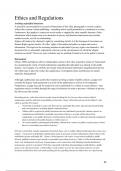
Ethics and Regulations
Avoiding unjustified intrusions
A journalist can potentially be accused of harassment if they film, photograph or record a subject
without the consent of their publishing - something which could potentially be considered as a crime.
Furthermore, this applies to content on social media or supplied by other republic domains. Other
information which maybe seen as an intrusion of privacy and therefore harassment may include
medical records, sex life or relationships.
Judges will analyse the claimant’s rights by considering Article 8 of the European Conventions on
Human Rights against Article 10 of the ‘rights of the media and public to impair and receive
information. The legal test for assessing whether an individual’s privacy rights were harmed is “did
the person have a reasonable expectation of privacy in the circumstances in which the alleged
intrusion occurred?” However, such violations may be justified if found to be in the public’s interest.
Harassment
Ofcom, IPSO and Impress all have independent actions to how they respond to claims of ‘harassment’
by considering the extent of which information regarding that individual was already in the public
domain - for example, if a celebrity previously released personal information regarding their private
life which may in later life, reduce the significance of complaints about a publication of similar
materials, being upheld.
Although a publication may justify their material as being a matter of public interest, a judge will
consider the degree/ harm generated as a result of the publication as well as its investigation.
Furthermore, a judge may ask for material to not be published if it is likely to create distress - such
regulations may be avoided through the usage of pixelation in order to prevent a violation of privacy
but still access the content.
Breaching privacy codes does not necessarily mean breaking the law, however does ensures ethical
maintenance and the reduction of possibilities of lawsuits. Clause 2 (therefore privacy) of the Editor’s Code
which is used by IPSO states:
1. “Everybody is entitled to respect for their privacy and family life, home, physical and mental health,
and correspondence, including digital communications.”
2. “Editors will be expected to justify intrusions into any individual’s private life without consent. In
considering an individual’s reasonable expectation of privacy, account will be taken of the
complainant’s own public disclosures of information and the extent to which the material complained
about is already in the public domain or will become so.”
3. “It is unacceptable to photograph individuals, without their consent, in public or private places where
there is a reasonable expectation of privacy.”
IPSO have stated that a media organisation breached clause 2 by revealing without justification that a man was a
refugee - “in general, an individual’s immigration status is personal, sensitive information which relates to the
individual’s private and family life.” Clause 7 of the Impress Code states “except where justified by public
interest, publishers must respect people’s reasonable expectation of privacy.” Rule 8.1 of the Broadcasting Code
states “any infringement of privacy in programmes, or in connection with obtaining material included in
programmes, must be warranted.” IPSO have repeatedly ruled that photographing an individual in a public
space is not a breach of clause 2 of the Editor’s Code as there is never the expectation of privacy in such
locations and therefore does not entail anything private regarding said person unless they are experiencing
25
, grief, suffering, distress etc. Although Ofcom believe that filming in public spaces is not a breach of the code,
section 8 of the Broadcasting Code states
- “Legitimate expectations of privacy will vary according to the place and nature of the information,
activity or condition in question, the extent to which it is in the public domain (if at all) and whether
the individual concerned is already in the public eye. There may be circumstances where people can
reasonably expect privacy even in a public place. Some activities and conditions may be of such a
private nature that filming or recording, even in public space, could involve an infringement of
privacy.”
In practice 8.4, the code clarifies that broadcasters should ensure that the place of recording is not so private
that prior consent is entitled. Some activities enable public spaces to embody private moments such as if a child
is “in state of undress, someone with disfiguring medical condition or CCTV footage of suicide attempt” is
obtained. Although a location may be privately owned, depending on its accessibility, that is irrelevant.
- In 2020, ‘Mr and Mrs R’ complained to Ofcom regarding a five-second clip in the Channel 4
documentary ‘When Cruises Go Wrong’ which captured Mrs R engaging in a physical altercation with
another female passenger. Although her face was not visible, her husbands was and so was his voice.
Mrs R stated that they did not consent to such an incident being broadcast. She stated that the footage
was misinformed and that her husband was merely attempting to help her as she was being ‘attacked.’
Channel 4 stated that the footage was captured in a public space and therefore consent was not
necessary. Although Ofcom agreed, they stated that the matter was private and therefore entitled to
privacy but nevertheless in the public’s interest. The matter was dismissed due to how short the clip
was, the fact the couple was not identified and due to the lack of private information shared.
Unless a camera is hidden, the usage of a long lens camera (telephoto) is not contained under clause 10 of the
Editor’s Code, however, this is significant when considering that a long lens can be used without the subject
being aware.
- In 2016, Princess Beatrice, the daughter of Prince Andrew, complained following theMail Online’s
publishing of a picture of her in a bikini through the usage of a long lens camera. IPSO stated this was a
violation as the yacht where the photo was captured was 200 metres away from the photographer. Mail
Online defended their involvement by suggesting that she did not have the right to expectation of
privacy due to how she was on the deck on the boat and therefore visible. The capturing of the image
with the emphasis of her body was declared as an invasion of privacy.
Although IPSO do not consider the leakage of an individual's person home address as being a breach of clause 2,
in certain circumstances, it may evolve to be so if security issues raise as a consequence - for example if that
subject is of high notability or public profile - this happened in 2017 when Mail Online published the address of
David Beckham. Practice 8.2 of the Broadcasting Code states that an individual’s address should not be leaked
unless their consent is provided or if it is warranted. Ofcom believes as a result that the home of an individual
can be filmed from a public street as long as the location is not announced. This however will be avoided if the
home possesses unique characteristics. If the interior of a home is broadcast without consent, this is an
instantaneous breach of section 2 unless the footage is in public interest. On multiple occasions, Ofcom has
found that the Channel 5 series ‘Can’t Pay? We’ll Take It Away!’ intruding on the domestic life of those filmed for
where filming an exterior, is not interfering with such matter - this however does not apply to gardens which
cannot be seen from public spaces.
Section 8 of the Broadcasting Code defines ‘Doorstepping as “the filming or recording of an interview or
attempted interview with someone, or announcing that a call is being filmed or recorded for broadcast
purposes, without any prior warning.” This puts subjects on the spot through the usage of ambushing such as a
politician opening their door or answering the phone during a scandal. “Doorstepping for factual programmes
should not take place unless a request for an interview has been refused or it has not been possible to request
an interview, or there is good reason to believe that an investigation will be frustrated if the subject is
26
Avoiding unjustified intrusions
A journalist can potentially be accused of harassment if they film, photograph or record a subject
without the consent of their publishing - something which could potentially be considered as a crime.
Furthermore, this applies to content on social media or supplied by other republic domains. Other
information which maybe seen as an intrusion of privacy and therefore harassment may include
medical records, sex life or relationships.
Judges will analyse the claimant’s rights by considering Article 8 of the European Conventions on
Human Rights against Article 10 of the ‘rights of the media and public to impair and receive
information. The legal test for assessing whether an individual’s privacy rights were harmed is “did
the person have a reasonable expectation of privacy in the circumstances in which the alleged
intrusion occurred?” However, such violations may be justified if found to be in the public’s interest.
Harassment
Ofcom, IPSO and Impress all have independent actions to how they respond to claims of ‘harassment’
by considering the extent of which information regarding that individual was already in the public
domain - for example, if a celebrity previously released personal information regarding their private
life which may in later life, reduce the significance of complaints about a publication of similar
materials, being upheld.
Although a publication may justify their material as being a matter of public interest, a judge will
consider the degree/ harm generated as a result of the publication as well as its investigation.
Furthermore, a judge may ask for material to not be published if it is likely to create distress - such
regulations may be avoided through the usage of pixelation in order to prevent a violation of privacy
but still access the content.
Breaching privacy codes does not necessarily mean breaking the law, however does ensures ethical
maintenance and the reduction of possibilities of lawsuits. Clause 2 (therefore privacy) of the Editor’s Code
which is used by IPSO states:
1. “Everybody is entitled to respect for their privacy and family life, home, physical and mental health,
and correspondence, including digital communications.”
2. “Editors will be expected to justify intrusions into any individual’s private life without consent. In
considering an individual’s reasonable expectation of privacy, account will be taken of the
complainant’s own public disclosures of information and the extent to which the material complained
about is already in the public domain or will become so.”
3. “It is unacceptable to photograph individuals, without their consent, in public or private places where
there is a reasonable expectation of privacy.”
IPSO have stated that a media organisation breached clause 2 by revealing without justification that a man was a
refugee - “in general, an individual’s immigration status is personal, sensitive information which relates to the
individual’s private and family life.” Clause 7 of the Impress Code states “except where justified by public
interest, publishers must respect people’s reasonable expectation of privacy.” Rule 8.1 of the Broadcasting Code
states “any infringement of privacy in programmes, or in connection with obtaining material included in
programmes, must be warranted.” IPSO have repeatedly ruled that photographing an individual in a public
space is not a breach of clause 2 of the Editor’s Code as there is never the expectation of privacy in such
locations and therefore does not entail anything private regarding said person unless they are experiencing
25
, grief, suffering, distress etc. Although Ofcom believe that filming in public spaces is not a breach of the code,
section 8 of the Broadcasting Code states
- “Legitimate expectations of privacy will vary according to the place and nature of the information,
activity or condition in question, the extent to which it is in the public domain (if at all) and whether
the individual concerned is already in the public eye. There may be circumstances where people can
reasonably expect privacy even in a public place. Some activities and conditions may be of such a
private nature that filming or recording, even in public space, could involve an infringement of
privacy.”
In practice 8.4, the code clarifies that broadcasters should ensure that the place of recording is not so private
that prior consent is entitled. Some activities enable public spaces to embody private moments such as if a child
is “in state of undress, someone with disfiguring medical condition or CCTV footage of suicide attempt” is
obtained. Although a location may be privately owned, depending on its accessibility, that is irrelevant.
- In 2020, ‘Mr and Mrs R’ complained to Ofcom regarding a five-second clip in the Channel 4
documentary ‘When Cruises Go Wrong’ which captured Mrs R engaging in a physical altercation with
another female passenger. Although her face was not visible, her husbands was and so was his voice.
Mrs R stated that they did not consent to such an incident being broadcast. She stated that the footage
was misinformed and that her husband was merely attempting to help her as she was being ‘attacked.’
Channel 4 stated that the footage was captured in a public space and therefore consent was not
necessary. Although Ofcom agreed, they stated that the matter was private and therefore entitled to
privacy but nevertheless in the public’s interest. The matter was dismissed due to how short the clip
was, the fact the couple was not identified and due to the lack of private information shared.
Unless a camera is hidden, the usage of a long lens camera (telephoto) is not contained under clause 10 of the
Editor’s Code, however, this is significant when considering that a long lens can be used without the subject
being aware.
- In 2016, Princess Beatrice, the daughter of Prince Andrew, complained following theMail Online’s
publishing of a picture of her in a bikini through the usage of a long lens camera. IPSO stated this was a
violation as the yacht where the photo was captured was 200 metres away from the photographer. Mail
Online defended their involvement by suggesting that she did not have the right to expectation of
privacy due to how she was on the deck on the boat and therefore visible. The capturing of the image
with the emphasis of her body was declared as an invasion of privacy.
Although IPSO do not consider the leakage of an individual's person home address as being a breach of clause 2,
in certain circumstances, it may evolve to be so if security issues raise as a consequence - for example if that
subject is of high notability or public profile - this happened in 2017 when Mail Online published the address of
David Beckham. Practice 8.2 of the Broadcasting Code states that an individual’s address should not be leaked
unless their consent is provided or if it is warranted. Ofcom believes as a result that the home of an individual
can be filmed from a public street as long as the location is not announced. This however will be avoided if the
home possesses unique characteristics. If the interior of a home is broadcast without consent, this is an
instantaneous breach of section 2 unless the footage is in public interest. On multiple occasions, Ofcom has
found that the Channel 5 series ‘Can’t Pay? We’ll Take It Away!’ intruding on the domestic life of those filmed for
where filming an exterior, is not interfering with such matter - this however does not apply to gardens which
cannot be seen from public spaces.
Section 8 of the Broadcasting Code defines ‘Doorstepping as “the filming or recording of an interview or
attempted interview with someone, or announcing that a call is being filmed or recorded for broadcast
purposes, without any prior warning.” This puts subjects on the spot through the usage of ambushing such as a
politician opening their door or answering the phone during a scandal. “Doorstepping for factual programmes
should not take place unless a request for an interview has been refused or it has not been possible to request
an interview, or there is good reason to believe that an investigation will be frustrated if the subject is
26