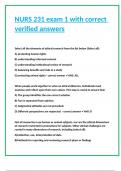
NURS 231 exam 1 with correct
verified answers
Select all the elements of ethical research from the list below (Select all):
||||| ||||| ||||| ||||| ||||| ||||| ||||| ||||| ||||| ||||| ||||| |||||
A) protecting human rights
||||| ||||| |||||
B) understanding informed consent
||||| ||||| |||||
C) understanding institutional review of research
||||| ||||| ||||| ||||| |||||
D) balancing benefits and risks in a study
||||| ||||| ||||| ||||| ||||| ||||| |||||
E) protecting animal rights - correct answer ✔ANS: ALL
||||| ||||| ||||| ||||| ||||| ||||| ||||| |||||
When people work together to solve an ethical dilemma, individuals must
||||| ||||| ||||| ||||| ||||| ||||| ||||| ||||| ||||| ||||| |||||
examine and reflect upon their own values. This step is crucial to ensure that:
||||| ||||| ||||| ||||| ||||| ||||| ||||| ||||| ||||| ||||| ||||| ||||| |||||
A) The group identifies the one correct solution.
||||| ||||| ||||| ||||| ||||| ||||| |||||
B) Fact is separated from opinion.
||||| ||||| ||||| ||||| |||||
C) Judgmental attitudes are not provoked.
||||| ||||| ||||| ||||| |||||
D) Different perspectives are respected. - correct answer ✔ANS: D
||||| ||||| ||||| ||||| ||||| ||||| ||||| ||||| |||||
Not all researchers use human or animal subjects, nor are the ethical dimensions
||||| ||||| ||||| ||||| ||||| ||||| ||||| ||||| ||||| ||||| ||||| ||||| |||||
of research restricted to protections for subjects. Other ethical challenges are
||||| ||||| ||||| ||||| ||||| ||||| ||||| ||||| ||||| ||||| |||||
rooted in many dimensions of research, including (select all):
||||| ||||| ||||| ||||| ||||| ||||| ||||| |||||
A)Collection, use, interpretation of data ||||| ||||| ||||| |||||
B)Methods for reporting and reviewing research plans or findings
||||| ||||| ||||| ||||| ||||| ||||| ||||| |||||
,C)Relationships between researchers ||||| |||||
D)Relationships between researchers and those that will be affected by the ||||| ||||| ||||| ||||| ||||| ||||| ||||| ||||| ||||| ||||| |||||
research
E)How to respond to misunderstandings, disputes, or misconduct - correct
||||| ||||| ||||| ||||| ||||| ||||| ||||| ||||| ||||| |||||
answer ✔ANS: ALL ||||| |||||
Ethical dilemmas are common occurrences in situations that involve healthcare
||||| ||||| ||||| ||||| ||||| ||||| ||||| ||||| ||||| |||||
research. The nurse understands that such dilemmas result from:
||||| ||||| ||||| ||||| ||||| ||||| ||||| ||||| |||||
A) Presence of conflicting values.
||||| ||||| ||||| |||||
B) Hierarchical systems.
||||| |||||
C) Judgmental perceptions of participants or of researchers.
||||| ||||| ||||| ||||| ||||| ||||| |||||
D) Poor communication with participants. - correct answer ✔ANS: A
||||| ||||| ||||| ||||| ||||| ||||| ||||| ||||| |||||
What is the goal of laws to guide medical research?
||||| ||||| ||||| ||||| ||||| ||||| ||||| ||||| |||||
A) To resolve disputes without violence and to protect the health, safety, and
||||| ||||| ||||| ||||| ||||| ||||| ||||| ||||| ||||| ||||| ||||| ||||| |||||
welfare of individuals ||||| |||||
B)To allow lawyers and police to contribute to an ongoing academic discourse.
||||| ||||| ||||| ||||| ||||| ||||| ||||| ||||| ||||| ||||| |||||
C)To promote lawfulness and a morally defensible body of medical research.
||||| ||||| ||||| ||||| ||||| ||||| ||||| ||||| ||||| |||||
D) To reconcile the beliefs of societies comprised of many different religions. -
||||| ||||| ||||| ||||| ||||| ||||| ||||| ||||| ||||| ||||| ||||| ||||| |||||
correct answer ✔ANS: A ||||| ||||| |||||
What are qualities that, according to research, most nurses expect of their
||||| ||||| ||||| ||||| ||||| ||||| ||||| ||||| ||||| ||||| ||||| |||||
leadership? Select all that apply. ||||| ||||| ||||| |||||
Visible
Assertive
Supportive
, Responsive
Laissez-faire - correct answer ✔ANS: A, C, D ||||| ||||| ||||| ||||| ||||| ||||| |||||
Which of the following is NOT a type of research study?
||||| ||||| ||||| ||||| ||||| ||||| ||||| ||||| ||||| ||||| |||||
A)Descriptive
B)Experimental
C)Quasi-experimental
D)Correctional
E)Correlational - correct answer ✔ANS: D ||||| ||||| ||||| ||||| |||||
Which of the following best describes the relationship between qualitative and
||||| ||||| ||||| ||||| ||||| ||||| ||||| ||||| ||||| ||||| |||||
quantitative studies? ||||| |||||
A) There is no such relationship
||||| ||||| ||||| ||||| |||||
B) Quantitative research precedes qualitative research
||||| ||||| ||||| ||||| |||||
C) Without qualitative research, quantitative research cannot adequately be
||||| ||||| ||||| ||||| ||||| ||||| ||||| ||||| |||||
conducted
D) They are equally important, and the order in which they are conducted does
||||| ||||| ||||| ||||| ||||| ||||| ||||| ||||| ||||| ||||| ||||| ||||| ||||| |||||
not matter - correct answer ✔ANS: C
||||| ||||| ||||| ||||| ||||| |||||
Which of the following describe quantitative research? (Select all)
||||| ||||| ||||| ||||| ||||| ||||| ||||| |||||
A) The design of the study is flexible
||||| ||||| ||||| ||||| ||||| ||||| |||||
B) Uses large samples
||||| ||||| |||||
C) Uses small samples
||||| ||||| |||||
D) Studies cause and effect relationships
||||| ||||| ||||| ||||| |||||
E) Useful in generating theories - correct answer ✔ANS: B, D
||||| ||||| ||||| ||||| ||||| ||||| ||||| ||||| ||||| |||||
verified answers
Select all the elements of ethical research from the list below (Select all):
||||| ||||| ||||| ||||| ||||| ||||| ||||| ||||| ||||| ||||| ||||| |||||
A) protecting human rights
||||| ||||| |||||
B) understanding informed consent
||||| ||||| |||||
C) understanding institutional review of research
||||| ||||| ||||| ||||| |||||
D) balancing benefits and risks in a study
||||| ||||| ||||| ||||| ||||| ||||| |||||
E) protecting animal rights - correct answer ✔ANS: ALL
||||| ||||| ||||| ||||| ||||| ||||| ||||| |||||
When people work together to solve an ethical dilemma, individuals must
||||| ||||| ||||| ||||| ||||| ||||| ||||| ||||| ||||| ||||| |||||
examine and reflect upon their own values. This step is crucial to ensure that:
||||| ||||| ||||| ||||| ||||| ||||| ||||| ||||| ||||| ||||| ||||| ||||| |||||
A) The group identifies the one correct solution.
||||| ||||| ||||| ||||| ||||| ||||| |||||
B) Fact is separated from opinion.
||||| ||||| ||||| ||||| |||||
C) Judgmental attitudes are not provoked.
||||| ||||| ||||| ||||| |||||
D) Different perspectives are respected. - correct answer ✔ANS: D
||||| ||||| ||||| ||||| ||||| ||||| ||||| ||||| |||||
Not all researchers use human or animal subjects, nor are the ethical dimensions
||||| ||||| ||||| ||||| ||||| ||||| ||||| ||||| ||||| ||||| ||||| ||||| |||||
of research restricted to protections for subjects. Other ethical challenges are
||||| ||||| ||||| ||||| ||||| ||||| ||||| ||||| ||||| ||||| |||||
rooted in many dimensions of research, including (select all):
||||| ||||| ||||| ||||| ||||| ||||| ||||| |||||
A)Collection, use, interpretation of data ||||| ||||| ||||| |||||
B)Methods for reporting and reviewing research plans or findings
||||| ||||| ||||| ||||| ||||| ||||| ||||| |||||
,C)Relationships between researchers ||||| |||||
D)Relationships between researchers and those that will be affected by the ||||| ||||| ||||| ||||| ||||| ||||| ||||| ||||| ||||| ||||| |||||
research
E)How to respond to misunderstandings, disputes, or misconduct - correct
||||| ||||| ||||| ||||| ||||| ||||| ||||| ||||| ||||| |||||
answer ✔ANS: ALL ||||| |||||
Ethical dilemmas are common occurrences in situations that involve healthcare
||||| ||||| ||||| ||||| ||||| ||||| ||||| ||||| ||||| |||||
research. The nurse understands that such dilemmas result from:
||||| ||||| ||||| ||||| ||||| ||||| ||||| ||||| |||||
A) Presence of conflicting values.
||||| ||||| ||||| |||||
B) Hierarchical systems.
||||| |||||
C) Judgmental perceptions of participants or of researchers.
||||| ||||| ||||| ||||| ||||| ||||| |||||
D) Poor communication with participants. - correct answer ✔ANS: A
||||| ||||| ||||| ||||| ||||| ||||| ||||| ||||| |||||
What is the goal of laws to guide medical research?
||||| ||||| ||||| ||||| ||||| ||||| ||||| ||||| |||||
A) To resolve disputes without violence and to protect the health, safety, and
||||| ||||| ||||| ||||| ||||| ||||| ||||| ||||| ||||| ||||| ||||| ||||| |||||
welfare of individuals ||||| |||||
B)To allow lawyers and police to contribute to an ongoing academic discourse.
||||| ||||| ||||| ||||| ||||| ||||| ||||| ||||| ||||| ||||| |||||
C)To promote lawfulness and a morally defensible body of medical research.
||||| ||||| ||||| ||||| ||||| ||||| ||||| ||||| ||||| |||||
D) To reconcile the beliefs of societies comprised of many different religions. -
||||| ||||| ||||| ||||| ||||| ||||| ||||| ||||| ||||| ||||| ||||| ||||| |||||
correct answer ✔ANS: A ||||| ||||| |||||
What are qualities that, according to research, most nurses expect of their
||||| ||||| ||||| ||||| ||||| ||||| ||||| ||||| ||||| ||||| ||||| |||||
leadership? Select all that apply. ||||| ||||| ||||| |||||
Visible
Assertive
Supportive
, Responsive
Laissez-faire - correct answer ✔ANS: A, C, D ||||| ||||| ||||| ||||| ||||| ||||| |||||
Which of the following is NOT a type of research study?
||||| ||||| ||||| ||||| ||||| ||||| ||||| ||||| ||||| ||||| |||||
A)Descriptive
B)Experimental
C)Quasi-experimental
D)Correctional
E)Correlational - correct answer ✔ANS: D ||||| ||||| ||||| ||||| |||||
Which of the following best describes the relationship between qualitative and
||||| ||||| ||||| ||||| ||||| ||||| ||||| ||||| ||||| ||||| |||||
quantitative studies? ||||| |||||
A) There is no such relationship
||||| ||||| ||||| ||||| |||||
B) Quantitative research precedes qualitative research
||||| ||||| ||||| ||||| |||||
C) Without qualitative research, quantitative research cannot adequately be
||||| ||||| ||||| ||||| ||||| ||||| ||||| ||||| |||||
conducted
D) They are equally important, and the order in which they are conducted does
||||| ||||| ||||| ||||| ||||| ||||| ||||| ||||| ||||| ||||| ||||| ||||| ||||| |||||
not matter - correct answer ✔ANS: C
||||| ||||| ||||| ||||| ||||| |||||
Which of the following describe quantitative research? (Select all)
||||| ||||| ||||| ||||| ||||| ||||| ||||| |||||
A) The design of the study is flexible
||||| ||||| ||||| ||||| ||||| ||||| |||||
B) Uses large samples
||||| ||||| |||||
C) Uses small samples
||||| ||||| |||||
D) Studies cause and effect relationships
||||| ||||| ||||| ||||| |||||
E) Useful in generating theories - correct answer ✔ANS: B, D
||||| ||||| ||||| ||||| ||||| ||||| ||||| ||||| ||||| |||||