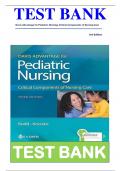
TEST BANK
Davis Advantage for Pediatric Nursing: Critical Components of Nursing Care
3rd Edition
TEST BANK
,Kathryn Rudd: Davis Advantage for Pediatric Nursing: Critical Components of Nursing Care, 3rd Edition
Chapter 1 Issues and Trends in Pediatric Nursing
Multiple Choice
Identify the choice that best completes the statement or answers the question.
1. The nurse has provided a presentation to middle school children about nursing as a career. One of
the children stated that he wanted to be a pediatric nurse, because he wants to take care of babies
and little “kids.” What would be an appropriate response to this middle school–aged child?
1. “Nursing is a general practice; all nurses must know how to take care of all ages of
patients.”
2. “As a pediatric nurse, you would get to care for babies and little kids as well as
children through their teenage years.”
3. “What you are describing is actually a neonatal nurse. Neonatal nurses work with
newborn babies, toddlers, and preschool-age children.”
4. “Being a pediatric nurse requires a master’s degree, so be sure to work hard in
school!”
2. The medical-surgical float nurse is assigned to the pediatric unit for the first time and states that
the skills are “the same as general nursing since children are little adults with smaller bodies.”
What component of pediatric nursing contraindicates this statement?
1. Pediatric nursing involves care based on the developmental level of the patient.
2. Pediatric nursing involves the patient’s family in the plan of care.
3. Pediatric nursing in based on prevention of infectious diseases.
4. Pediatric nursing involves cultural sensitivity in patient care.
3. The culturally sensitive pediatric nurse is aware of the racial makeup of the U.S. population.
Which of the following reflects the demographics of the U.S. pediatric population in 2018, based
on U.S. Census Bureau data?
1. The American Indian and Alaska Native population represent one-fifth of the
pediatric population.
2. About half of the children fall in the category of something other than White non-
Hispanic.
3. The population of Asian children decreased from 2015 to 2018.
4. There was no change in the population of Non-Hispanic children who represent
two or more races between 2015 and 2018.
4. The nurse at a family clinic is providing care to an adolescent patient diagnosed with diabetes. The
patient has verbalized discomfort with the feelings of isolation when unable to drink alcohol with
their friends. Which of the following would be the most appropriate response to this statement?
1. “Drinking alcohol is not only illegal but dangerous for your blood sugar control
and overall well-being.”
2. “You can still drink alcohol, in moderation, if you control the sugar spike with
more insulin.”
3. “Prepare for alcohol intake with more water and less carbohydrates before drinking
to slow sugar spikes.”
4. “It is understandable that you want to be included, but perhaps we can work out a
plan on how to work through those situations.”
,5. Which statement best describes the common core concepts of the different models of pediatric
nursing?
1. All models focus on the open communication between the child and nurse.
2. All models focus on importance of family relationship to the child.
3. All models focus on safeguarding the child’s dignity during care.
4. All models focus on coordination of care needs that arise during illness.
6. Which of the following tasks is associated with the pediatric medical home care model of pediatric
nursing?
1. The nurse refers the family to a childhood cancer support group prior to discharge
from the hospital.
2. The nurse includes a simple explanation of the procedure to the child based on the
child’s developmental level.
3. The nurse includes the family’s cultural celebrations and observations while
providing care to the child.
4. The nurse develops the plan of care with the child and family as the focal point of
the interventions.
7. The pediatric nurse begins a research project on 8-year-old patients with the medical diagnosis of
pediatric acute-onset neuropsychiatric syndrome (PANS). The family has consented to the
research, but as the nurse begins to administer the intervention, the patient refuses to cooperate.
What is the appropriate response to this refusal?
1. The nurse should discuss with the family the options of performing the
intervention without the child’s knowledge.
2. The nurse should explain to the child that this is necessary and promise a reward at
the end of the research project.
3. The nurse should refuse to perform the intervention until the child consents to the
intervention and project.
4. The nurse should discuss the pros and cons of the research project with the child
and focus on the outcomes.
8. A nurse is providing relationship-based care to a pediatric patient. Which of the following is a
challenge the nurse is likely to encounter while using this model of care?
1. Maintaining a sterile field for a procedure with a restless toddler
2. Communicating with the blended family on regular basis
3. Treating children with antibiotic-resistant illnesses
4. Caring for a larger number of children with autism spectrum disorders and
childhood depression
9. The pediatric nurse desires to expand his or her career options to become the hospital’s nurse
educator of pediatrics. Which of the following is necessary for this nurse to achieve this career
goal?
1. The nurse is recommended to earn a minimum of a master’s degree in nursing.
2. The nurse must earn a minimum of a doctorate degree in nursing.
3. The nurse must implement and develop research in nursing practice.
4. The nurse must implement a plan to obtain certification in pediatrics.
,10. The school nurse is developing a teaching session for the population of children in a middle
school. The nurse has determined that the greatest need for the overall health of the children is
promotion of healthy foods. Which of the following interventions is most likely to be effective?
1. Remove all unhealthy snacks from the vending machines.
2. Have a poster contest on healthy eating options.
3. Survey the student population during lunch breaks.
4. Engage the students in healthy choices with cooking lessons.
11. The nurse recognizes the needs of professional development to provide safe and effective care to
the pediatric population by attending which of the following courses?
1. Procedure with rationale to administer human papilloma vaccine to the middle
school population
2. Study review of the incidence of bullying and intimidation in the elementary
school population
3. Demographic study of the U.S. population with regard to cultural diversity and
practices
4. How to provide individual health care education for the children without parental
interference
12. Which of the following continuing education courses would best enhance the pediatric nurse’s
practice in relationship to current trends?
1. Evidence-based practice on improving antibiotic adherence with education to the
family unit
2. Evidence-based practice on proper administration of antibiotics for children with
autoimmune diseases
3. How to enhance communication with children in regards to adherence to antibiotic
use
4. How to decrease instances of exacerbation of infections of children with
autoimmune diseases with antibiotics
13. The pediatric nurse is developing interventions for a school-aged child based on the nursing
diagnosis of imbalanced nutrition related to a body mass index (BMI) of 37 and poor food choices
as evidenced by patient’s mother’s food diary for the family and child’s statements of food
preferences. Which of the following would be an appropriate nursing intervention?
1. Provide the child and family with information from https://www.MyPlate.gov for
healthy food options.
2. Increase the child’s activity by incorporating the child’s friends into a plan of
healthy exercise options.
3. Explain the importance of balancing diet and exercise to prevent obesity to the
child and family.
4. Provide information on the increased risk for potential disease processes such as
diabetes and hypertension.
14. The nurse is developing interventions for a transgender adolescent based on the nursing diagnosis
decreased self-esteem related to transgender identity as evidenced by statements of feeling
“worthless, different, and alone.” What would be the most appropriate intervention based on the
diagnosis?
1. Give positive feedback on personal choices as appropriate.
, 2. Provide gender-affirming care to transgender youth.
3. Provide information on support groups for patient and family.
4. Assess risk factors for depression and suicidal thoughts.
15. The pediatric nurse is providing care to an 8-year-old client who has Down’s syndrome and wants
to ensure they are providing evidence-based care. Which of the following resources would best
offer evidence-based practice guidelines related to the care of this patient?
1. Journal of Specialists in Pediatric Nursing
2. Journal of Child and Adolescent Psychiatric Nursing
3. National Database of Nursing Quality Indicators
4. American Journal of Maternal/Child Nursing
Multiple Response
Identify one or more choices that best complete the statement or answer the question.
16. The nurse must obtain data for a routine assessment of the 8-month-old patient. Which of the
following are part of that assessment? Select all that apply.
1. Measure the head circumference and record results.
2. Enter length and weight in the growth chart.
3. Assess bilateral hand grasp strength and function.
4. Input the Tanner scale results in the chart.
5. List most recent immunizations in the chart.
17. Which of the following examples accurately represent the unique role of the pediatric nurse? Select
all that apply.
1. The nurse developed an intervention that correlated with the patient’s particular
cultural practice.
2. The nurse shared information on the progress and interventions with the family
and patient.
3. The nurse engaged in one-to-one conversations with the family members as well as
the patient.
4. The nurse requested the family to leave during invasive procedures to maintain
privacy.
5. The nurse developed interventions based on the knowledge of human growth and
development.
18. The nurse is developing a health fair for children aged 5 and 6 years. Which of the following
would be appropriate topics for this population based on current trends? Select all that apply.
1. How to deal with bullying on the Internet
2. How to prevent the flu with hand washing
3. How to choose and eat healthy foods
4. How to recognize suicidal thoughts
5. Ways to stay active and stay healthy
,19. The qschool qnurse qis qproviding qcare qto qthe qstudent qpopulation qin qthe qurban qelementary
qschool. qThe qnurse qnotes qthat qthe qchildren qdo qnot qfeel qsafe qplaying qoutside qduring
qrecess qdue qto qthe qrecent qviolent qincidents qin qthe qsurrounding qarea. qWhat qare qsome
qdisease qprocesses qthat qthe qnurse qmay qnotice qdue qto qthis qinactivity? qSelect qall qthat
qapply.
1. The qgeneral qpopulation qis qat qhigher qrisk qfor qobesity.
2. The qstudents qare qat qhigher qrisk qfor qincreased qbullying.
3. The qstudents qare qat qa qhigher qrisk qfor qlearning qdisabilities.
4. The qstudents qare qat qhigher qrisk qfor qdiabetes qmellitus.
5. The qstudents qare qat qhigher qrisk qfor qearlier qonset qof qpuberty.
q 20. qThe qpediatric qnurse qis qproviding qcare qto qa q5-year-old qpatient qfor qspeech
qimpediments qthat qwere qcaused qby qrepeated qincidences qof qotitis qmedia. qWhich qof
qthe qfollowing qis qan qexample qof qcurrent qissues qregarding qthis qtype qof qmedical
qproblem? qSelect qall qthat qapply.
1. Increased qadmissions qbased qon qenvironmental qrisk qfactors, qsuch qas qsmoking
2. Increased qadmissions qbased qon qknowledge qdeficits qdue qto qlanguage qbarriers
3. Increased qawareness qof qchildhood qhealth qissues qfrom qsocial qmedia qand qInternet
4. Shift qin qthe qfocus qof qmedical qcare qfrom qdisease qtreatment qto qdisease qprevention
5. Deficient qknowledge qthat qhas qnegatively qimpacted qthe qadherence qto qthe
qantibiotic qregimen
, Chapter q1 qIssues qand qTrends qin qPediatric
qNursing qAnswer qSection
MULTIPLE qCHOICE
1. ANS: q 2
Chapter: qChapter q1 qIssues qand qTrends qin qPediatric
qNursing qChapter qLearning qObjective: q1. qDefine
qpediatric q nursing. qPage: q3
Heading: qIntroduction qto qPediatric
qNursing qIntegrated qProcesses: qTeaching
qand qLearning qClient qNeed:
qPsychosocial qIntegrity qCognitive qLevel:
qApplication q[Applying] qConcept:
qCognition
Difficulty: qModerate
Feedback
1 This qis qincorrect. qNurses qcan qspecialize qin qa qnumber qof qareas. qPediatrics
qis qone qof qthese qareas.
2 This qis qcorrect. qPediatric qnursing qcare qrequires qthe qnurse qto quse
qassessment qand qevaluation qtools qthat qare qunique qto qinfants, qchildren, qand
qadolescent qpopulations,
not qjust qbabies qand qyoung qchildren.
3 This qis qincorrect. qThis qis qnot qaccurate. qNeonatal qnurses qtypically qprovide
qcare qto qinfants. qThey qwould qnot qprovide qcare qto qtoddlers qor qpreschool-
age qchildren.
4 This qis qincorrect. qA qmaster’s qdegree qis qnot qrequired qto qbe qa qpediatric
qnurse.
However, qadvanced qdegrees qand qadditional qcertification qare qavailable qfor
qpediatric qnurses.
PTS: 1 CON: q Cognition
2. ANS: q 1
Chapter: qChapter q1 qIssues qand qTrends qin qPediatric qNursing
Chapter qLearning qObjective: q7. qDescribe qthe qroles qof qthe
qpediatric qnurse. qPage: q3
Heading: qIntroduction qto qPediatric qNursing q> qNursing qCare qfor
qChildren qIntegrated qProcesses: qNursing qProcess
Client qNeed: qPhysiological qIntegrity: qReduction qof qRisk qPotential
qCognitive qLevel: qAnalysis q[Analyzing]
Concept: qSafety
qDifficulty: qModerate
Feedback
Davis Advantage for Pediatric Nursing: Critical Components of Nursing Care
3rd Edition
TEST BANK
,Kathryn Rudd: Davis Advantage for Pediatric Nursing: Critical Components of Nursing Care, 3rd Edition
Chapter 1 Issues and Trends in Pediatric Nursing
Multiple Choice
Identify the choice that best completes the statement or answers the question.
1. The nurse has provided a presentation to middle school children about nursing as a career. One of
the children stated that he wanted to be a pediatric nurse, because he wants to take care of babies
and little “kids.” What would be an appropriate response to this middle school–aged child?
1. “Nursing is a general practice; all nurses must know how to take care of all ages of
patients.”
2. “As a pediatric nurse, you would get to care for babies and little kids as well as
children through their teenage years.”
3. “What you are describing is actually a neonatal nurse. Neonatal nurses work with
newborn babies, toddlers, and preschool-age children.”
4. “Being a pediatric nurse requires a master’s degree, so be sure to work hard in
school!”
2. The medical-surgical float nurse is assigned to the pediatric unit for the first time and states that
the skills are “the same as general nursing since children are little adults with smaller bodies.”
What component of pediatric nursing contraindicates this statement?
1. Pediatric nursing involves care based on the developmental level of the patient.
2. Pediatric nursing involves the patient’s family in the plan of care.
3. Pediatric nursing in based on prevention of infectious diseases.
4. Pediatric nursing involves cultural sensitivity in patient care.
3. The culturally sensitive pediatric nurse is aware of the racial makeup of the U.S. population.
Which of the following reflects the demographics of the U.S. pediatric population in 2018, based
on U.S. Census Bureau data?
1. The American Indian and Alaska Native population represent one-fifth of the
pediatric population.
2. About half of the children fall in the category of something other than White non-
Hispanic.
3. The population of Asian children decreased from 2015 to 2018.
4. There was no change in the population of Non-Hispanic children who represent
two or more races between 2015 and 2018.
4. The nurse at a family clinic is providing care to an adolescent patient diagnosed with diabetes. The
patient has verbalized discomfort with the feelings of isolation when unable to drink alcohol with
their friends. Which of the following would be the most appropriate response to this statement?
1. “Drinking alcohol is not only illegal but dangerous for your blood sugar control
and overall well-being.”
2. “You can still drink alcohol, in moderation, if you control the sugar spike with
more insulin.”
3. “Prepare for alcohol intake with more water and less carbohydrates before drinking
to slow sugar spikes.”
4. “It is understandable that you want to be included, but perhaps we can work out a
plan on how to work through those situations.”
,5. Which statement best describes the common core concepts of the different models of pediatric
nursing?
1. All models focus on the open communication between the child and nurse.
2. All models focus on importance of family relationship to the child.
3. All models focus on safeguarding the child’s dignity during care.
4. All models focus on coordination of care needs that arise during illness.
6. Which of the following tasks is associated with the pediatric medical home care model of pediatric
nursing?
1. The nurse refers the family to a childhood cancer support group prior to discharge
from the hospital.
2. The nurse includes a simple explanation of the procedure to the child based on the
child’s developmental level.
3. The nurse includes the family’s cultural celebrations and observations while
providing care to the child.
4. The nurse develops the plan of care with the child and family as the focal point of
the interventions.
7. The pediatric nurse begins a research project on 8-year-old patients with the medical diagnosis of
pediatric acute-onset neuropsychiatric syndrome (PANS). The family has consented to the
research, but as the nurse begins to administer the intervention, the patient refuses to cooperate.
What is the appropriate response to this refusal?
1. The nurse should discuss with the family the options of performing the
intervention without the child’s knowledge.
2. The nurse should explain to the child that this is necessary and promise a reward at
the end of the research project.
3. The nurse should refuse to perform the intervention until the child consents to the
intervention and project.
4. The nurse should discuss the pros and cons of the research project with the child
and focus on the outcomes.
8. A nurse is providing relationship-based care to a pediatric patient. Which of the following is a
challenge the nurse is likely to encounter while using this model of care?
1. Maintaining a sterile field for a procedure with a restless toddler
2. Communicating with the blended family on regular basis
3. Treating children with antibiotic-resistant illnesses
4. Caring for a larger number of children with autism spectrum disorders and
childhood depression
9. The pediatric nurse desires to expand his or her career options to become the hospital’s nurse
educator of pediatrics. Which of the following is necessary for this nurse to achieve this career
goal?
1. The nurse is recommended to earn a minimum of a master’s degree in nursing.
2. The nurse must earn a minimum of a doctorate degree in nursing.
3. The nurse must implement and develop research in nursing practice.
4. The nurse must implement a plan to obtain certification in pediatrics.
,10. The school nurse is developing a teaching session for the population of children in a middle
school. The nurse has determined that the greatest need for the overall health of the children is
promotion of healthy foods. Which of the following interventions is most likely to be effective?
1. Remove all unhealthy snacks from the vending machines.
2. Have a poster contest on healthy eating options.
3. Survey the student population during lunch breaks.
4. Engage the students in healthy choices with cooking lessons.
11. The nurse recognizes the needs of professional development to provide safe and effective care to
the pediatric population by attending which of the following courses?
1. Procedure with rationale to administer human papilloma vaccine to the middle
school population
2. Study review of the incidence of bullying and intimidation in the elementary
school population
3. Demographic study of the U.S. population with regard to cultural diversity and
practices
4. How to provide individual health care education for the children without parental
interference
12. Which of the following continuing education courses would best enhance the pediatric nurse’s
practice in relationship to current trends?
1. Evidence-based practice on improving antibiotic adherence with education to the
family unit
2. Evidence-based practice on proper administration of antibiotics for children with
autoimmune diseases
3. How to enhance communication with children in regards to adherence to antibiotic
use
4. How to decrease instances of exacerbation of infections of children with
autoimmune diseases with antibiotics
13. The pediatric nurse is developing interventions for a school-aged child based on the nursing
diagnosis of imbalanced nutrition related to a body mass index (BMI) of 37 and poor food choices
as evidenced by patient’s mother’s food diary for the family and child’s statements of food
preferences. Which of the following would be an appropriate nursing intervention?
1. Provide the child and family with information from https://www.MyPlate.gov for
healthy food options.
2. Increase the child’s activity by incorporating the child’s friends into a plan of
healthy exercise options.
3. Explain the importance of balancing diet and exercise to prevent obesity to the
child and family.
4. Provide information on the increased risk for potential disease processes such as
diabetes and hypertension.
14. The nurse is developing interventions for a transgender adolescent based on the nursing diagnosis
decreased self-esteem related to transgender identity as evidenced by statements of feeling
“worthless, different, and alone.” What would be the most appropriate intervention based on the
diagnosis?
1. Give positive feedback on personal choices as appropriate.
, 2. Provide gender-affirming care to transgender youth.
3. Provide information on support groups for patient and family.
4. Assess risk factors for depression and suicidal thoughts.
15. The pediatric nurse is providing care to an 8-year-old client who has Down’s syndrome and wants
to ensure they are providing evidence-based care. Which of the following resources would best
offer evidence-based practice guidelines related to the care of this patient?
1. Journal of Specialists in Pediatric Nursing
2. Journal of Child and Adolescent Psychiatric Nursing
3. National Database of Nursing Quality Indicators
4. American Journal of Maternal/Child Nursing
Multiple Response
Identify one or more choices that best complete the statement or answer the question.
16. The nurse must obtain data for a routine assessment of the 8-month-old patient. Which of the
following are part of that assessment? Select all that apply.
1. Measure the head circumference and record results.
2. Enter length and weight in the growth chart.
3. Assess bilateral hand grasp strength and function.
4. Input the Tanner scale results in the chart.
5. List most recent immunizations in the chart.
17. Which of the following examples accurately represent the unique role of the pediatric nurse? Select
all that apply.
1. The nurse developed an intervention that correlated with the patient’s particular
cultural practice.
2. The nurse shared information on the progress and interventions with the family
and patient.
3. The nurse engaged in one-to-one conversations with the family members as well as
the patient.
4. The nurse requested the family to leave during invasive procedures to maintain
privacy.
5. The nurse developed interventions based on the knowledge of human growth and
development.
18. The nurse is developing a health fair for children aged 5 and 6 years. Which of the following
would be appropriate topics for this population based on current trends? Select all that apply.
1. How to deal with bullying on the Internet
2. How to prevent the flu with hand washing
3. How to choose and eat healthy foods
4. How to recognize suicidal thoughts
5. Ways to stay active and stay healthy
,19. The qschool qnurse qis qproviding qcare qto qthe qstudent qpopulation qin qthe qurban qelementary
qschool. qThe qnurse qnotes qthat qthe qchildren qdo qnot qfeel qsafe qplaying qoutside qduring
qrecess qdue qto qthe qrecent qviolent qincidents qin qthe qsurrounding qarea. qWhat qare qsome
qdisease qprocesses qthat qthe qnurse qmay qnotice qdue qto qthis qinactivity? qSelect qall qthat
qapply.
1. The qgeneral qpopulation qis qat qhigher qrisk qfor qobesity.
2. The qstudents qare qat qhigher qrisk qfor qincreased qbullying.
3. The qstudents qare qat qa qhigher qrisk qfor qlearning qdisabilities.
4. The qstudents qare qat qhigher qrisk qfor qdiabetes qmellitus.
5. The qstudents qare qat qhigher qrisk qfor qearlier qonset qof qpuberty.
q 20. qThe qpediatric qnurse qis qproviding qcare qto qa q5-year-old qpatient qfor qspeech
qimpediments qthat qwere qcaused qby qrepeated qincidences qof qotitis qmedia. qWhich qof
qthe qfollowing qis qan qexample qof qcurrent qissues qregarding qthis qtype qof qmedical
qproblem? qSelect qall qthat qapply.
1. Increased qadmissions qbased qon qenvironmental qrisk qfactors, qsuch qas qsmoking
2. Increased qadmissions qbased qon qknowledge qdeficits qdue qto qlanguage qbarriers
3. Increased qawareness qof qchildhood qhealth qissues qfrom qsocial qmedia qand qInternet
4. Shift qin qthe qfocus qof qmedical qcare qfrom qdisease qtreatment qto qdisease qprevention
5. Deficient qknowledge qthat qhas qnegatively qimpacted qthe qadherence qto qthe
qantibiotic qregimen
, Chapter q1 qIssues qand qTrends qin qPediatric
qNursing qAnswer qSection
MULTIPLE qCHOICE
1. ANS: q 2
Chapter: qChapter q1 qIssues qand qTrends qin qPediatric
qNursing qChapter qLearning qObjective: q1. qDefine
qpediatric q nursing. qPage: q3
Heading: qIntroduction qto qPediatric
qNursing qIntegrated qProcesses: qTeaching
qand qLearning qClient qNeed:
qPsychosocial qIntegrity qCognitive qLevel:
qApplication q[Applying] qConcept:
qCognition
Difficulty: qModerate
Feedback
1 This qis qincorrect. qNurses qcan qspecialize qin qa qnumber qof qareas. qPediatrics
qis qone qof qthese qareas.
2 This qis qcorrect. qPediatric qnursing qcare qrequires qthe qnurse qto quse
qassessment qand qevaluation qtools qthat qare qunique qto qinfants, qchildren, qand
qadolescent qpopulations,
not qjust qbabies qand qyoung qchildren.
3 This qis qincorrect. qThis qis qnot qaccurate. qNeonatal qnurses qtypically qprovide
qcare qto qinfants. qThey qwould qnot qprovide qcare qto qtoddlers qor qpreschool-
age qchildren.
4 This qis qincorrect. qA qmaster’s qdegree qis qnot qrequired qto qbe qa qpediatric
qnurse.
However, qadvanced qdegrees qand qadditional qcertification qare qavailable qfor
qpediatric qnurses.
PTS: 1 CON: q Cognition
2. ANS: q 1
Chapter: qChapter q1 qIssues qand qTrends qin qPediatric qNursing
Chapter qLearning qObjective: q7. qDescribe qthe qroles qof qthe
qpediatric qnurse. qPage: q3
Heading: qIntroduction qto qPediatric qNursing q> qNursing qCare qfor
qChildren qIntegrated qProcesses: qNursing qProcess
Client qNeed: qPhysiological qIntegrity: qReduction qof qRisk qPotential
qCognitive qLevel: qAnalysis q[Analyzing]
Concept: qSafety
qDifficulty: qModerate
Feedback