

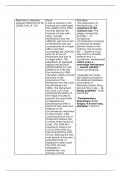
R(Jackson) v Attorney Facts Principles
General [2005] UK HL 56 J had an interest in fox “the Supremacy of
[2005] 3 W.L.R. 733 hunting and challenged Parliament is … a
the validity of the 2004 construct of the
Act that banned the common law. The
hunting of foxes with judges created this
dogs. J sought principle … In
declarations that the exceptional
1949 Act was not an Act circumstances involving
of Parliament and was an attempt to abolish
consequently of no legal judicial review or the
effect, and that ordinary role of courts,
accordingly the 2004 Act the … Supreme Court
was not an Act of may have to consider
Parliament and was of whether this is a
no legal effect. The constitution fundamental
appellants (J) appealed which even a
against the decision sovereign Parliament
([2005] EWCA Civ 126, … cannot abolish.”
[2005] Q.B. 579) that [102] Lord Bingham
the Hunting Act 2004
had been validly enacted “gradually but surely,
pursuant to the the English principle of
provisions of the the absolute legislative
Parliament Act 1911 and sovereignty of
the Parliament Act Parliament which Dicey
1949 . The Parliament derived from Coke … is
Act 1911 s.2(1) had being qualified.” [104]
restricted the ability of Lord Hope
the House of Lords to
prevent the enactment “Parliamentary
of legislation by Supremacy is no
providing that after a longer, if it ever was,
period of two years had absolute” [104] LH
elapsed in the
circumstances described
in that section, a Bill
could become an Act of
Parliament without the
consent of the House of
Lords. The 1949 Act,
enacted in reliance on
s.2(1) of the 1911 Act,
had amended the 1911
Act by reducing the two-
year period to one year. J
submitted that (1)
legislation made under
the 1911 Act was
delegated or
subordinate, not
primary; (2) the
, legislative power
conferred by s.2(1) of
the 1911 Act was not
unlimited in scope; (3)
the amendments made
by the 1949 Act were
not authorised and that
Act was invalid. Held,
dismissing the appeal,
that (1) the 1911 Act
provided that legislation
made in accordance with
s.2 would be an Act of
Parliament. There was
nothing in the 1911
Act which would
preclude it being
amended by the
procedure laid down
in the 1949 Act and
the 1949 Act and the
2004 Act were Acts of
Parliament of full
legal effect.
Allister v Secretary of The appellants appealed “the most fundamental
State for Northern against the refusal of rule of UK constitutional
Ireland [2023] UKSC 5 their applications for law is that Parliament …
[2023] 2 W.L.R. 457 judicial review of the is sovereign” [66] Lord
lawfulness of the Stephens
Protocol on
Ireland/Northern Ireland
(which was given effect
by the EU (Withdrawal)
Act 2018 s7(a)). The
Protocol contained
bespoke arrangements
to ensure continued co-
operation between
Northern Ireland (NI) and
the Republic of Ireland
following the UK's
withdrawal from the EU;
to avoid a hard border
between the two; and to
protect the agreements
for peace between the
communities of NI.
Effectively, NI
remained in the EU
single market for
goods and some EU
laws continued to be
applied there. The
appellants sought
General [2005] UK HL 56 J had an interest in fox “the Supremacy of
[2005] 3 W.L.R. 733 hunting and challenged Parliament is … a
the validity of the 2004 construct of the
Act that banned the common law. The
hunting of foxes with judges created this
dogs. J sought principle … In
declarations that the exceptional
1949 Act was not an Act circumstances involving
of Parliament and was an attempt to abolish
consequently of no legal judicial review or the
effect, and that ordinary role of courts,
accordingly the 2004 Act the … Supreme Court
was not an Act of may have to consider
Parliament and was of whether this is a
no legal effect. The constitution fundamental
appellants (J) appealed which even a
against the decision sovereign Parliament
([2005] EWCA Civ 126, … cannot abolish.”
[2005] Q.B. 579) that [102] Lord Bingham
the Hunting Act 2004
had been validly enacted “gradually but surely,
pursuant to the the English principle of
provisions of the the absolute legislative
Parliament Act 1911 and sovereignty of
the Parliament Act Parliament which Dicey
1949 . The Parliament derived from Coke … is
Act 1911 s.2(1) had being qualified.” [104]
restricted the ability of Lord Hope
the House of Lords to
prevent the enactment “Parliamentary
of legislation by Supremacy is no
providing that after a longer, if it ever was,
period of two years had absolute” [104] LH
elapsed in the
circumstances described
in that section, a Bill
could become an Act of
Parliament without the
consent of the House of
Lords. The 1949 Act,
enacted in reliance on
s.2(1) of the 1911 Act,
had amended the 1911
Act by reducing the two-
year period to one year. J
submitted that (1)
legislation made under
the 1911 Act was
delegated or
subordinate, not
primary; (2) the
, legislative power
conferred by s.2(1) of
the 1911 Act was not
unlimited in scope; (3)
the amendments made
by the 1949 Act were
not authorised and that
Act was invalid. Held,
dismissing the appeal,
that (1) the 1911 Act
provided that legislation
made in accordance with
s.2 would be an Act of
Parliament. There was
nothing in the 1911
Act which would
preclude it being
amended by the
procedure laid down
in the 1949 Act and
the 1949 Act and the
2004 Act were Acts of
Parliament of full
legal effect.
Allister v Secretary of The appellants appealed “the most fundamental
State for Northern against the refusal of rule of UK constitutional
Ireland [2023] UKSC 5 their applications for law is that Parliament …
[2023] 2 W.L.R. 457 judicial review of the is sovereign” [66] Lord
lawfulness of the Stephens
Protocol on
Ireland/Northern Ireland
(which was given effect
by the EU (Withdrawal)
Act 2018 s7(a)). The
Protocol contained
bespoke arrangements
to ensure continued co-
operation between
Northern Ireland (NI) and
the Republic of Ireland
following the UK's
withdrawal from the EU;
to avoid a hard border
between the two; and to
protect the agreements
for peace between the
communities of NI.
Effectively, NI
remained in the EU
single market for
goods and some EU
laws continued to be
applied there. The
appellants sought


