

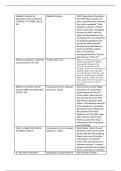
Padfield v Minister for Padfield Principle S19(3) Agricultural Marketing
Agriculture, Food & Fisheries Act 1958 allows ministers to
[1968] AC 997 [1968] 2 W.L.R. refer complaints about the way
924 that milk is marketed “if the
minister so directs”, minister
chose not to refer a complaint
because he didn’t want the
policy he advocated for to be
complained of as he wished for
his political reputation to be
preserved. Held: unlawful
decision as his discretionary
powers granted by statute
were not exercised
consistently with the “objects
and purpose” of the Act.
Fulham Corporation v Attorney “Simple ultra vires” Bath and Washhouses Acts
General [1921] 1 Ch. 440 1846 (repealed) to 1878
(repealed) allowed the
council to operate wash
houses, they then decided to
operate them as a laundry
so individuals would pay the
council employees to wash
their clothes. Held: the Act
only gave them the power to
run a wash house, not a
laundry.
Wheeler v Leicester County Using powers for an improper Some of the Leicester Rugby
Council [1985] AC 1054 [1985] purpose or motive Club broke the South Africa
3 W.L.R. 335 rugby boycott and the City
Council didn’t allow them to
use the grounds as the Club
had failed to discipline their
players. This decision was held
to be unlawful as 1. Breaking
the boycott wasn’t illegal and
the purpose of the Race
Relations Act 1976 didn’t align
with what the City Council’s
intent to punish the club, it
only governs the recreational
use of facilities.
Porter v Magill [2001] UK HL Using powers for an improper Westminster County Council
67 [2002] 2 WLR 37 purpose or motive decided to sell council-owned
homes with the aim of getting
labour voters out of London
and luring in conservative
voters. This was held to be an
improper purpose – a proper
purpose would be encouraging
home ownership, for example.
R v Secretary of State for Taking into account irrelevant The Secretary of State
, Home Department, ex parte considerations or failing to determined the prison
Venables & Thompson [1998] take into account relevant sentence and gave the two
AC 407 [1997] 3 W.L.R. 23 considerations. boys the maximum after they
turned 18 for the killing of
James Bulger. The purpose of
the Children and Young
Persons Act 1933 was to
consider what sentence should
be given in the interests of
justice. The Secretary
considered a public opinion
poll in determining the
sentence length. Held:
unlawful decision as the public
opinion poll was an irrelevant
factor that he took into
consideration and the majority
of judges said that as the
Secretary of State had quasi-
judicial powers, then he
should’ve acted objectively
and impartially.
R v Secretary of State for Taking into account irrelevant A dam was constructed by the
Home Department, ex parte considerations or failing to Pergau River using British
World Development take into account relevant money. In Overseas
Movement [1995] 1 WLR 386 considerations.
Development and Co-
operation Act 1980, there
were factors listed that the
Secretary of State should
consider and one of them was
economic viability – it was not
an economically viable project.
He refused to abandon it and
stated that diplomacy was a
factor he considered. Held: it
was an unlawful decision as
diplomacy wasn’t a listed
factor and thus was irrelevant.
British Oxygen v Minister of “Fettering” discretion British Oxygen made a bid for
Technology [1971] AC 610 investment grants but the
[1969] 2 W.L.R. 892 Minister said he’d only
consider bids for items that
were a minimum price of £25 –
but the purpose of the
Industrial Development Act
1966 was exactly to help
companies such as British
Oxygen. Held: unlawful
decision as his policy was so
narrow and rigid that it
Agriculture, Food & Fisheries Act 1958 allows ministers to
[1968] AC 997 [1968] 2 W.L.R. refer complaints about the way
924 that milk is marketed “if the
minister so directs”, minister
chose not to refer a complaint
because he didn’t want the
policy he advocated for to be
complained of as he wished for
his political reputation to be
preserved. Held: unlawful
decision as his discretionary
powers granted by statute
were not exercised
consistently with the “objects
and purpose” of the Act.
Fulham Corporation v Attorney “Simple ultra vires” Bath and Washhouses Acts
General [1921] 1 Ch. 440 1846 (repealed) to 1878
(repealed) allowed the
council to operate wash
houses, they then decided to
operate them as a laundry
so individuals would pay the
council employees to wash
their clothes. Held: the Act
only gave them the power to
run a wash house, not a
laundry.
Wheeler v Leicester County Using powers for an improper Some of the Leicester Rugby
Council [1985] AC 1054 [1985] purpose or motive Club broke the South Africa
3 W.L.R. 335 rugby boycott and the City
Council didn’t allow them to
use the grounds as the Club
had failed to discipline their
players. This decision was held
to be unlawful as 1. Breaking
the boycott wasn’t illegal and
the purpose of the Race
Relations Act 1976 didn’t align
with what the City Council’s
intent to punish the club, it
only governs the recreational
use of facilities.
Porter v Magill [2001] UK HL Using powers for an improper Westminster County Council
67 [2002] 2 WLR 37 purpose or motive decided to sell council-owned
homes with the aim of getting
labour voters out of London
and luring in conservative
voters. This was held to be an
improper purpose – a proper
purpose would be encouraging
home ownership, for example.
R v Secretary of State for Taking into account irrelevant The Secretary of State
, Home Department, ex parte considerations or failing to determined the prison
Venables & Thompson [1998] take into account relevant sentence and gave the two
AC 407 [1997] 3 W.L.R. 23 considerations. boys the maximum after they
turned 18 for the killing of
James Bulger. The purpose of
the Children and Young
Persons Act 1933 was to
consider what sentence should
be given in the interests of
justice. The Secretary
considered a public opinion
poll in determining the
sentence length. Held:
unlawful decision as the public
opinion poll was an irrelevant
factor that he took into
consideration and the majority
of judges said that as the
Secretary of State had quasi-
judicial powers, then he
should’ve acted objectively
and impartially.
R v Secretary of State for Taking into account irrelevant A dam was constructed by the
Home Department, ex parte considerations or failing to Pergau River using British
World Development take into account relevant money. In Overseas
Movement [1995] 1 WLR 386 considerations.
Development and Co-
operation Act 1980, there
were factors listed that the
Secretary of State should
consider and one of them was
economic viability – it was not
an economically viable project.
He refused to abandon it and
stated that diplomacy was a
factor he considered. Held: it
was an unlawful decision as
diplomacy wasn’t a listed
factor and thus was irrelevant.
British Oxygen v Minister of “Fettering” discretion British Oxygen made a bid for
Technology [1971] AC 610 investment grants but the
[1969] 2 W.L.R. 892 Minister said he’d only
consider bids for items that
were a minimum price of £25 –
but the purpose of the
Industrial Development Act
1966 was exactly to help
companies such as British
Oxygen. Held: unlawful
decision as his policy was so
narrow and rigid that it


