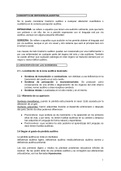
CHRONOLOGICAL ORDER (key dates)
1. Galen (theory of opposites)
2. Vesalius - 1543 (anatomy disproved 300 of Galen’s ideas - published Fabric of the Human Body)
3. Paré – 1564 (promoted ligatures instead of cauterisation)
4. Harvey - 1628 (Blood circulation - ideas published)
5. Edward Jenner - 1796 (Smallpox Vaccine)
a. 1853 – smallpox vaccine becomes compulsory in Britain
6. James Simpson - 1847 (chloroform as an anaesthetic)
7. John Snow - 1854 (cholera and water source)
8. Pasteur - 1861 (Germ Theory and vaccines)
9. Koch – 1882
10. Joseph Lister – 1867 (carbolic acid as an antiseptic)
11. Fleming - 1928 (discovered penicillin)
12. Florey + Chain – 1939 WW2 (mass production of penicillin)
13. Crick + Watson + Franklin - 1953 (DNA structure)
Key reasons for continuity and change
Reasons for continuity Reasons for change
● Religion (banned discretion, ● Technology (Printing press allowed for communication of
only published work that ideas) - Renaissance
agreed with Galen) - Middle ● Technology (microscopes allowed for Germ Theory) -
Ages + Renaissance Industrial Revolution
● Individual Genius (no new ● Technology (electron microscope discovered, hi-tech
medical discoveries during treatment) - present day to 20th century
middle ages, during ● Science (Germ Theory disproved Spontaneous
Renaissance new Generation/misma, Koch, vaccines) - Industrial Revolution
discoveries mainly anatomy ● Science (DNA) - 20th century to present day
based not cause, treatment, ● War (Franco-Prussian war sped up Germ Theory and vaccine
prevention) research between Pasteur and Koch + Crimean War for
● Technology (microscopes Nightingale) - Industrial Revolution
not enough to prove ● War (WWs sped up need to change with new injuries + Blood
capillaries exist, Harvey) Banks)
● Science (Jenner couldn’t ● Government (funded Nightingale, made Smallpox Vaccine
prove why Smallpox Vaccine mandatory in 1852, public health acts) - Industrial Revolution
worked and John Snow ● Government (lifestyle campaigns, Clean Air acts, NHS set up
couldn’t prove why cholera by labour govt.) - 20th century present day
waterborne) ● Individual genius (Vesalius, Harvey, , Jenner, Chadwick,
● Government (laissez-faire Simpson, Lister, John Snow, Nightingale, Pasteur, Koch,
attitude until end of Landsteiner, Ehrlich, Fleming, Domagk, Florey + Chain,
Industrial Revolution) Beveridge, Watson + Crick, Franklin + Wilkins)
● War (slows down research) ● Chance (chloroform and chicken cholera vaccine) - Industrial
● Communication (some Revolution
people don’t publish ideas) ● Chance (penicillin discovery) - 20th century to present day
● Royal Society (setup 1660 encourages medical discussion
and new ideas)
● Attitudes in society (move away from christianity to
humanism)
● Universities removed from church in Renaissance
● 4 cholera epidemics, Great Stink and men get vote in mid
1800s to remove govt. laissez-faire attitude
Flash card practice with - Key dates and western front facts
1. Galen (theory of opposites)
2. Vesalius - 1543 (anatomy disproved 300 of Galen’s ideas - published Fabric of the Human Body)
3. Paré – 1564 (promoted ligatures instead of cauterisation)
4. Harvey - 1628 (Blood circulation - ideas published)
5. Edward Jenner - 1796 (Smallpox Vaccine)
a. 1853 – smallpox vaccine becomes compulsory in Britain
6. James Simpson - 1847 (chloroform as an anaesthetic)
7. John Snow - 1854 (cholera and water source)
8. Pasteur - 1861 (Germ Theory and vaccines)
9. Koch – 1882
10. Joseph Lister – 1867 (carbolic acid as an antiseptic)
11. Fleming - 1928 (discovered penicillin)
12. Florey + Chain – 1939 WW2 (mass production of penicillin)
13. Crick + Watson + Franklin - 1953 (DNA structure)
Key reasons for continuity and change
Reasons for continuity Reasons for change
● Religion (banned discretion, ● Technology (Printing press allowed for communication of
only published work that ideas) - Renaissance
agreed with Galen) - Middle ● Technology (microscopes allowed for Germ Theory) -
Ages + Renaissance Industrial Revolution
● Individual Genius (no new ● Technology (electron microscope discovered, hi-tech
medical discoveries during treatment) - present day to 20th century
middle ages, during ● Science (Germ Theory disproved Spontaneous
Renaissance new Generation/misma, Koch, vaccines) - Industrial Revolution
discoveries mainly anatomy ● Science (DNA) - 20th century to present day
based not cause, treatment, ● War (Franco-Prussian war sped up Germ Theory and vaccine
prevention) research between Pasteur and Koch + Crimean War for
● Technology (microscopes Nightingale) - Industrial Revolution
not enough to prove ● War (WWs sped up need to change with new injuries + Blood
capillaries exist, Harvey) Banks)
● Science (Jenner couldn’t ● Government (funded Nightingale, made Smallpox Vaccine
prove why Smallpox Vaccine mandatory in 1852, public health acts) - Industrial Revolution
worked and John Snow ● Government (lifestyle campaigns, Clean Air acts, NHS set up
couldn’t prove why cholera by labour govt.) - 20th century present day
waterborne) ● Individual genius (Vesalius, Harvey, , Jenner, Chadwick,
● Government (laissez-faire Simpson, Lister, John Snow, Nightingale, Pasteur, Koch,
attitude until end of Landsteiner, Ehrlich, Fleming, Domagk, Florey + Chain,
Industrial Revolution) Beveridge, Watson + Crick, Franklin + Wilkins)
● War (slows down research) ● Chance (chloroform and chicken cholera vaccine) - Industrial
● Communication (some Revolution
people don’t publish ideas) ● Chance (penicillin discovery) - 20th century to present day
● Royal Society (setup 1660 encourages medical discussion
and new ideas)
● Attitudes in society (move away from christianity to
humanism)
● Universities removed from church in Renaissance
● 4 cholera epidemics, Great Stink and men get vote in mid
1800s to remove govt. laissez-faire attitude
Flash card practice with - Key dates and western front facts