100% satisfaction guarantee Immediately available after payment Both online and in PDF No strings attached 4.2 TrustPilot
logo-home
Exam (elaborations)

Mental Health Exam 1 - ch 1-9 Questions and Complete Solutions Graded AI+

Rating
-
Sold
-
Pages
16
Grade
A+
Uploaded on
27-03-2025
Written in
2024/2025

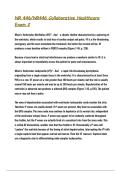
Mental Health Exam 1 - ch 1-9 Questions and Complete Solutions Graded AI+ In which scenario is it most urgent for the nurse to act as a patient advocate? a. An adult cries and experiences anxiety after a near-miss automobile accident on the way to work. b. A homeless adult diagnosed with schizophrenia lives in a community expecting a category 5 hurricane. c. A 14-year-old girl's grades decline because she consistently focuses on her appearance and social networking. d. The parents allow the prescription to lapse for 1 day for their 8-year-old child's medication for attention-deficit/hyperactivity disorder. - Answer: Answer: b. Although all of the scenarios present opportunities for a nurse to intervene, the correct response presents an imminent danger to the patient's safety and well-being. The nurse interacts with a veteran of World War II. The veteran says, "Veterans of modern wars whine and complain all the time. Back when I was in service, you kept your feelings to yourself." Select the nurse's best response. a. "American society in the 1940s expected World War II soldiers to be strong." b. "World War II was fought in a traditional way, but the enemy is more difficult to identify in today's wars." c. "We now have a better understanding of how trauma affects people and the importance of research-based, compassionate care." d. "Intermittent explosive devices (IEDs), which were not in use during World War II, produce traumatic brain injuries that must be treated." - Answer: Answer: c. Trauma occurs in many forms, including physical, sexual, and emotional abuse; war; natural disasters; and other harmful experiences. Trauma-informed care provides guidelines for integrating an understanding of how trauma affects patients into clinical programming. A patient reports sleeplessness, fatigue, and sadness to the primary care provider. In our current health care climate, what is the most likely treatment approach that will be offered to the patient? a. Group therapy b. Individual psychotherapy c. Complementary therapy d. Psychopharmacological treatment - Answer: Answer: d. The patient's report suggests that depression is occurring. With the increased understanding of the biology of psychiatric illnesses, treatment approaches have evolved rapidly into more scientifically grounded methods, particularly psychopharmacology. The nurse prepares outcomes to the plan of care for an adult diagnosed with mental illness. Which strategy recognizes the current focus of treatment services for this population? a. The patient's diagnoses are confirmed using advanced neuroimaging techniques. b. The nurse confers with the treatment team to verify the patient's most significant disability. c. The nurse prioritizes the patient's problems in accordance with Maslow's hierarchy of needs. d. The patient and family participate actively in establishing priorities and selecting interventions. - Answer: Answer: d. The correct response recognizes the recovery model, which has the following tenets: Mental health care is consumer and family driven, with patients being partners in all aspects of care; care must focus on increasing the consumer's success in coping with life's challenges and building resilience; and an individualized care plan is at the core of consumer-centered recovery. Which scenario best demonstrates empathic caring? a. A nurse provides comfort to a colleague after an error of medication administration. b. A nurse works a fourth extra shift in 1 week to maintain adequate unit staffing. c. A nurse identifies a violation of confidentiality and makes a report to an agency's privacy officer. d. A nurse conscientiously reads current literature to stay aware of new evidence-based practices. - Answer: Answer: a. Caring is evidenced by empathic understanding, actions, and patience on another's behalf; actions, words, and presence that lead to happiness and touch the heart; and giving of self while preserving the importance of self. Comforting is a part of caring, which includes social, emotional, physical, and spiritual support. A mentally ill gunman opens fire in a crowded movie theater, killing six people and injuring others. Which comment about this event by a member of the community most clearly shows the stigma of mental illness? a. "Gun control laws are inadequate in our country." b. "It's frightening to feel that it is not safe to go to a movie theater." c. "All these people with mental illness are violent and should be locked up." d. "These events happen because American families no longer go to church together." - Answer: Answer: c. Stigma refers to the array of negative attitudes and beliefs regarding mental illness. Bias, prejudice, fear, and misinformation contribute to stigma. The nurse presents a class about mental health and mental illness to a group of fourth graders. One student asks, "Why do people get mentally ill?" Select the nurse's best response. a. "There are many reasons why mental illness occurs." b. "The cause of mental illness is complicated and very hard to understand." c. "Sometimes a person's brain does not work correctly because something bad happens or he or she inherits a brain problem." d. "Most mental illnesses result from genetically transmitted abnormalities in cerebral structure; however, some are a consequence of traumatic life experiences." - Answer: Answer: c. In the correct response, the nurse answers rather than evades the question, provides accurate information, and uses terminology a 9- or 10-year-old child can understand. Many of the most prevalent and disabling mental disorders have been found to have strong biological influences, including genetic transmission. An adult experienced a spinal cord injury resulting in quadriplegia 3 years ago and now lives permanently in a skilled care facility. Which comment by this person best demonstrates resiliency? a. "I often pray for a miracle that will heal my paralysis so I will be whole again." b. "I don't know what I did to deserve this fate or whether I am tough enough to endure it." c. "My accident was a twist of fate. I suppose there are worse things than being paralyzed." d. "Being paralyzed has taken things from me, but it hasn't kept me from being mentally involved in life." - Answer: Answer: d. Resiliency is the ability to recover from or adjust successfully to trauma or change. A successful transition through a crisis builds resiliency for the next difficult trial. In the correct response, the person demonstrates acceptance of the paralysis and a focus on his or her abilities and assets. A nursing assistant says to the nurse, "The schizophrenic in room 226 has been rambling all day." When considering the nurse's responsibility to manage the ancillary staff, which response should the nurse provide? a. "It is more respectful to refer to the patient by name than by diagnosis." b. "Thank you for informing me about that. I will document the behavior." c. "It is not unusual for schizophrenics to do that. It's just part of their illness." d. "You have a difficult job. I'm glad you are so accepting of our patients' behaviors." - Answer: Answer: a. Diagnoses classify disorders that people have, not the person. For this reason, it is important to avoid use of expressions such as "a schizophrenic" or "an alcoholic." The nurse has a responsibility to educate the coworker. Which scenario meets the criteria for "normal" behavior? a. An 8-year-old child's only verbalization is "No, no, no." b. A 16-year-old girl usually sleeps for 3 or 4 hours per night. c. A 43-year-old man cries privately for 1 month after the death of his wife. d. A 64-year-old woman has difficulty remembering the names of her grandchildren. - Answer: Answer: c. Many biological, cultural, and environmental factors influence mental health. Persons who are normal also may experience dysfunction during their lives. The death of a spouse is a difficult experience, so crying is expected. A nurse plans a group meeting for adult patients in a therapeutic milieu. Which topic should the nurse include? a. Coping with grief and loss b. The importance of hand washing c. Strategies for money management d. Staffing shortages expected over the next 3 days - Answer: Answer: b. A therapeutic milieu provides a healthy social structure within an inpatient setting or structured outpatient clinic. Groups aim to help increase patients' self-esteem, decrease social isolation, encourage appropriate social behaviors, and educate patients in basic living skills, such as good hand washing. Coping with grief and loss (Option a) would be more appropriately provided by a therapist or advanced practice nurse. Considering Maslow's pyramid, which comment indicates that an individual is motivated by one of the higher levels of need? a. "Even though I'm 40 years old, I have returned to college so that I can get a better job." b. "I help my community by volunteering at a thrift shop that raises money for the poor." c. "I recently applied for public assistance in order to feed my family, but I hope it's not forever." d. "My children tell me I'm a good parent. I feel happy being part of a family that appreciates me." - Answer: Answer: b. Maslow's hierarchy of needs is placed conceptually on a pyramid, with the most basic and important needs on the lower level. The higher levels, the more distinctly human needs, occupy the top sections of the pyramid. When lower-level needs are met, higher-level needs are able to emerge. Self-actualization and esthetics are the highest-level needs. Which patient is likely to achieve maximum benefit from cognitive-behavioral therapy (CBT)? a. Older adult diagnosed with stage 3 Alzheimer's disease b. Adult diagnosed with schizophrenia and experiencing delusions c. Adult experiencing feelings of failure after losing the fourth job in 2 years d. School-age child diagnosed with attention-deficit/hyperactivity disorder (ADHD) - Answer: Answer: c. The goal of CBT is to identify the negative patterns of thought that lead to negative emotions. Once the maladaptive patterns are identified, they can be replaced with rational thoughts. A person must be able to engage in meaningful dialogue to benefit from CBT. An adult plans to attend an upcoming 10-year high school reunion. This person says to the nurse, "I am embarrassed to go. I will not look as good as my classmates. I haven't been successful in my career." Which comment by the nurse addresses this cognitive distortion? a. "You look fine to me. Do you think you will have fun at your reunion?" b. "Everyone ages. Other classmates have had more problems than you." c. "Do you think you are the only person who has aged and faced difficulties in life?" d. "I think you are doing well in the face of the numerous problems you have endured." - Answer: Answer: c. Rapid, unthinking responses are known as automatic thoughts. Often these automatic thoughts, or cognitive distortions, are irrational because people make false assumptions and misinterpretations. Once the negative patterns of thought that lead to negative emotions are identified, they can be replaced with rational thoughts. A distraught 8-year-old girl tells the nurse, "I had a horrible nightmare and was so scared. I tried to get in bed with my parents, but they said, 'No.' I think I could have gone back to sleep if I had been with them." Which family dynamic is likely the basis of this child's comment? a. Boundaries in the family are rigid. b. The family has poor differentiation of roles. c. The girl is enmeshed in part of a family triangle. d. Generational boundaries in the family are diffuse. - Answer: Answer: a. Rigid or disengaged boundaries are those in which the rules and roles are followed despite the consequences. A patient is diagnosed with an abscess in the cerebellum. Which nursing diagnosis has priority for the plan of care? a. Risk for falls related to loss of balance and equilibrium b. Unilateral neglect related to impairment in perception c. Impaired physical mobility related to spasticity and changes in muscle tone d. Risk for impaired cerebral tissue perfusion related to obstruction secondary to infection - Answer: Answer: a. The cerebellum is critical in both motor and cognitive functions. Alterations in cerebello-thalamo-cortical circuits may manifest as disturbances of coordination, balance, and gait. Safety is the nurse's first concern. A patient begins a new prescription for risperidone (Risperdal). Which intervention should the nurse include in the plan of care? a. Monitor intake and output daily. b. Educate patient about foods that contain tyramines. c. Assess sitting, standing, and lying blood pressure daily. d. Administer with food to reduce gastrointestinal irritation. - Answer: Answer: c. Risperidone blocks α1- and H1 receptors. It can cause orthostatic hypotension and sedation, which can lead to falls. Systematic measurement of body weight, body mass index (BMI), waist circumference, and glucose levels would be most important for a patient beginning a new prescription for which medication? a. Aripiprazole (Abilify) b. Olanzapine (Zyprexa) c. Ziprasidone (Geodon) d. Quetiapine (Seroquel) - Answer: Answer: b. Olanzapine (Zyprexa) has metabolic side effects, particularly weight gain. Metabolic monitoring for all patients receiving atypicals is recommended, although risperidone (Risperdal) and quetiapine (Seroquel) have lower weight gain. Ziprasidone (Geodon) and aripiprazole (Abilify) are considered weight neutral. Metabolic monitoring usually includes measurements of body weight, BMI, waist circumference, fasting plasma glucose level, and fasting lipid profile. A patient tells the community mental health nurse, "I told my health care provider I was having trouble sleeping, and he prescribed trazodone 50 mg every night. I read on the Internet that the drug is an antidepressant, but I'm not depressed. What should I do?" Which response by the nurse is correct? a. "I will help you contact your health care provider for clarification regarding this new prescription." b. "Insomnia and depression usually go hand in hand. If your depression is relieved, your sleep will improve." c. "In low doses, trazodone helps relieve insomnia. Higher doses are needed for antidepressant effects to occur." d. "Information on the Internet is often misleading and incorrect. It's more important to trust the judgment of your health care provider." - Answer: Answer: c. At lower doses, trazodone loses its antidepressant action while retaining hypnotic effects through histamine-receptor antagonism; therefore, it is useful for insomnia. Fifty milligrams is a low dose. High doses of trazodone are required for the serotonergic action to relieve depression. Which patient would the nurse expect to have the most difficulty with problem solving and decision making? a. An 18-year-old diagnosed with bulimia nervosa at age 14; has taken oral doses of fluoxetine (Prozac) daily for 3 years b. A 46-year-old diagnosed with schizophrenia at age 24; has taken oral doses of clozapine (Clozaril) daily for 18 years c. A 62-year-old diagnosed with bipolar disorder at age 28; has taken oral divalproex sodium (Depakote) daily for 16 years d. A 52-year-old diagnosed with schizophrenia at age 21; has taken monthly injections of haloperidol (Haldol decanoate) for 12 years - Answer: Answer: d. Executive functions occur in the cerebrum. Loss of cortical tissue has been associated with schizophrenia as well as with treatment involving haloperidol and other typical antipsychotics. In contrast, newer atypical antipsychotics and antidepressants have been found to increase brain volume and structural synaptic/neuronal plasticity. A patient diagnosed with major depressive disorder tells the community mental health nurse, "I usually spend all day watching television. If there's nothing good to watch, I just sleep or think about my problems." What is the nurse's best action? a. Refer the patient for counseling with a recreational therapist. b. Ask the patient, "What kinds of program do you like to watch?" c. Suggest to the patient, "Are there some friends you could call instead?" d. Advise the patient, "Watching television and thinking about problems makes depression worse." - Answer: Answer: a. The patient's comments indicate problems with the use of leisure time. Recreational activities improve emotional, physical, cognitive, and social well-being. A recreational therapist is the best member of the treatment team to provide these services. Asking the patient about program preferences (Option b) may give the nurse more information but does not provide any action to improve well-being. The nurse admits a patient experiencing hallucinations and delusional thinking to an inpatient mental health unit. The plan of care will require that which service occurs first? a. Social history b. Psychiatric history c. Medical assessment d. Psychological evaluation - Answer: Answer: c. The plan of care begins with a medical assessment to rule out or consider co-occurring/comorbid conditions. A nurse working in an acute care unit for adolescents diagnosed with mental illness says, "Our patients have so much energy. We need some physical activities for them." In recognition of needs for safety and exercise, which activity could the treatment team approve? a. Badminton tournament b. Competitive soccer matches c. Intramural basketball games d. Line dancing to popular music - Answer: Answer: d. Safety is a key consideration in the selection of activities. The correct response identifies an activity likely to appeal to the population but without physical contact between patients or equipment, which may be associated with injury. As Election Day nears, a psychiatric nurse studies the position statements of various candidates for federal offices. Which candidate's commentary would the nurse interpret as supportive of services for persons diagnosed with mental illness? a. Full-parity insurance coverage for mental illness b. Coverage for biologically based mental illnesses c. Reimbursement for initial treatment of addictions d. Managed care oversight for mental illness services - Answer: Answer: a. Mental health parity refers to third-party (insurance) coverage of care for mental illness and addictions similar to the coverage of the care for physical illness. Federal and state legislation apply, but coverage varies by state. Some states offer full parity for mental illness insurance coverage. An experienced nurse in a major medical center requests a transfer from a general medical unit to an acute care psychiatric unit. Which organizational feature would best support this nurse's successful transition? a. Assignment to medication administration for the first 6 months b. Working with a seasoned mental health technician for the first month c. Co-assignment with a knowledgeable psychiatric nurse for an extended orientation d. Staff development activities focused on developing therapeutic communication skills - Answer: Answer: c. The nurse's skills from the medical unit will be valuable, but this nurse will need to expand his or her skill set to effectively care for a psychiatric population. Working with an experienced psychiatric nurse will provide opportunities for learning. A nurse's sibling happily says, "I want to introduce you to my fiancé. We're getting married in 6 months." The nurse has encountered the fiancé in a clinical setting and is aware of the fiancé's diagnosis of schizophrenia. What is the nurse's best response? a. In private, tell the sibling about the fiancé's diagnosis. b. Encourage the sibling to postpone the wedding for at least a year. c. Ask the fiancé, "Have you told my sibling about your mental illness?" d. Say to the sibling and fiancé, "I hope you will be very happy together." - Answer: Answer: d. Despite personal misgivings, the nurse must maintain the fiancé's confidentiality. A patient has been disruptive to the therapeutic milieu for 2 days. A certified nursing assistant says to the nurse, "We need to seclude this patient because this behavior is upsetting everyone on the unit." Considering patients' rights, how should the nurse respond? a. "Seclusion is not part of this patient's plan of care." b. "Let's think of some new ways to help this patient be less disruptive." c. "Thank you for that suggestion. I will discuss it with the health care provider." d. "Disruptive behavior is expected with mental illness. We must respond therapeutically." - Answer: Answer: b. The scenario offers no indication that the patient is dangerous or out of control; therefore, less restrictive interventions should be employed. The nurse has a responsibility to provide guidance to the certified nursing assistant. A day-shift nurse contacts a nurse scheduled for the night shift at home and says, "Our unit is full, and there are eight patients in the emergency department waiting for a bed." The night-shift nurse replies, "Thanks for telling me. I am calling in sick." Which type of problem is evident by the night-shift nurse's reply? a. Ethical problem of fidelity b. Legal problem of negligence c. Legal problem of an intentional tort d. Violation of the patients' right to treatment - Answer: Answer: a. Fidelity is the ethical principle of maintaining loyalty and commitment to the patient. The nurse in this situation is not maintaining commitment to patients by refusing to work the shift. It is not, however, illegal for a nurse to call off for personal reasons, making this an ethical decision. In a staff meeting at an inpatient mental health facility for individuals, the administrator announces that psychiatric technicians will now be supervised by the milieu director rather than by nurses. What is the nurse's best action? a. Confer with colleagues about their opinions regarding the proposed change. b. Volunteer to participate on a committee charged with defining the job responsibilities of unlicensed assistive personnel. c. Ask the administrator to delay implementation of this change until the decision can be reviewed by an interdisciplinary team. d. Advise the administrator of regulations in the state nurse practice act regarding supervision of unlicensed assistive personnel. - Answer: Answer: d. Institutional policies and practices do not absolve an individual nurse of responsibility to practice on the basis of professional standards of nursing care. State nurse practice acts specify that assistive personnel must work under a nurse's supervision. A colleague tells the nurse, "I have not been able to sleep for the past 3 days. I feel like a robot." What is the nurse's best action? a. Direct the colleague to leave the facility immediately. b. Observe the colleague closely for evidence of impaired practice. c. Offer to administer medications to patients assigned to the colleague. d. Confer with the supervisor about the nurse's ability to safely deliver care. - Answer: Answer: d. Sleep deprivation causes impaired practice, which jeopardizes patient safety. The colleague's comments indicate that impairment is likely. The nurse should confer with the supervisor to determine the appropriate action. A new patient whose chief concern is, "I'm tired of crying every day." Which comment from the patient would prompt the nurse to suspect that a medical reason is causing the problem rather than depression? a. "I usually drink two or three cups of coffee in the morning." b. "I often have headaches, especially when the pollen count is high." c. "Years ago I had thyroid problems, but they cleared up and I stopped the medicine." d. "I recently had three moles removed because my doctor thought they were suspicious." - Answer: Answer: c. The patient's thyroid problems may have reemerged and can mimic depression. A 55-year-old lives 100 miles from her parents and mother-in-law. In the past year, her father had back surgery, her mother broke her hip, and her mother-in-law had a cardiac event. Which nursing diagnosis is most applicable to the 55-year-old? a. Risk for dysfunctional grief related to impending deaths of parents b. Risk for injury related to frequent long drives to care for aging parents c. Risk for situational low self-esteem related to overwhelming responsibilities d. Risk for caregiver stress related to responsibilities for care of aging parents - Answer: Answer: d. The focus of the question is the caregiver. The demands associated with the care of three elderly persons who live at a distance have the potential of overwhelming the caregiver. Because there is no evidence of role strain, a risk diagnosis is formulated. A patient asks the psychiatric mental health registered nurse, "I'm having so much anxiety. I think hypnosis would help me. Will you do that for me?" When determining a response, which factor should the nurse consider? a. The patient's current medication regime b. State regulations regarding scope of practice c. The patient's level of participation within the therapeutic milieu d. The plan of care the multidisciplinary team has developed for the patient - Answer: Answer: b. Hypnosis is not within the scope of practice of a staff-level registered nurse. The state nurse practice act details regulations regarding scope of practice. Hypnosis is an advanced practice intervention. The nurse plans care for a newly hospitalized patient experiencing panic-level anxiety after an automobile accident. The patient has no physical injuries. When selecting goals and outcomes, the nurse will: a. select outcomes related to patient learning. b. focus first on the long-term goals for the patient. c. individualize outcomes based on the patient's needs. d. confer with the patient about which outcomes the patient wants to achieve. - Answer: Answer: c. Outcomes, as well as interventions, must always be individualized to the patient and should reflect the patient's multidimensional needs. Although it is important to confer with the patient about which outcomes are desirable, a patient experiencing panic is unable to engage in decision making or learning activities. On an inpatient unit, one patient assaults another patient, resulting in a small laceration. Considering the patients' right to confidentiality, how will the nurse effectively document this event? a. Ensure unit safety by documenting the hostile and combative characteristics of the assaulting patient. b. Document in each patient's medical record the events and actions taken, using the initials of the other patient involved. c. Document in both patients' medical records that an occurrence (incident) report was prepared according to agency policy. d. Verbally report the events to other team members and minimize written documentation in order to reduce potential legal consequences. - Answer: Answer: b. It is important to document the events and actions taken in both patients' records; however, confidentiality must be maintained. Using the initials of the patients involved is one way to ensure that confidentiality is maintained. An adult experiencing a recent exacerbation of ulcerative colitis tells the nurse, "I had an accident while I was at the grocery store. It was so embarrassing." Select the nurse's therapeutic response. a. "Most grocery stores have public restrooms available." b. "Tell me more about how you felt when that happened." c. "People usually have compassion about those types of events." d. "Your disease is now in remission so that is not likely to happen again." - Answer: Answer: b. The correct response encourages description and helps the patient to express feelings related to this experience. A nurse counsels a widow whose husband died 5 years ago. The widow says, "If I'd done more, he would still be alive." Select the nurse's therapeutic response. a. "I understand how you feel after such a terrible loss." b. "That was a long time ago. Now it's time to move on with your life." c. "You did a very good job of caring for him, especially because he was sick for so long." d. "Your husband was 82 years old with severe chronic obstructive pulmonary disease." - Answer: Answer: c. The correct response demonstrates the therapeutic technique of presenting reality. Giving advice, disagreeing, and changing the subject are nontherapeutic communication techniques. A patient has been out of work for 3 weeks with a major illness and anticipates another month of recovery. The patient tells the nurse, "I'm trying to keep up with my work email from home. They hired a new person in my department, but that person has no experience." Select the nurse's therapeutic response. a. "It sounds like you're saying you are worried about your job security." b. "No one expects you to keep pace with your job while you're recovering." c. "Your employer is required to hold your job for you while you're on sick leave." d. "Don't worry about your job right now. It's more important for you to recover." - Answer: Answer: a. The correct response demonstrates the therapeutic technique of reflection. In which nurse-patient interaction might it be appropriate for the nurse to consider using touch? a. Comforting a tearful patient of Japanese heritage b. Counseling a child who was physically abused by a parent c. Welcoming a person of Hispanic heritage to a new group session d. Interacting with a Native American who has a hearing impairment - Answer: Answer: c. Therapeutic use of touch is a basic aspect of the nurse-patient relationship and is often perceived as a gesture of warmth and friendship, but the response to touch is culturally defined. Many Hispanic Americans are accustomed to frequent physical contact and perceive it in a positive way. A nurse prepares a patient in a rural community for an initial telehealth visit with the health care provider. Select the nurse's priority action. a. Ensure that the patient's rights to privacy are respected. b. Ask the patient, "How much do you know about the Internet?" c. Inform the patient, "This experience will be like appearing on television." d. Advise the patient, "You will be able to hear, but not see, your health care provider." - Answer: Answer: a. Telehealth is a live, interactive mechanism used to track clinical progress and provide access to people who otherwise might not receive good medical or psychosocial help. The nurse should provide accurate education about this mechanism and ensure the patient's rights to privacy. Which comment by the nurse would be appropriate to begin a new nurse-patient relationship? a. "Which of your problems is most serious?" b. "I want you to tell me about your problems." c. "I'm an experienced nurse. You can trust me." d. "What would you like to tell me about yourself?" - Answer: Answer: d. The correct response is respectful and recognizes that trust between the nurse and patient needs to be developed. The correct response is also open ended, which is an appropriate communication technique to begin a new relationship. A neighbor telephones the nurse daily, giving lengthy details about multiple somatic complaints and relationship problems. Which limit-setting strategy should the nurse employ? a. Suggest the neighbor call other people in the community. b. Say to the neighbor, "I can talk to you for 15 minutes twice a week." c. Use the telephone's caller identification to screen calls from the neighbor. d. Tell the neighbor, "You should discuss these concerns with your personal physician rather than me." - Answer: Answer: b. The nurse has a responsibility for self-care and must set limits on the neighbor's intrusive calls. Specifying the frequency and time allotment for calls shows compassion for the neighbor while preventing infringement on the nurse's personal life. A patient has been oppositional, demanding, and resistant to working on goals. A mental health nurse tells the nursing supervisor, "We finally had a serious talk. I let that patient know it's time to get right with God and stop this behavior." Recognizing the nurse's actions were not acceptable, select the supervisor's responding action. a. Review the facility policies regarding patient's rights with the nurse. b. Ask the nurse about documentation related to this patient interaction. c. Schedule the nurse for a staff development activity on cultural sensitivity. d. Work with the nurse to prepare and analyze a process recording of the interaction. - Answer: Answer: d. Preparing and analyzing a process recording provides an opportunity for clinical supervision of the experienced nurse. The nurse and the supervisor examine the nurse's feelings and reactions to the patient and the way in which they affect the relationship. A nurse participating in a community health fair interviews an adult who has had no interaction with a health care professional for more than 10 years. The adult says, "I like to keep to myself. Crowds make me nervous." Which action should the nurse employ? a. Refer the adult for a full health assessment. b. Explore the adult's family and social relationships. c. Ask the adult, "How do you feel about the quality of your life?" d. Explain to the adult, "We can help you feel better about yourself." - Answer: Answer: c. It's important for the nurse to continue to assess the adult, respect the adult's individuality, and delay judgment regarding whether the person is experiencing illness. Avoiding crowds may be an effective coping technique for this patient. A few nurses are privately discussing patients under their care. Which nurse's comment indicates the need for clinical supervision regarding countertransference? a. "My patient is always asking my permission to do something, just like a child." b. "When our unit is understaffed, it seems like we have more incidents of disruptive behavior." c. "My patient tries to tell me what to do all the time. I got a divorce because my spouse used to do that." d. "Our patients have had so many traumatic life experiences. I find myself feeling sympathetic sometimes." - Answer: Answer: c. Countertransference refers to the tendency of the nurse to displace onto the patient feelings related to people in his or her past. Frequently, the patient's transference to the nurse evokes countertransference feelings in the nurse.

Show more Read less
Institution
NUR2459
Module
NUR2459


Whoops! We can’t load your doc right now. Try again or contact support.

Written for

Institution
NUR2459
Module
NUR2459

Document information

Uploaded on
March 27, 2025
Number of pages
16
Written in
2024/2025
Type
Exam (elaborations)
Contains
Questions & answers

Subjects

Content preview

Mental Health Exam 1 - ch 1-9 Questions
and Complete Solutions Graded AI+
In which scenario is it most urgent for the nurse to act as a patient advocate?

a. An adult cries and experiences anxiety after a near-miss automobile accident on the way to work.

b. A homeless adult diagnosed with schizophrenia lives in a community expecting a category 5
hurricane.

c. A 14-year-old girl's grades decline because she consistently focuses on her appearance and social
networking.

d. The parents allow the prescription to lapse for 1 day for their 8-year-old child's medication for
attention-deficit/hyperactivity disorder. - Answer: Answer: b.

Although all of the scenarios present opportunities for a nurse to intervene, the correct response
presents an imminent danger to the patient's safety and well-being.


The nurse interacts with a veteran of World War II. The veteran says, "Veterans of modern wars whine
and complain all the time. Back when I was in service, you kept your feelings to yourself." Select the
nurse's best response.

a. "American society in the 1940s expected World War II soldiers to be strong."

b. "World War II was fought in a traditional way, but the enemy is more difficult to identify in today's
wars."

c. "We now have a better understanding of how trauma affects people and the importance of research-
based, compassionate care."

d. "Intermittent explosive devices (IEDs), which were not in use during World War II, produce traumatic
brain injuries that must be treated." - Answer: Answer: c.

Trauma occurs in many forms, including physical, sexual, and emotional abuse; war; natural disasters;
and other harmful experiences. Trauma-informed care provides guidelines for integrating an
understanding of how trauma affects patients into clinical programming.


A patient reports sleeplessness, fatigue, and sadness to the primary care provider. In our current health
care climate, what is the most likely treatment approach that will be offered to the patient?

a. Group therapy

b. Individual psychotherapy

c. Complementary therapy

,d. Psychopharmacological treatment - Answer: Answer: d.

The patient's report suggests that depression is occurring. With the increased understanding of the
biology of psychiatric illnesses, treatment approaches have evolved rapidly into more scientifically
grounded methods, particularly psychopharmacology.


The nurse prepares outcomes to the plan of care for an adult diagnosed with mental illness. Which
strategy recognizes the current focus of treatment services for this population?

a. The patient's diagnoses are confirmed using advanced neuroimaging techniques.

b. The nurse confers with the treatment team to verify the patient's most significant disability.

c. The nurse prioritizes the patient's problems in accordance with Maslow's hierarchy of needs.

d. The patient and family participate actively in establishing priorities and selecting interventions. -
Answer: Answer: d.

The correct response recognizes the recovery model, which has the following tenets: Mental health care
is consumer and family driven, with patients being partners in all aspects of care; care must focus on
increasing the consumer's success in coping with life's challenges and building resilience; and an
individualized care plan is at the core of consumer-centered recovery.


Which scenario best demonstrates empathic caring?

a. A nurse provides comfort to a colleague after an error of medication administration.

b. A nurse works a fourth extra shift in 1 week to maintain adequate unit staffing.

c. A nurse identifies a violation of confidentiality and makes a report to an agency's privacy officer.

d. A nurse conscientiously reads current literature to stay aware of new evidence-based practices. -
Answer: Answer: a.

Caring is evidenced by empathic understanding, actions, and patience on another's behalf; actions,
words, and presence that lead to happiness and touch the heart; and giving of self while preserving the
importance of self. Comforting is a part of caring, which includes social, emotional, physical, and spiritual
support.


A mentally ill gunman opens fire in a crowded movie theater, killing six people and injuring others.
Which comment about this event by a member of the community most clearly shows the stigma of
mental illness?

a. "Gun control laws are inadequate in our country."

b. "It's frightening to feel that it is not safe to go to a movie theater."

, c. "All these people with mental illness are violent and should be locked up."

d. "These events happen because American families no longer go to church together." - Answer:
Answer: c.

Stigma refers to the array of negative attitudes and beliefs regarding mental illness. Bias, prejudice, fear,
and misinformation contribute to stigma.


The nurse presents a class about mental health and mental illness to a group of fourth graders. One
student asks, "Why do people get mentally ill?" Select the nurse's best response.

a. "There are many reasons why mental illness occurs."

b. "The cause of mental illness is complicated and very hard to understand."

c. "Sometimes a person's brain does not work correctly because something bad happens or he or she
inherits a brain problem."

d. "Most mental illnesses result from genetically transmitted abnormalities in cerebral structure;
however, some are a consequence of traumatic life experiences." - Answer: Answer: c.

In the correct response, the nurse answers rather than evades the question, provides accurate
information, and uses terminology a 9- or 10-year-old child can understand. Many of the most prevalent
and disabling mental disorders have been found to have strong biological influences, including genetic
transmission.


An adult experienced a spinal cord injury resulting in quadriplegia 3 years ago and now lives
permanently in a skilled care facility. Which comment by this person best demonstrates resiliency?

a. "I often pray for a miracle that will heal my paralysis so I will be whole again."

b. "I don't know what I did to deserve this fate or whether I am tough enough to endure it."

c. "My accident was a twist of fate. I suppose there are worse things than being paralyzed."

d. "Being paralyzed has taken things from me, but it hasn't kept me from being mentally involved in
life." - Answer: Answer: d.

Resiliency is the ability to recover from or adjust successfully to trauma or change. A successful
transition through a crisis builds resiliency for the next difficult trial. In the correct response, the person
demonstrates acceptance of the paralysis and a focus on his or her abilities and assets.


A nursing assistant says to the nurse, "The schizophrenic in room 226 has been rambling all day." When
considering the nurse's responsibility to manage the ancillary staff, which response should the nurse
provide?

a. "It is more respectful to refer to the patient by name than by diagnosis."
Get to know the seller

Seller avatar
Reputation scores are based on the amount of documents a seller has sold for a fee and the reviews they have received for those documents. There are three levels: Bronze, Silver and Gold. The better the reputation, the more your can rely on the quality of the sellers work.
YourExamplug Grand Canyon University
Follow You need to be logged in order to follow users or courses
Sold
171
Member since
1 year
Number of followers
26
Documents
14333
Last sold
2 days ago
Your Exm Plug

Assignments, Case Studies, Research, Essay writing service, Questions and Answers, Discussions etc. for students who want to see results twice as fast. I have done papers of various topics and complexities. I am punctual and always submit work on-deadline. I write engaging and informative content on all subjects. Send me your research papers, case studies, psychology papers, etc, and I’ll do them to the best of my abilities. Writing is my passion when it comes to academic work. I’ve got a good sense of structure and enjoy finding interesting ways to deliver information in any given paper. I love impressing clients with my work, and I am very punctual about deadlines. Send me your assignment and I’ll take it to the next level. I strive for my content to be of the highest quality. Your wishes come first— send me your requirements and I’ll make a piece of work with fresh ideas, consistent structure, and following the academic formatting rules. For every student you refer to me with an order that is completed and paid transparently, I will do one assignment for you, free of charge!!!!!!!!!!!!

Read more Read less
4.3

67 reviews

5
38
4
16
3
7
2
4
1
2

Recently viewed by you

Why students choose Stuvia

Created by fellow students, verified by reviews

Quality you can trust: written by students who passed their exams and reviewed by others who've used these revision notes.

Didn't get what you expected? Choose another document

No problem! You can straightaway pick a different document that better suits what you're after.

Pay as you like, start learning straight away

No subscription, no commitments. Pay the way you're used to via credit card and download your PDF document instantly.

Student with book image

“Bought, downloaded, and smashed it. It really can be that simple.”

Alisha Student

Frequently asked questions