Teaching foreign languages in Uzbekistan
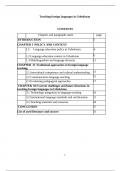
CONTENTS
Chapters and paragraphs name page
INTRODUCTION 3
CHAPTER I POLICY AND CONTEXT
1.1. Language education policy in Uzbekistan. 6
1.2 Language education context in Uzbekistan 8
1.3 Multilingualism and language diversity 11
CHAPTER II Traditional approaches in foreign language
teaching
2.1 Intercultural competence and cultural understanding 13
2.2 Communicative language teaching 15
2.3 Evaluating pedagogical approaches 17
CHAPTER III Current challenges and future directions in
teaching foreign languages in Uzbekistan
3.1 Technology integration in language teaching 19
3.2 International language standards and certifications 21
3.3 Teaching materials and resources 24
CONCLUSION 27
List of used literature and sources 31
1
, INTRODUCTION
We are the representatives of the enlightened people who consider the
teacher as great as a father and always honor him. When I think of a teacher, I
imagine intelligent and modern, sincere and kind people who are the most dear and
respected to me. Because this teacher gave lessons and education to all of us and
raised us among our loving parents, - said the head of state at the beginning of the
meeting. - Today we are creating the foundations of a new era of development of
Uzbekistan.1
Teaching foreign languages is a critical component of education systems
worldwide, and Uzbekistan is no exception. As a multilingual country, with Uzbek
as its national language, Uzbekistan recognizes the importance of equipping its
citizens with proficiency in foreign languages to foster global communication,
cultural exchange, and economic opportunities. This coursework aims to explore
the landscape of teaching foreign languages in Uzbekistan, examining the policies,
pedagogical approaches, curriculum, teacher preparation, assessment practices, and
challenges faced in this context. Language education policies in Uzbekistan have a
significant impact on the teaching and learning of foreign languages. The official
status of languages such as English, Russian, and others, as well as the
government's initiatives to promote language proficiency, shape the curricular and
instructional frameworks. Understanding these policies provides insights into the
priorities and goals of foreign language education in the country. Pedagogical
approaches play a crucial role in language instruction. Traditional methods like
grammar-translation and audio-lingual approaches have been prevalent, but more
communicative and task-based methodologies have gained traction in recent years.
Exploring these approaches and their implementation in Uzbekistan will shed light
1
President Shavkat Mirziyoyev. Videoconference ( May 06, 2021)
2
,on the effectiveness of different teaching methods in fostering language
proficiency and communicative competence. Curriculum and materials are
essential components of language education. Analyzing the structure, content, and
objectives of the foreign language curriculum in Uzbekistan, as well as the
textbooks and supplementary materials commonly used, will provide a
comprehensive understanding of the learning outcomes and resources available to
teachers and students. Effective teacher preparation and professional development
are vital for ensuring quality language instruction. Investigating the training
programs, qualifications, and ongoing support mechanisms for language teachers
in Uzbekistan will shed light on the competencies and skills required to deliver
effective language education. Furthermore, exploring the assessment and
evaluation practices used to measure language proficiency will provide insight into
how learning outcomes are assessed and monitored in Uzbekistan. However,
teaching foreign languages in Uzbekistan also faces various challenges. Limited
resources, large class sizes, and the need for authentic language exposure are
among the obstacles that educators encounter. Identifying these challenges and
considering potential strategies to address them will contribute to the ongoing
improvement of language education in Uzbekistan. By examining the teaching of
foreign languages in Uzbekistan, this coursework aims to provide a comprehensive
overview of the policies, pedagogical approaches, curriculum, teacher preparation,
assessment practices, and challenges in the field. Drawing on research, empirical
evidence, and insights from educators and policymakers, this study seeks to
contribute to the ongoing development and enhancement of foreign language
education in Uzbekistan. This coursework aims to explore the current landscape of
teaching foreign languages in Uzbekistan, identify the challenges and opportunities
faced by language educators, and propose future directions for enhancing language
teaching and learning in the country. By examining various aspects such as
language policy, curriculum, teacher preparation, assessment practices, technology
integration, learner-centered approaches, multiculturalism, teaching materials,
3
, collaboration, and program evaluation, we can gain a comprehensive
understanding of the present state of foreign language education in Uzbekistan.
Language policy and curriculum frameworks shape the goals, objectives, and
instructional practices in foreign language education. Understanding the language
policy in Uzbekistan and its impact on language instruction is crucial in
comprehending the broader context of language education. Additionally, analyzing
the existing curriculum frameworks and guidelines for teaching foreign languages
provides insights into the expectations and standards set for language educators.
The relevance of course work: Uzbekistan has a well-developed language
education system that emphasizes the teaching and learning of foreign languages.
Coursework in this area provides teachers with the necessary knowledge, skills,
and strategies to effectively teach foreign languages in line with the country's
language education policies and objectives.
The purpose of scientific research: The purpose of scientific research
about teaching foreign languages in Uzbekistan is to contribute to the advancement
and improvement of language education practices in the country. Such research
aims to investigate various aspects of teaching foreign languages and provide
evidence-based insights and recommendations for enhancing language instruction.
The tasks of the theme: The tasks related to the theme of teaching foreign
languages in Uzbekistan can vary depending on the specific focus and objectives
of the research.
The theory of course paper: The theory section of a course paper about
teaching foreign languages in Uzbekistan would provide the theoretical foundation
for the research and analysis conducted in the paper. It would typically include
relevant theories, frameworks, and concepts that inform and support the study.
The methodological framework: The methodological framework for
teaching foreign languages in Uzbekistan would outline the approach and methods
used in the research study or course paper. It provides a systematic and structured
plan for collecting data, analyzing information, and drawing conclusions.
4
CONTENTS
Chapters and paragraphs name page
INTRODUCTION 3
CHAPTER I POLICY AND CONTEXT
1.1. Language education policy in Uzbekistan. 6
1.2 Language education context in Uzbekistan 8
1.3 Multilingualism and language diversity 11
CHAPTER II Traditional approaches in foreign language
teaching
2.1 Intercultural competence and cultural understanding 13
2.2 Communicative language teaching 15
2.3 Evaluating pedagogical approaches 17
CHAPTER III Current challenges and future directions in
teaching foreign languages in Uzbekistan
3.1 Technology integration in language teaching 19
3.2 International language standards and certifications 21
3.3 Teaching materials and resources 24
CONCLUSION 27
List of used literature and sources 31
1
, INTRODUCTION
We are the representatives of the enlightened people who consider the
teacher as great as a father and always honor him. When I think of a teacher, I
imagine intelligent and modern, sincere and kind people who are the most dear and
respected to me. Because this teacher gave lessons and education to all of us and
raised us among our loving parents, - said the head of state at the beginning of the
meeting. - Today we are creating the foundations of a new era of development of
Uzbekistan.1
Teaching foreign languages is a critical component of education systems
worldwide, and Uzbekistan is no exception. As a multilingual country, with Uzbek
as its national language, Uzbekistan recognizes the importance of equipping its
citizens with proficiency in foreign languages to foster global communication,
cultural exchange, and economic opportunities. This coursework aims to explore
the landscape of teaching foreign languages in Uzbekistan, examining the policies,
pedagogical approaches, curriculum, teacher preparation, assessment practices, and
challenges faced in this context. Language education policies in Uzbekistan have a
significant impact on the teaching and learning of foreign languages. The official
status of languages such as English, Russian, and others, as well as the
government's initiatives to promote language proficiency, shape the curricular and
instructional frameworks. Understanding these policies provides insights into the
priorities and goals of foreign language education in the country. Pedagogical
approaches play a crucial role in language instruction. Traditional methods like
grammar-translation and audio-lingual approaches have been prevalent, but more
communicative and task-based methodologies have gained traction in recent years.
Exploring these approaches and their implementation in Uzbekistan will shed light
1
President Shavkat Mirziyoyev. Videoconference ( May 06, 2021)
2
,on the effectiveness of different teaching methods in fostering language
proficiency and communicative competence. Curriculum and materials are
essential components of language education. Analyzing the structure, content, and
objectives of the foreign language curriculum in Uzbekistan, as well as the
textbooks and supplementary materials commonly used, will provide a
comprehensive understanding of the learning outcomes and resources available to
teachers and students. Effective teacher preparation and professional development
are vital for ensuring quality language instruction. Investigating the training
programs, qualifications, and ongoing support mechanisms for language teachers
in Uzbekistan will shed light on the competencies and skills required to deliver
effective language education. Furthermore, exploring the assessment and
evaluation practices used to measure language proficiency will provide insight into
how learning outcomes are assessed and monitored in Uzbekistan. However,
teaching foreign languages in Uzbekistan also faces various challenges. Limited
resources, large class sizes, and the need for authentic language exposure are
among the obstacles that educators encounter. Identifying these challenges and
considering potential strategies to address them will contribute to the ongoing
improvement of language education in Uzbekistan. By examining the teaching of
foreign languages in Uzbekistan, this coursework aims to provide a comprehensive
overview of the policies, pedagogical approaches, curriculum, teacher preparation,
assessment practices, and challenges in the field. Drawing on research, empirical
evidence, and insights from educators and policymakers, this study seeks to
contribute to the ongoing development and enhancement of foreign language
education in Uzbekistan. This coursework aims to explore the current landscape of
teaching foreign languages in Uzbekistan, identify the challenges and opportunities
faced by language educators, and propose future directions for enhancing language
teaching and learning in the country. By examining various aspects such as
language policy, curriculum, teacher preparation, assessment practices, technology
integration, learner-centered approaches, multiculturalism, teaching materials,
3
, collaboration, and program evaluation, we can gain a comprehensive
understanding of the present state of foreign language education in Uzbekistan.
Language policy and curriculum frameworks shape the goals, objectives, and
instructional practices in foreign language education. Understanding the language
policy in Uzbekistan and its impact on language instruction is crucial in
comprehending the broader context of language education. Additionally, analyzing
the existing curriculum frameworks and guidelines for teaching foreign languages
provides insights into the expectations and standards set for language educators.
The relevance of course work: Uzbekistan has a well-developed language
education system that emphasizes the teaching and learning of foreign languages.
Coursework in this area provides teachers with the necessary knowledge, skills,
and strategies to effectively teach foreign languages in line with the country's
language education policies and objectives.
The purpose of scientific research: The purpose of scientific research
about teaching foreign languages in Uzbekistan is to contribute to the advancement
and improvement of language education practices in the country. Such research
aims to investigate various aspects of teaching foreign languages and provide
evidence-based insights and recommendations for enhancing language instruction.
The tasks of the theme: The tasks related to the theme of teaching foreign
languages in Uzbekistan can vary depending on the specific focus and objectives
of the research.
The theory of course paper: The theory section of a course paper about
teaching foreign languages in Uzbekistan would provide the theoretical foundation
for the research and analysis conducted in the paper. It would typically include
relevant theories, frameworks, and concepts that inform and support the study.
The methodological framework: The methodological framework for
teaching foreign languages in Uzbekistan would outline the approach and methods
used in the research study or course paper. It provides a systematic and structured
plan for collecting data, analyzing information, and drawing conclusions.
4