Reading – PSN, 41-66
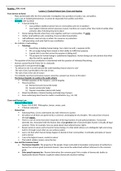
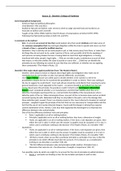
Lecture 2. Classical Natural Law: Cicero and Aquinas
From Greece to Rome
- Plato and Aristotle offer the first systematic investigation into questions of justice, law, and politics.
- Law is not an isolated phenomenon. It cannot be separated from politics and ethics
- Aristotle (384-322 BCE)
A human being is a:
zoon politikon (political animal: lives in communities and not in isolation)
zoon logikon (rational animal: possesses reason, functions on reasons other than instinct (unlike other
animals), able of devising long term plans)
Human beings flourish when they come together and live in communities poleis
Rather small political units consisting of several oikoi (households).
Self-sufficient: need not rely on others for resources or protection.
Self-governing: each polis had its own constitution
- On Aristotle’s methodology:
Teleology:
Everything, including human beings, has a telos (an end), a purpose to life.
We can judge beings/items based on their ability to fulfill their purpose.
A good chair is one that serves the purpose of sitting well.
The purpose for human beings is eudaimonia (happiness). Human beings can only achieve that when
they live well in a good polis.
- The question of the best constitution is intertwined with the question of individual flourishing.
- Humans cannot flourish if they live in a bad polis.
- A good polis is one governed by law
- ‘To ask law to rule is to ask God and the understanding (reason) alone to rule’
- The rule of law is preferable to the rule of men.
- The rule of law is the rule of reason
- For Aristotle, law that contravenes reason cannot be a proper law (more on this later)
- The Roman Republic (re publica=the public affairs)
509 BCE expulsion of the Tarquins—end of kingship
Three branches:
(a) Elected Consuls (monarchic body)
(b) Senate (aristocratic body)
(c) Popular Assemblies (democratic body)
Mixed Constitution. Mutual checking and balancing of power.
Same underlying ideas found in modern constitutions (e.g., US, UK)
Cicero and Roman Law
- Marcus Tullius Cicero
Rome, 106-43 BCE. Philosopher, lawyer, orator, poet
A Roman statesman
- Natural law
Following Plato, Cicero understands law with reference to justice.
All nations at all times are governed by a universal, unchanging set of principles. This natural law is known
through reason.
There is a set of norms that exist irrespective of the legal system of each polis/jurisdiction. Transcends
domestic law. Associated with the Roman idea of jus gentium (set of laws/principles found in virtually all legal
systems). Think, for example, how we speak about international human rights.
Reason exists in nature and is found in human beings. It is that which allows us to distinguish right and wrong.
And it is through reason that you can achieve justice
Law is not that which human beings happen to decide in their communities. It embodies principles of reason
and is eternal.
‘Law is the highest reason, rooted in nature’
That which violates reason cannot be law
- Law and the Common Good
The Roman Republic: The property of the people. Power entrusted to lawmakers and persons of authority to
pursue the common good (summum bonum). Law cannot be understood without reference to the common
good.
Salus populi suprema lex - Reason determines the common good. Not a matter of democratic bodies to
haphazardly decide (Platonic scepticism about democratic decision-making)
Lecture 2. Classical Natural Law: Cicero and Aquinas
From Greece to Rome
- Plato and Aristotle offer the first systematic investigation into questions of justice, law, and politics.
- Law is not an isolated phenomenon. It cannot be separated from politics and ethics
- Aristotle (384-322 BCE)
A human being is a:
zoon politikon (political animal: lives in communities and not in isolation)
zoon logikon (rational animal: possesses reason, functions on reasons other than instinct (unlike other
animals), able of devising long term plans)
Human beings flourish when they come together and live in communities poleis
Rather small political units consisting of several oikoi (households).
Self-sufficient: need not rely on others for resources or protection.
Self-governing: each polis had its own constitution
- On Aristotle’s methodology:
Teleology:
Everything, including human beings, has a telos (an end), a purpose to life.
We can judge beings/items based on their ability to fulfill their purpose.
A good chair is one that serves the purpose of sitting well.
The purpose for human beings is eudaimonia (happiness). Human beings can only achieve that when
they live well in a good polis.
- The question of the best constitution is intertwined with the question of individual flourishing.
- Humans cannot flourish if they live in a bad polis.
- A good polis is one governed by law
- ‘To ask law to rule is to ask God and the understanding (reason) alone to rule’
- The rule of law is preferable to the rule of men.
- The rule of law is the rule of reason
- For Aristotle, law that contravenes reason cannot be a proper law (more on this later)
- The Roman Republic (re publica=the public affairs)
509 BCE expulsion of the Tarquins—end of kingship
Three branches:
(a) Elected Consuls (monarchic body)
(b) Senate (aristocratic body)
(c) Popular Assemblies (democratic body)
Mixed Constitution. Mutual checking and balancing of power.
Same underlying ideas found in modern constitutions (e.g., US, UK)
Cicero and Roman Law
- Marcus Tullius Cicero
Rome, 106-43 BCE. Philosopher, lawyer, orator, poet
A Roman statesman
- Natural law
Following Plato, Cicero understands law with reference to justice.
All nations at all times are governed by a universal, unchanging set of principles. This natural law is known
through reason.
There is a set of norms that exist irrespective of the legal system of each polis/jurisdiction. Transcends
domestic law. Associated with the Roman idea of jus gentium (set of laws/principles found in virtually all legal
systems). Think, for example, how we speak about international human rights.
Reason exists in nature and is found in human beings. It is that which allows us to distinguish right and wrong.
And it is through reason that you can achieve justice
Law is not that which human beings happen to decide in their communities. It embodies principles of reason
and is eternal.
‘Law is the highest reason, rooted in nature’
That which violates reason cannot be law
- Law and the Common Good
The Roman Republic: The property of the people. Power entrusted to lawmakers and persons of authority to
pursue the common good (summum bonum). Law cannot be understood without reference to the common
good.
Salus populi suprema lex - Reason determines the common good. Not a matter of democratic bodies to
haphazardly decide (Platonic scepticism about democratic decision-making)