

100% satisfaction guarantee Immediately available after payment Both online and in PDF No strings attached 4.6 TrustPilot
logo-home
Exam (elaborations)

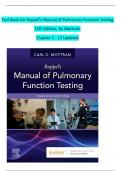
Test Bank for Ruppel’s Manual of Pulmonary Function Testing 12th Edition, By Mottram Chapter 1 - 13 Updated

Rating
-
Sold
-
Pages
292
Grade
A+
Uploaded on
13-03-2025
Written in
2024/2025

Chapter 1 : Indications for Pulmonary Function Testing Test Bank 1. Who first popularized spirometry for the evaluation of pulmonary function? a. August and Marie Krogh b. Alvan Barach c. John Severinghaus d. John Hutchinson ANS: D Hutchinson popularized the concept of using VC to assess lung function, and the names he gave to several other lung compartments are still used today. DIF: 1 REF: p. 2 OBJ: None MSC: NBRC: None 2. Which of the following are indications for performing spirometry? 1. Assess the risk of lung resection. 2. Determine the response to bronchodilator therapy. 3. Assess the severity of restrictive lung disease. 4. Quantify the extent of COPD. a. 1 and 4 b. 2 and 3 c. 1 , 2, and 4 d. 2 , 3, and 4 ANS: C Spirometry cannot assess severity of restriction; for that you need to measure lung volumes ( see Box 1-2, Chapter 1). DIF: 1 REF: p. 7 OBJ: EL-2 MSC: NBRC: None 3. The main indication for the measurement of lung volumes is to do which of the following? a. Diagnose or assess the severity of restriction. b. Evaluate the severity of pulmonary hypertension. c. Determine the level of cardiopulmonary fitness. d. Assess the risk of abdominal surgical procedures. ANS: A The most common reason for measuring lung volumes is to identify restrictive lung disease. DIF: 1 REF: p. 35 OBJ: EL-2 MSC: NBRC: None 4. DLCO measurements may be indicated to evaluate pulmonary involvement in which of the following systemic diseases? a. Asthma b. Sarcoidosis c. Exertional hypoxemia d. Guillain-Barré syndrome ANS: B Sarcoidosis is the only systemic disease listed that affects gas exchange. DIF: 1 REF: p. 9 | p. 19 | p. 21 | p. 35 OBJ: EL-2 MSC: NBRC: None 5. Blood gas analysis is used with patients with COPD to do which of the following? a. Monitor airway responsiveness. b. Determine level of cardiopulmonary fitness. c. Detect pulmonary hypertension. d. Assess need for supplementary O2. ANS: D Blood gas analysis is most commonly used to determine the need for supplemental oxygen and to manage patients who require ventilatory support. DIF: 2 REF: p. 15 OBJ: EL-1 MSC: NBRC: CPFT 2A-2 6. Which of the following cause emphysema? 1. 1- Antitrypsin deficiency 2. Exposure to environmental pollutants 3. Radiation therapy 4. Cigarette smoking a. 1 and 2 b. 3 and 4 c. 1 , 2, and 4 d. 2 , 3, and 4 ANS: C Emphysema is caused primarily by cigarette smoking. Some emphysema is caused by the absence of a protective enzyme. Chronic exposure to environmental pollutants can also contribute to the development of emphysema. DIF: 1 REF: p. 11 OBJ: EL-3 | AL-2 MSC: NBRC: None 7. An adult patient complains of chest tightness and cough whenever he jogs in cold weather. These symptoms are consistent with which of the following? a. Cystic fibrosis b. Asthma c. Pulmonary hypertension d. Idiopathic pulmonary fibrosis ANS: B Agents or events that cause an asthmatic episode are called triggers (see Box 1-7, Chapter 1). Antigens such as animal dander, pollens, and dusts are the most common triggers. Other common triggers include exposure to air pollutants and exercise in cold or dry air. DIF: 2 REF: p. 16 OBJ: EL-3 MSC: NBRC: None 8. Which of the following statements concerning tumors in the upper airway is true? a. There may be variable or fixed obstruction. b. Fixed obstruction will be present. c. Variable obstruction will be present. d. Small airway obstruction will result. ANS: A Tumors involving the upper airway may cause variable or fixed obstruction. DIF: 2 REF: p. 19 OBJ: EL-2 MSC: NBRC: CPFT 3C-3 9. Sarcoidosis is a systemic disorder that usually causes which of the following? a. A restrictive ventilatory defect b. An obstructive ventilatory defect c. Hyperreactive airways d. Primary pulmonary hypertension ANS: A Restriction is often associated with the following: interstitial lung diseases, including idiopathic fibrosis, pneumoconioses, and sarcoidosis. DIF: 1 REF: p. 19 | p. 21 OBJ: EL-3 MSC: NBRC: None 10. For which of the following conditions might pulmonary function testing be contraindicated? a. Vocal cord dysfunction b. Untreated pneumothorax c. Congestive heart failure (CHF) d. Bronchiolitis obliterans ANS: B Pulmonary function tests are usually contraindicated in the presence of pneumothorax. However, undiagnosed pneumothorax may present a risk if pulmonary function studies are performed. DIF: 1 REF: p. 23 OBJ: EL-4 MSC: NBRC: CPFT 2B-6 d. 11. Which of the following correctly describe(s) appropriate physical measurements before pulmonary function testing? 1. Actual body weight should be used to calculate predicted values. 2. Standing height should be measured when the patient is barefoot. 3. Arm span should be used instead of height for a patient with kyphosis. 4. Age should be recorded to the nearest decade (10 years ). a. 1 only b. 2 and 3 c. 1 , 2, and 4 d. 1 , 2, 3, and 4 ANS: B Various physical measurements are required for estimating each patient’s expected level of pulmonary function. Age to the nearest month, height to the nearest 0.1 cm, and weight are usually recorded in addition to the patient’s gender. Race or ethnic origin should also be recorded. (Although body weight is recorded, it is not used to calculate predicted values.) DIF: 1 REF: p. 29 OBJ: None MSC: NBRC: CPFT 3A-20 12. In addition to explaining the procedure for each pulmonary function test to the patient, the pulmonary function technologist should do which of the following? a. Briefly explain the physiologic basis of the test. b. Demonstrate the correct performance of the test maneuver. c. Limit feedback to the patient to reduce the placebo effect. d. Explain the exact number of efforts that will be required for each test. ANS: B In addition to a description of the test, the maneuver should always be demonstrated. DIF: 1 REF: p. 32 OBJ: None MSC: NBRC: CPFT 2B-6 13. The single-breath diffusing capacity test was first described by: a. John Severinghaus b. August and Marie Krogh c. Robert Hyatt d. Leland Clark ANS: B The basis for the modern single-breath diffusing capacity (DLCO) test was described by August and Marie Krogh in 1911. DIF: 1 REF: p. 5 OBJ: None MSC: NBRC: None 14. DLCO measurements may be indicated to evaluate gas exchange abnormality in which of the following? a. Ketoacidosis b. Myasthenia gravis c. Interstitial lung disease d. Bronchitis ANS: C The other options do not affect the alveolar capillary membrane interface. DIF: 1 REF: p. 9 OBJ: EL-2 MSC: NBRC: None 15. Vocal cord dysfunction will typically affect the flow-volume loop in what way? a. Blunt the expiratory portion of the curve b. Blunt both the inspiratory and expiratory portions of the curve c. Blunt the inspiratory portion of the curve Have no effect on the curve but cause inspiratory stridor d. ANS: C The vocal cords are normally held open or abducted during inspiration. When damaged, the vocal cords move toward the midline, narrowing the airway opening. This type of obstruction limits flow primarily during inspiration. DIF: 2 REF: p. 18 OBJ: EL-4 MSC: NBRC: CPFT 3C-3 16. All of the following disease processes are potential causes of a restrictive pattern except: a. Interstitial lung disease (e.g., fibrosis, sarcoidosis) b. Kyphoscoliosis c. Asthma d. Neuromuscular disorders ANS: C Asthma causes airway obstruction. DIF: 1 REF: p. 21 | p. 22 | p. 23 OBJ: EL-3 MSC: NBRC: None 17. The following data are obtained from a subject complaining of shortness of breath: Predicted Found % Pred TLCpl 5.76 3.18 55 RVpl 2.38 1.18 50 FVC 3.38 2.10 62 FEV1 2.63 1.88 71 FEV1/FVC 78 89 DLCO 23.1 6.0 26 These data are most consistent with which disease entity? a. Pulmonary fibrosis b. Kyphoscoliosis c. Obesity d. Emphysema ANS: A Excerpt from the restrictive disease discussion: These reductions in VC and TLC occur as fibrosis causes the lungs to become stiff. Pulmonary fibrosis is the only disease entity listed that causes a reduction in lung volumes and affects the alveolar capillary interface (e.g., reduced DLCO). DIF: 3 REF: p. 20 OBJ: EL-3 ANS: MSC: NBRC: RPFT 3C-4b 18. Lou Gehrig, a famous New York Yankee baseball player, is often associated with which neuromuscular disease? a. Amyotrophic lateral sclerosis b. Guillain-Barré syndrome c. Diaphragm paralysis syndrome Myasthenia gravis A Amyotrophic lateral sclerosis (ALS, or Lou Gehrig’s disease) affects the anterior horn cells of the spinal cord (motor neurons). DIF: 1 REF: p. 24 OBJ: EL-3 MSC: NBRC: None 19. The following data are obtained from a subject complaining of shortness of breath: Predicted Found % Pred TLCpl 6.59 4.12 63 RVpl 2.43 3.01 124 FVC 4.16 1.14 28 FEV1 3.16 1.16 37 FEV1/FVC 76 99 MEP +190 63 33 MIP -101 -56 55 These data are most consistent with which disease entity? a. Obesity b. Pectus excavatum c. Pulmonary fibrosis d. Myasthenia gravis ANS: D Progression of a myasthenic crisis can be assessed using VC and respiratory pressures. Results would yield a reduction in lung volumes and respiratory muscle pressures, as seen in this case. DIF: 3 REF: p. 24 OBJ: EL-3 MSC: NBRC: RPFT 3C-4b 20. All of the following pulmonary function tests may be used to follow the effect of treatment for congestive heart failure except: a. Lung volumes b. Arterial blood gases c. Diffusing capacity d. Maximal respiratory pressures ANS: D Pulmonary function tests, particularly lung volumes and DLCO, may be used to monitor the effects of treatment. Arterial blood gases may also assist in assessing gas exchange, but the respiratory muscles are not affected. DIF: 2 REF: p. 25 OBJ: EL-4 MSC: NBRC: None 21. All of the following anthropometric measurements are essential for pulmonary function testing except: a. Height b. Percent body fat c. Gender Age B Age, height, and weight are usually recorded in addition to the patient’s sex. Race or ethnic origin should also be recorded. DIF: 1 REF: p. 29 OBJ: None MSC: NBRC: CPFT 3A-20 22. There are three essential components to an FVC maneuver. Which of the following is the first phase of the maneuver? a. A deep breath to TLC b. Continued exhalation to RV c. The initial blast of inspiratory breath after emptying the lungs fully ANS: A According to the American Thoracic Society-European Respiratory Society (ATS-ERS) guidelines, the first important portion of the maneuver is the deep breath to TLC before the initial blast. DIF: 1 REF: p. 31 OBJ: None MSC: NBRC: CPFT 2A-6 23. According to the ATS-ERS general considerations guidelines, all of the following should be avoided before lung function testing except: a. Smoking within 1 hour of testing b. Wearing restrictive clothing c. Eating a large meal within 2 hours of testing | d. Consuming alcohol within 4 hours of testing ANS: B According to the ATS-ERS general guidelines, all should be avoided before testing except wearing restrictive clothing. DIF: 1 REF: p. 28 OBJ: None MSC: NBRC: CPFT 2B-6 24. According to the ATS-ERS general considerations guidelines, all of the following laboratory variables must be recorded except: a. Ambient temperature b. Date and time of test c. When the equipment was last cleaned d. Barometric pressure ANS: C According to the ATS-ERS general guidelines, all variables listed must be recorded except equipment cleaning. DIF: 1 REF: p. 31 | p. 32 OBJ: None MSC: NBRC: None 25. Who is credited with first describing the flow-volume curve? a. Hyatt d. b. Hutchinson c. Tiffeneau d. Fowler ANS: A Hyatt is recognized for first describing the flow-volume curve in the 1950s. DIF: 1 REF: p. 3 OBJ: None MSC: NBRC: None 26. Which of the following is an indication for a cardiopulmonary exercise test? a. Vocal cord dysfunction b. Pulmonary rehabilitation prescription c. Exercise-induced asthma d. Undefined cough ANS: B Understanding the physiologic basis for the patient’s exercise limitation is an important aspect in prescribing effective therapy such as pulmonary rehabilitation. DIF: 1 REF: p. 10 OBJ: AL-1 MSC: NBRC: None 27. A patient with cystic fibrosis may present with an increased: a. FRCpl and RV/TLC ratio b. FVC and FEV1 c. VA and DLCO d. MIP and MEP ANS: A Cystic fibrosis results in gas trapping as the disease progresses, which is revealed in lung volume measurements. DIF: 2 REF: p. 10 | p. 11 OBJ: AL-2 MSC: NBRC: CPFT 3C-3 28. Technologist-driven protocols allow a selection of tests related to the: a. Diagnosis b. Clinical question asked c. Physician interpretation d. Work of breathing ANS: B The initial tests performed should be based on the clinical question to be answered by the pulmonary function testing. Additional tests are determined based on the results of the selected tests associated with the clinical question

Show more Read less


Whoops! We can’t load your doc right now. Try again or contact support.

Document information

Uploaded on
March 13, 2025
Number of pages
292
Written in
2024/2025
Type
Exam (elaborations)
Contains
Questions & answers

Subjects

Content preview

Test Bank for Ruppel’s Manual of Pulmonary Function Testing

12th Edition, By Mottram

Chapter 1 - 13 Updated

,Chapter 1: Indications for Pulmonary Function Testing Test Bank
r r r r r r r r


MULTIPLErCHOICE

1. Whorfirstrpopularizedrspirometryrforrtherevaluationrofrpulmonaryrfunction?
a. AugustrandrMarierKrogh
b. AlvanrBarach
c. JohnrSeveringhaus
d. JohnrHutchinson

ANS:rD
HutchinsonrpopularizedrtherconceptrofrusingrVCrtorassessrlungrfunction,randrthernamesrhergavert
orseveralrotherrlungrcompartmentsrarerstillrusedrtoday.

DIF: 1 REF: p.r2 OBJ: Noner MSC:rNBRC:rNone

2. Whichrofrtherfollowingrarerindicationsrforrperformingrspirometry?
1. Assessrtherriskrofrlungrresection.
2. Determinertherresponsertorbronchodilatorrtherapy.
3. Assessrtherseverityrofrrestrictiverlungrdisease.
4. QuantifyrtherextentrofrCOPD.
a. 1r andr 4
b. 2r andr 3
c. 1r,r2,randr 4
d. 2r,r3,randr 4

ANS:rC
Spirometryrcannotrassessrseverityrofrrestriction;rforrthatryourneedrtormeasurerlungrvolumesr(rsee
rBoxr1-2,rChapterr 1).


DIF: 1 REF: p.r7 OBJ: EL-2 MSC:rNBRC:rNone

,3. Thermainrindicationrforrthermeasurementrofrlungrvolumesrisrtordorwhichrofrtherfollowing?
a. Diagnoserorrassessrtherseverityrofrrestriction.
b. Evaluatertherseverityrofrpulmonaryrhypertension.
c. Determinertherlevelrofrcardiopulmonaryrfitness.
d. Assessrtherriskrofrabdominalrsurgicalrprocedures.

ANS:rA
Thermostrcommonrreasonrforrmeasuringrlungrvolumesrisrtoridentifyrrestrictiverlungrdisease.rDI

F: 1 REF: p.r35 OBJ: EL-2 MSC:rNBRC:rNone

4. DLCOrmeasurementsrmayrberindicatedrtorevaluaterpulmonaryrinvolvementrinrwhichrofrtherfo
llowingrsystemicrdiseases?
a. Asthma
b. Sarcoidosis
c. Exertionalrhypoxemia

, Stuvia.comr-rTherMarketplacertorBuyrandrSellryourrStudyrMaterial


d. Guillain-Barrérsyndrome

ANS:rB
Sarcoidosisrisrtheronlyrsystemicrdiseaserlistedrthatraffectsrgasrexchange.rDIF

:r1rREF:rp.r9r|rp.r19r|rp.r21r|rp.r35rOBJ:rEL-2rMSC:rNBRC:rNone

5. BloodrgasranalysisrisrusedrwithrpatientsrwithrCOPDrtordorwhichrofrtherfoll
owing?
a. Monitorrairwayrresponsiveness.
b. Determinerlevelrofrcardiopulmonaryrfitness.
c. Detectrpulmonaryrhypertension.
d. AssessrneedrforrsupplementaryrO2.

ANS:rD
Bloodrgasranalysisrisrmostrcommonlyrusedrtordeterminertherneedrforrsupplementalroxygenran
drtormanagerpatientsrwhorrequirerventilatoryrsupport.

DIF: 2 REF: p.r15 OBJ: EL-
1rMSC:rNBRC:rCPFTr2A-2

6. Whichrofrtherfollowingrcauseremphysema?
1. 1-rAntitrypsinrdeficiency
2. Exposurertorenvironmentalrpollutants
3. Radiationrtherapy
4. Cigarettersmoking
a. 1r andr 2
b. 3r andr 4
c. 1r,r2,randr 4
d. 2r,r3,randr 4

ANS:rC
Emphysemarisrcausedrprimarilyrbyrcigarettersmoking.rSomeremphysemarisrcausedrbyrtherabsenc
erofrarprotectiverenzyme.rChronicrexposurertorenvironmentalrpollutantsrcanralsorcontributertort
herdevelopmentrofremphysema.

DIF: 1 REF: p.r11 OBJ: EL-3r|rAL-2 MSC:rNBRC:rNone

7. Anradultrpatientrcomplainsrofrchestrtightnessrandrcoughrwheneverrherjogsrinrcoldrweather.rT
hesersymptomsrarerconsistentrwithrwhichrofrtherfollowing?
a. Cysticrfibrosis
b. Asthma
c. Pulmonaryrhypertension
d. Idiopathicrpulmonaryrfibrosis


|

Get to know the seller

Seller avatar
Reputation scores are based on the amount of documents a seller has sold for a fee and the reviews they have received for those documents. There are three levels: Bronze, Silver and Gold. The better the reputation, the more your can rely on the quality of the sellers work.
EliteScholars Teachme2-tutor
View profile
Follow You need to be logged in order to follow users or courses
Sold
39
Member since
1 year
Number of followers
6
Documents
1033
Last sold
1 month ago
ACADEMIC HALL STORE!!!!

As a scholar you need a trusted source for your study materials and thats where we come in. Here you get TOP QUALITY; TESTBANKS, SOLUTION MANUALS, EXAMS & OTHER STUDY MATERIALS!!!!!! 100% GUARANTEED Success When you purchase our documents, Please leave reviews so we can meet up to your satisfaction .''At academic hall store'' your good grades is our top priority!!!

4.9

235 reviews

5
230
4
2
3
1
2
0
1
2

Recently viewed by you

Why students choose Stuvia

Created by fellow students, verified by reviews

Quality you can trust: written by students who passed their exams and reviewed by others who've used these revision notes.

Didn't get what you expected? Choose another document

No problem! You can straightaway pick a different document that better suits what you're after.

Pay as you like, start learning straight away

No subscription, no commitments. Pay the way you're used to via credit card and download your PDF document instantly.

Student with book image

“Bought, downloaded, and smashed it. It really can be that simple.”

Alisha Student

Frequently asked questions

