P3
“Here I have performed a risk assessment for Liverpool Community College
(LCC) at Vauxhall Road. I have explored the possible hazards, who will be
harmed and the possible consequences if the hazards are ignored.”
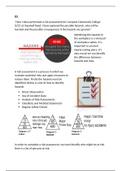
Identifying the hazards in
the workplace is a vital part
of workplace safety. It is
important to prevent
injuries taking place. It’s
also crucial we can identify
the difference between
hazards and risks.
A risk assessment is a process in which we
evaluate potential risks and apply measures to
reduce them. Firstly the hazards must be
identified. Below is a list of how to identify
hazards.
Direct Observation
Use of Accident Data
Analysis of Risk Assessments
Checklists and Method Statements
Regular Safety Checks
Diagram 1: F Diagram 2: Diagram 3:
E Bird RIDDOR Heinrich
In order to complete a risk assessment, we must identify who might be at risk.
Here is a list of persons at risk.
, Employees: are at the highest level of risk because they carry out the
more dangerous work (i.e. Gas Installation, Welding, and Automotive
Engineering). For this employees require more information, training and
instruction to protect themselves and their students.
Site Visitors: must report to the reception upon entry. This is so they can
be accounted for in the event of a fire. Site visitors may require an
induction or will be accompanied by a site supervisor.
General Public: are protected from entering the site. Locked doors on
stairways and corridors prevent this. Members of the public will too
have report to the reception upon arrival.
The risk rating of a hazard is the likelihood of harm occurring multiplied by its
potential severity of harm. (RISK = LIKELIHOOD x SEVERITY) This method will
determine whether or not the task is too dangerous to continue with, requires
further measures or is okay to continue with existing control measures. This is
called the risk assessment matrix.
There are many consequences if accidents occur and risks are ignored or not
taken seriously. These consist of the following.
Human Consequences: affect both the victim and their families.
Accidents can result in people having long term disabilities such as
amputated limbs or life threatening respiratory diseases.
Moral Consequences: affect all in the
company. Safety should come before
costs. High accident rates lead to a
demotivated work force.
Financial Consequences: affect the
employee who has to stay off work due
“Here I have performed a risk assessment for Liverpool Community College
(LCC) at Vauxhall Road. I have explored the possible hazards, who will be
harmed and the possible consequences if the hazards are ignored.”
Identifying the hazards in
the workplace is a vital part
of workplace safety. It is
important to prevent
injuries taking place. It’s
also crucial we can identify
the difference between
hazards and risks.
A risk assessment is a process in which we
evaluate potential risks and apply measures to
reduce them. Firstly the hazards must be
identified. Below is a list of how to identify
hazards.
Direct Observation
Use of Accident Data
Analysis of Risk Assessments
Checklists and Method Statements
Regular Safety Checks
Diagram 1: F Diagram 2: Diagram 3:
E Bird RIDDOR Heinrich
In order to complete a risk assessment, we must identify who might be at risk.
Here is a list of persons at risk.
, Employees: are at the highest level of risk because they carry out the
more dangerous work (i.e. Gas Installation, Welding, and Automotive
Engineering). For this employees require more information, training and
instruction to protect themselves and their students.
Site Visitors: must report to the reception upon entry. This is so they can
be accounted for in the event of a fire. Site visitors may require an
induction or will be accompanied by a site supervisor.
General Public: are protected from entering the site. Locked doors on
stairways and corridors prevent this. Members of the public will too
have report to the reception upon arrival.
The risk rating of a hazard is the likelihood of harm occurring multiplied by its
potential severity of harm. (RISK = LIKELIHOOD x SEVERITY) This method will
determine whether or not the task is too dangerous to continue with, requires
further measures or is okay to continue with existing control measures. This is
called the risk assessment matrix.
There are many consequences if accidents occur and risks are ignored or not
taken seriously. These consist of the following.
Human Consequences: affect both the victim and their families.
Accidents can result in people having long term disabilities such as
amputated limbs or life threatening respiratory diseases.
Moral Consequences: affect all in the
company. Safety should come before
costs. High accident rates lead to a
demotivated work force.
Financial Consequences: affect the
employee who has to stay off work due