Important theories and concepts
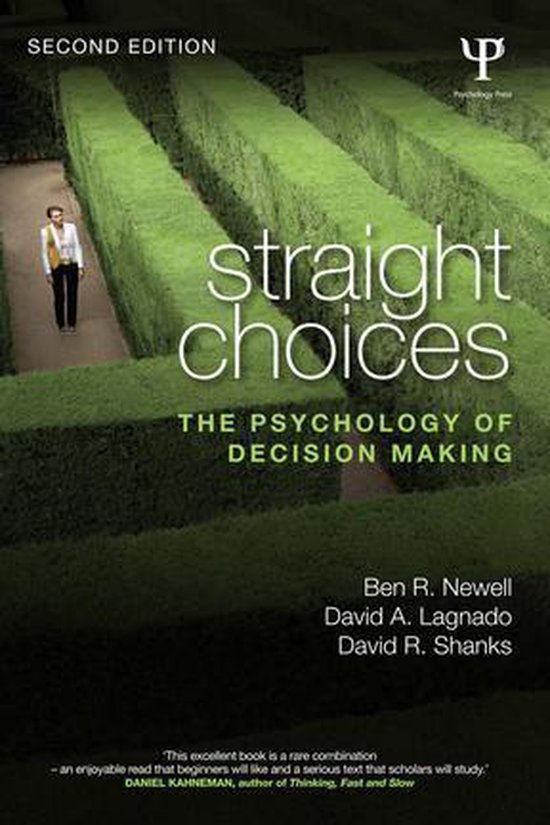
From the book (1, 2, 3, 4, 5, 6, 8, 9, 11, 15, 16 and 17)
Spring 2020
,CP1
Framing
Positive versus negative framing
● Mortality framing vs. Survival framing: Depending on how the information is framed,
the risk of dying seems higher in the mortality framing that in the survival framing
● Relative vs. absolute risk framing: The relative risk can remain constant while
absolute risk reduction varies widely.
→ Relative risk information is much more persuasive than absolute risk data
Prosecutor's fallacy/ Inverse fallacy
● Exaggerate the likelihood of defendant's guilt
● Low match probability→ Incorrect inference about the guilt of the defendant
- Natural frequency formats→ fewer verdicts, Probabilities → more verdicts
Stock selection heuristic
● Invest in stocks of the companies you recognize → higher returns
● Beneficial degree of ignorance: If you recognize all, you do not know which are
more trending currently
Diversification heuristic
● When when asked to make several choices simultaneously → Diversify rather than
selecting the same item several times
● Seek variety when asked to make choices for the future
● Doesn't assure sensible or coherent decision making
CP 2
Cognitive dissonance
● Looking past with ‘rose-tinted spectacles’
● We recall bad decisions faster, perhaps because their extreme badness makes them
particularly distinctive and unusual
Expected utility
, ● The utility of money declines with increasing gains (1000 vs. 1010)
● the utility is dependent on the money a person already has
Expected utility theory (EUT)
● Axioms (rational choice rules)
→ Transitivity: A>B, B>C => A>C (C>A, axiom violated)
→ Systematically violate the axioms of rational choice theory
Bounded rationality
● The rationality of human behaviour can only be fully explained by looking at the
structure of the environment as well as the person
● Assumptions/premises: cognitive limitation
Heuristic processes
● Availability, representativeness and anchoring heuristics and the characteristic
biases emerging from these heuristics
Prospect theory
● Modified version of EUT
● Individuals react differently to gains and losses based on how it’s framed (neutral
reference point open to manipulation)
● Although our choices involve maximizing some kind of expectation
→ the utilities and probabilities of outcomes undergo systematic psychological or
cognitive distortions when they are evaluated
● People evaluate outcomes in terms of changes in wealth rather than final states of
wealth ( the isolation effect)
● Explains why we observe a variety of departures from EUT when people make
choices (framing, certainty effect, loss-aversion, endowment effect)
CP 3
Brunswik’s Lens model
● How to reach an objective/goal by making a decision→ cues to inform our decision
● Each of the cues play a certain role in judgement (cues have different weights)
● Judgement is multiple linear regression
Multiple-cue probability learning (MCPL)
From the book (1, 2, 3, 4, 5, 6, 8, 9, 11, 15, 16 and 17)
Spring 2020
,CP1
Framing
Positive versus negative framing
● Mortality framing vs. Survival framing: Depending on how the information is framed,
the risk of dying seems higher in the mortality framing that in the survival framing
● Relative vs. absolute risk framing: The relative risk can remain constant while
absolute risk reduction varies widely.
→ Relative risk information is much more persuasive than absolute risk data
Prosecutor's fallacy/ Inverse fallacy
● Exaggerate the likelihood of defendant's guilt
● Low match probability→ Incorrect inference about the guilt of the defendant
- Natural frequency formats→ fewer verdicts, Probabilities → more verdicts
Stock selection heuristic
● Invest in stocks of the companies you recognize → higher returns
● Beneficial degree of ignorance: If you recognize all, you do not know which are
more trending currently
Diversification heuristic
● When when asked to make several choices simultaneously → Diversify rather than
selecting the same item several times
● Seek variety when asked to make choices for the future
● Doesn't assure sensible or coherent decision making
CP 2
Cognitive dissonance
● Looking past with ‘rose-tinted spectacles’
● We recall bad decisions faster, perhaps because their extreme badness makes them
particularly distinctive and unusual
Expected utility
, ● The utility of money declines with increasing gains (1000 vs. 1010)
● the utility is dependent on the money a person already has
Expected utility theory (EUT)
● Axioms (rational choice rules)
→ Transitivity: A>B, B>C => A>C (C>A, axiom violated)
→ Systematically violate the axioms of rational choice theory
Bounded rationality
● The rationality of human behaviour can only be fully explained by looking at the
structure of the environment as well as the person
● Assumptions/premises: cognitive limitation
Heuristic processes
● Availability, representativeness and anchoring heuristics and the characteristic
biases emerging from these heuristics
Prospect theory
● Modified version of EUT
● Individuals react differently to gains and losses based on how it’s framed (neutral
reference point open to manipulation)
● Although our choices involve maximizing some kind of expectation
→ the utilities and probabilities of outcomes undergo systematic psychological or
cognitive distortions when they are evaluated
● People evaluate outcomes in terms of changes in wealth rather than final states of
wealth ( the isolation effect)
● Explains why we observe a variety of departures from EUT when people make
choices (framing, certainty effect, loss-aversion, endowment effect)
CP 3
Brunswik’s Lens model
● How to reach an objective/goal by making a decision→ cues to inform our decision
● Each of the cues play a certain role in judgement (cues have different weights)
● Judgement is multiple linear regression
Multiple-cue probability learning (MCPL)