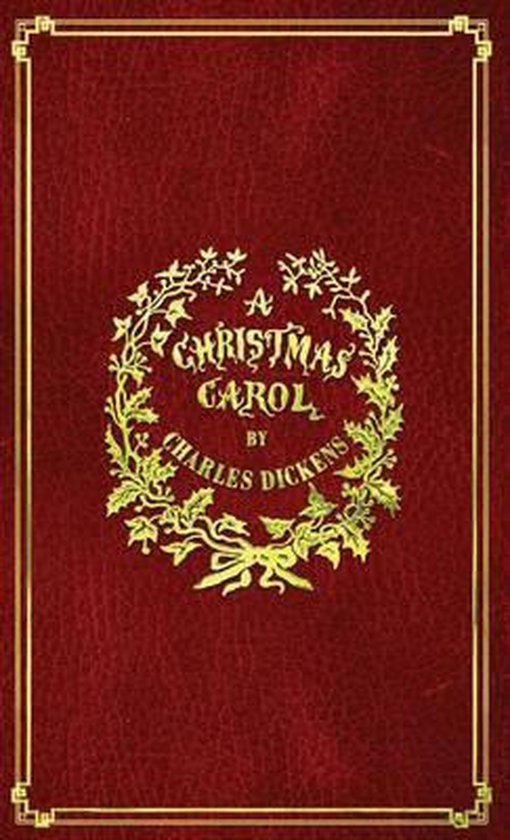
A Christmas Carol
Explanation title
Dickens called his story A Christmas Carol because he expected the story to be repeated
and shared and to bring people together just as the singing of Christmas carols spread joy
and brought families together each season throughout London. His carol was a song of
praise of the Christmas season and of the redemption of Ebenezer Scrooge.
Biographical information of the writer
Charles Dickens was één van de populairste auteurs van de victoriaanse tijd.
He grew up in a really big family. When he was 10, his family moved to London. The
neighbourhood inspired Dickins; there was a big contrast between rich and poor people.
Dickens father went to jail because they had big depts. Dickens had to go and work in a
shoe polish factory. Later he started working lawform. He also worked as a journalist for
some time. He has travelled to fight against slavery. When he came back, he started writing
books. After 1860 Charles Dickens’s health started getting worse. He died when he was 58
and is buried in Westminster Abbey.
Themes
The relationship between money and happiness
The narrative reflects a growing concern that the money will become more important that
morality and social justice. Scrooge judges the people around him based on their monetary
value and wealth is very important to him. Dickens also highlights the disparity between rich
and poor, such as when Scrooge refuses to donate money to the poor.
The Ability to Transform and Change
The narrative contains a number of supernatural and spiritual, or moral, transformations.
However, the two most major transformations both occur to Scrooge himself: firstly, from
young, lonely boy to embittered old miser, and then the challenging transformation of this
miser to a man of kindness and empathy. As such, the theme of transformation and change
is inextricable from the virtues of compassion and forgiveness which also appear central to
the narrative.
The Influence of Memory and Time
Dickens deliberately employs time as a key motivator for Scrooge’s development and
transformation. Scrooge does not merely remember his past, but is physically guided
through each memory. Because of this he sees his own mistakes. Time also creates a sense
of urgency in the narrative, as both Tiny Tim’s illness and Scrooge’s own eventual death.
Setting
This story takes place in London, England. The time is winter and it starts the day before
Christmas, also known as Christmas Eve. The settings of the book include Scrooge’s
Counting House, Scrooge’s Home, Bob Cratchit’s home and a number places throughout
Scrooge's childhood and future.
Explanation title
Dickens called his story A Christmas Carol because he expected the story to be repeated
and shared and to bring people together just as the singing of Christmas carols spread joy
and brought families together each season throughout London. His carol was a song of
praise of the Christmas season and of the redemption of Ebenezer Scrooge.
Biographical information of the writer
Charles Dickens was één van de populairste auteurs van de victoriaanse tijd.
He grew up in a really big family. When he was 10, his family moved to London. The
neighbourhood inspired Dickins; there was a big contrast between rich and poor people.
Dickens father went to jail because they had big depts. Dickens had to go and work in a
shoe polish factory. Later he started working lawform. He also worked as a journalist for
some time. He has travelled to fight against slavery. When he came back, he started writing
books. After 1860 Charles Dickens’s health started getting worse. He died when he was 58
and is buried in Westminster Abbey.
Themes
The relationship between money and happiness
The narrative reflects a growing concern that the money will become more important that
morality and social justice. Scrooge judges the people around him based on their monetary
value and wealth is very important to him. Dickens also highlights the disparity between rich
and poor, such as when Scrooge refuses to donate money to the poor.
The Ability to Transform and Change
The narrative contains a number of supernatural and spiritual, or moral, transformations.
However, the two most major transformations both occur to Scrooge himself: firstly, from
young, lonely boy to embittered old miser, and then the challenging transformation of this
miser to a man of kindness and empathy. As such, the theme of transformation and change
is inextricable from the virtues of compassion and forgiveness which also appear central to
the narrative.
The Influence of Memory and Time
Dickens deliberately employs time as a key motivator for Scrooge’s development and
transformation. Scrooge does not merely remember his past, but is physically guided
through each memory. Because of this he sees his own mistakes. Time also creates a sense
of urgency in the narrative, as both Tiny Tim’s illness and Scrooge’s own eventual death.
Setting
This story takes place in London, England. The time is winter and it starts the day before
Christmas, also known as Christmas Eve. The settings of the book include Scrooge’s
Counting House, Scrooge’s Home, Bob Cratchit’s home and a number places throughout
Scrooge's childhood and future.