3: INTERNATIONAL TRADE
3.1 Trade
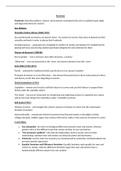
Free Trade
Exchange of capital, goods, and services across international borders without any trade
barriers such as tariffs or quotas.
Comparative Advantage (in the production of the good)
The situation when a country can produce a particular good at a lower opportunity cost
than another country.
World Trade Organization
Promote free trade by reducing tariffs and other trade barriers and settling disputes
between governments
Roles include:
- Reduce trade barriers
- Settle Trade Disputes, organize trade negotiations
- Administer and monitor application of WTO rules for trade
- Ensure trade agreements are clear
Trade Protection
Restrictions to free international trade imposed by governments, thus the partial or
complete protection of domestic industries from foreign competition in domestic markets
Tariffs
Taxes imposed on imports, decreasing world supply curve
Dumping
Firm selling a good in international markets at a price below its COP
Quotas
Restrictions on the maximum quantity of imports.
, Administrative Trade Barriers
Government regulations including product, sanitary and pollution standards that result in
lower level of imports into a country, often set to protect domestic producers
Infant industry
A new domestic industry that has not had time to establish itself and achieve
efficiencies in production, therefore unable to compete with mature competitor firms
abroad
Diversification
Increasing variety of goods and services produced
3.2 Exchange Rates
Exchange Rate
Price of one currency in terms of another currency, measuring the external value of a
currency
Freely Floating Exchange Rate System
Exchange rate is determined solely through interaction of demand and supply for the
currency with no government intervention.
Fixed Exchange Rate System
Exchange rate set at a level by the government and maintained through central bank
intervention.
Appreciation
Increase in value of one currency in terms of another currency in a floating exchange
rate system.
Depreciation
Decrease in value of one currency in terms of another currency in a floating exchange
rate system.
Devaluation
3.1 Trade
Free Trade
Exchange of capital, goods, and services across international borders without any trade
barriers such as tariffs or quotas.
Comparative Advantage (in the production of the good)
The situation when a country can produce a particular good at a lower opportunity cost
than another country.
World Trade Organization
Promote free trade by reducing tariffs and other trade barriers and settling disputes
between governments
Roles include:
- Reduce trade barriers
- Settle Trade Disputes, organize trade negotiations
- Administer and monitor application of WTO rules for trade
- Ensure trade agreements are clear
Trade Protection
Restrictions to free international trade imposed by governments, thus the partial or
complete protection of domestic industries from foreign competition in domestic markets
Tariffs
Taxes imposed on imports, decreasing world supply curve
Dumping
Firm selling a good in international markets at a price below its COP
Quotas
Restrictions on the maximum quantity of imports.
, Administrative Trade Barriers
Government regulations including product, sanitary and pollution standards that result in
lower level of imports into a country, often set to protect domestic producers
Infant industry
A new domestic industry that has not had time to establish itself and achieve
efficiencies in production, therefore unable to compete with mature competitor firms
abroad
Diversification
Increasing variety of goods and services produced
3.2 Exchange Rates
Exchange Rate
Price of one currency in terms of another currency, measuring the external value of a
currency
Freely Floating Exchange Rate System
Exchange rate is determined solely through interaction of demand and supply for the
currency with no government intervention.
Fixed Exchange Rate System
Exchange rate set at a level by the government and maintained through central bank
intervention.
Appreciation
Increase in value of one currency in terms of another currency in a floating exchange
rate system.
Depreciation
Decrease in value of one currency in terms of another currency in a floating exchange
rate system.
Devaluation