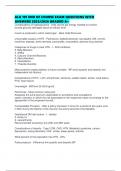
HEALTHSTREAM TEST 2024/2025 LATEST QUIDE QUESTIONS WITH
CORRECT ANSWERS ALREADY GRADED A+
A 46-year-old patient states that he has had weakness in his lower extremities that has
worsened in an ascending manner over the past 3 days. The patient also states he is having
difficulty breathing. The nurse is most concerned that this patient is at high risk for respiratory
failure caused by: - RIGHT ANSWER -Guillain-Barré syndrome
A blood transfusion is: indicated in cases of - RIGHT ANSWER -active hemorrhage resulting in
shock
A continuous drip of a medication is ordered at a rate of 2 mg/min. The standard mixture of this
medication to yield a final concentration of 2 mg/mL is 1 g of the medication in 500 mL of IV
fluid. At what rate in milliliters per hour should the IV pump be set? - RIGHT ANSWER -60 mL/hr
A continuous drip of a medication is ordered at a rate of 2 mg/min. The standard mixture of this
medication to yield a final concentration of 2 mg/mL is 1 g of the medication in 500mL of IV fluid.
At what rate in milliliters per hour should the IV pump be set? - RIGHT ANSWER -60 mL/hr
A continuous infusion of regular insulin at 7 units/hour has been ordered for a patient with type
1 diabetes mellitus. The pharmacy dispensed a standard insulin infusion containing 100 units of
regular U-100 insulin in 100 mL normal saline. At what rate in milliliters per
hour should the infusion pump be set? - RIGHT ANSWER -7 mL/hr
A dose of 35 mg of a corticosteroid is ordered to be given IM to treat inflammation. The
medication is available as 250 mg/10 mL. How many milliliters should be administered? - RIGHT
ANSWER -1.4 ml
A patient assessment reveals distended neck veins, pulsus paradoxus, and decreased systolic
pressure. This assessment is most consistent with: - RIGHT ANSWER -cardiac tamponade.
, A patient has an elevated central venous pressure (CVP) measurement. The most likely reason is
- RIGHT ANSWER -right heart failure.
A patient has an elevated central venous pressure (CVP) measurement. The most likely reason is:
- RIGHT ANSWER -right heart failure.
A patient has an elevated central venous pressure measurement. The most likely reason is: -
RIGHT ANSWER -right heart failure.
A patient has an elevated central venous pressure measurement. The most likely reason is: -
RIGHT ANSWER -right heart failure.
A patient has been admitted to the telemetry unit with infective endocarditis. During the nursing
assessment, the nurse notes the confirmatory findings of petechiae, splinter hemorrhages, -
RIGHT ANSWER -Osler's nodes
A patient has been admitted to the telemetry unit with infective endocarditis. During the nursing
assessment, the nurse notes the confirmatory findings of petechiae, splinter hemorrhages, and: -
RIGHT ANSWER -Osler's nodes.
A patient has cardiomyopathy and is unstable. The nurse understands that the treatment goal is
to improve contractility, reduce preload and reduce afterload. The nurse anticipates that
medication management will include: - RIGHT ANSWER -dobutamine and nitroprusside infusions
A patient has cardiomyopathy and is unstable. You understand that the treatment goal is to
improve contractility, reduce preload, and reduce afterload. You anticipate that medication
management will include starting: - RIGHT ANSWER -dobutamine and nitroprusside infusions.
A patient is admitted to the ICU with suspected cervical spinal cord injury following a motor
vehicle accident. The most important nursing intervention for this patient is to: - RIGHT ANSWER
-immobilize his head.
CORRECT ANSWERS ALREADY GRADED A+
A 46-year-old patient states that he has had weakness in his lower extremities that has
worsened in an ascending manner over the past 3 days. The patient also states he is having
difficulty breathing. The nurse is most concerned that this patient is at high risk for respiratory
failure caused by: - RIGHT ANSWER -Guillain-Barré syndrome
A blood transfusion is: indicated in cases of - RIGHT ANSWER -active hemorrhage resulting in
shock
A continuous drip of a medication is ordered at a rate of 2 mg/min. The standard mixture of this
medication to yield a final concentration of 2 mg/mL is 1 g of the medication in 500 mL of IV
fluid. At what rate in milliliters per hour should the IV pump be set? - RIGHT ANSWER -60 mL/hr
A continuous drip of a medication is ordered at a rate of 2 mg/min. The standard mixture of this
medication to yield a final concentration of 2 mg/mL is 1 g of the medication in 500mL of IV fluid.
At what rate in milliliters per hour should the IV pump be set? - RIGHT ANSWER -60 mL/hr
A continuous infusion of regular insulin at 7 units/hour has been ordered for a patient with type
1 diabetes mellitus. The pharmacy dispensed a standard insulin infusion containing 100 units of
regular U-100 insulin in 100 mL normal saline. At what rate in milliliters per
hour should the infusion pump be set? - RIGHT ANSWER -7 mL/hr
A dose of 35 mg of a corticosteroid is ordered to be given IM to treat inflammation. The
medication is available as 250 mg/10 mL. How many milliliters should be administered? - RIGHT
ANSWER -1.4 ml
A patient assessment reveals distended neck veins, pulsus paradoxus, and decreased systolic
pressure. This assessment is most consistent with: - RIGHT ANSWER -cardiac tamponade.
, A patient has an elevated central venous pressure (CVP) measurement. The most likely reason is
- RIGHT ANSWER -right heart failure.
A patient has an elevated central venous pressure (CVP) measurement. The most likely reason is:
- RIGHT ANSWER -right heart failure.
A patient has an elevated central venous pressure measurement. The most likely reason is: -
RIGHT ANSWER -right heart failure.
A patient has an elevated central venous pressure measurement. The most likely reason is: -
RIGHT ANSWER -right heart failure.
A patient has been admitted to the telemetry unit with infective endocarditis. During the nursing
assessment, the nurse notes the confirmatory findings of petechiae, splinter hemorrhages, -
RIGHT ANSWER -Osler's nodes
A patient has been admitted to the telemetry unit with infective endocarditis. During the nursing
assessment, the nurse notes the confirmatory findings of petechiae, splinter hemorrhages, and: -
RIGHT ANSWER -Osler's nodes.
A patient has cardiomyopathy and is unstable. The nurse understands that the treatment goal is
to improve contractility, reduce preload and reduce afterload. The nurse anticipates that
medication management will include: - RIGHT ANSWER -dobutamine and nitroprusside infusions
A patient has cardiomyopathy and is unstable. You understand that the treatment goal is to
improve contractility, reduce preload, and reduce afterload. You anticipate that medication
management will include starting: - RIGHT ANSWER -dobutamine and nitroprusside infusions.
A patient is admitted to the ICU with suspected cervical spinal cord injury following a motor
vehicle accident. The most important nursing intervention for this patient is to: - RIGHT ANSWER
-immobilize his head.