6BBB0333
L8 + 9 – Coiled Coils and Leucine Zippers
Nomenclature of coiled-coils and leucine zippers
- Historically the term ‘coiled-coil’ comes first
- Crick, 1952 when analysing X-Ray diffraction patterns in alpha keratin (nails, hair etc), found
helical structures that are bent into superhelices or coiled coils.
- Alpha helix structure kind of known (in theory)
- These structures did not quite agree with ideal models of alpha helices at the time (alpha
helix structure had not been found yet, later to be found by Perutz
- Found a smudge at 5.15A – not quite alpha helix
What were Crick’s experiments?
- Found a spot with periodicity of 5.15Å, but alpha helix would have 5.4Å Built models Found a
small twist of the alpha helix is required for alignment of hydrophobic residues that can
make contact with other helices- this distorted helix has a meridonal reflection of 5.1Å as
opposed to 5.4Å for the un-twisted helix
- Crick proposed that 2 of the "twisted" helices wrap around each other with hydrophobic
residues aligned with the dimer axis, instead of the helical axis as in the alpha helix For
dimerization, "knobs" and "holes" fit into each other
- This hypothesis is close to the reality The protein sequence of keratin was not determined at
this point, this hypothesis was made based on structural predictions only
- Interdigitation of hydrophobic side chains
- Mechanism by which coiled coil folds
,6BBB0333
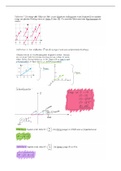
- How to derive the 5.15A model from the 5.4A model:
o Bottom LHS: 5.4A reflection
o Take helix and have hydrophobic residues on one side – apply a small twist and
brings the residues on a vertical axis by applying small twist to alpha helix
o By applying this twist you get the periodicity that crick was observing
o Hydrophobic residues vertically aligned
▪ This can be achieved by putting two of these helices together
,6BBB0333
If you have two of these twisted helices:
- You have two with hydrophobic residues aligned vertically (from twist)
- Wrap the helices around vertical axis
- Creates hydrophobic core that allows perfect packing of two helices around each other
- Packing happens in well-defined way
Summary
- Historically the term coiled-coil comes first
- Based on the analysis of diffraction patterns of natural occurring substances
- Idea of coiled coil was born from the need to adapt the known characteristics to the
experimental data
o Found a model to fit his data (small twist so that positioning of hydrophobic residues
can pack with each other – places void of side chains)
- As a result the new type of helical structure came with a recipe as to how two (or more)
single helical strands can assemble- by side chain packing according to the knobs and holes
When were leucine zippers first characterized?
- Landschulz et al., 1988
- Based on sequence analysis of DNA binding proteins, finding a sequence of leucines
o Found that many DNA-binding proteins had a strange sequence pattern of leucines
- In contract to the coiled coil this motif was discovered on the sequence level first before a
structure was determined
- Predicted before structures were actually determined Long alpha helix with Leu side chains
that interdigitate to form dimers and oligomers Leu every 7 residues Twist and distortion in
coiled coil has 3.5 residues per turn (for alpha helix, n=3.6)
- They found an unexpected periodicity of the amino acid leucine in the sequence of a number
of DNA binding proteins - at every 7th position. In normal helices there are 3.6 amino acids
per turn but in a coiled-coil there are 3.5
- Hypothesised that Leucine zippers were a type of coiled coil- twisted alpha helix that aligns
Leucine for binding interface
- The sequence motif would therefore be expected to fold into a coiled-coil dimer whereby the
leucine provide the hydrophobic core.
, 6BBB0333
- Leucine every 7 residues
- There is a periodicity of 7
- Makes sense in terms of the periodicity of the coiled coil
- Because in classic alpha helix we have 3.6 amino acid residues per turn but in a coiled-coil
there are 3.5 (because we have twisted the helix a little bit)
- 3.5*2 = 7
- And 7 is the sequence repeat that Landschultz et al found
- Means that the repetition of leucines at every 7th residue matches the geometry of the coiled
coil alpha helix
- This positions every 7th residue in the middle (from previous image this is the red
knobs/dots) = leucines
- This creates a pattern whereby all the leucines are in the same surface of the alpha helix
(what crick postulated – hydrophobics on one side and come together to form core)
- Plot this as a helical wheel:
(looking d
- Makes sense as this will provide the hydrophobic core (all leucines on same side)
Summary
- The term leucine zipper derives from the analysis of protein sequences (agrees with Crick’s X-
ray diffraction work)
- A 7-fold sequence repeat pattern of leucine suggested a helical structure where two come
together to form a dimer to fold into a coiled coil structure.
- Coiled-coil and leucine zipper describe one and the same thing. They originated from
different contexts and concepts but arrived at the same structure.
o A periodical helical structure with hydrophobic residues (often leucine) in every 7th
position
- Because of the historic link of leucine zippers to DNA binding proteins this term is still used in
this context and in general for shorter coiled coils. The term coiled-coils is more general and
mainly used for longer entities.
L8 + 9 – Coiled Coils and Leucine Zippers
Nomenclature of coiled-coils and leucine zippers
- Historically the term ‘coiled-coil’ comes first
- Crick, 1952 when analysing X-Ray diffraction patterns in alpha keratin (nails, hair etc), found
helical structures that are bent into superhelices or coiled coils.
- Alpha helix structure kind of known (in theory)
- These structures did not quite agree with ideal models of alpha helices at the time (alpha
helix structure had not been found yet, later to be found by Perutz
- Found a smudge at 5.15A – not quite alpha helix
What were Crick’s experiments?
- Found a spot with periodicity of 5.15Å, but alpha helix would have 5.4Å Built models Found a
small twist of the alpha helix is required for alignment of hydrophobic residues that can
make contact with other helices- this distorted helix has a meridonal reflection of 5.1Å as
opposed to 5.4Å for the un-twisted helix
- Crick proposed that 2 of the "twisted" helices wrap around each other with hydrophobic
residues aligned with the dimer axis, instead of the helical axis as in the alpha helix For
dimerization, "knobs" and "holes" fit into each other
- This hypothesis is close to the reality The protein sequence of keratin was not determined at
this point, this hypothesis was made based on structural predictions only
- Interdigitation of hydrophobic side chains
- Mechanism by which coiled coil folds
,6BBB0333
- How to derive the 5.15A model from the 5.4A model:
o Bottom LHS: 5.4A reflection
o Take helix and have hydrophobic residues on one side – apply a small twist and
brings the residues on a vertical axis by applying small twist to alpha helix
o By applying this twist you get the periodicity that crick was observing
o Hydrophobic residues vertically aligned
▪ This can be achieved by putting two of these helices together
,6BBB0333
If you have two of these twisted helices:
- You have two with hydrophobic residues aligned vertically (from twist)
- Wrap the helices around vertical axis
- Creates hydrophobic core that allows perfect packing of two helices around each other
- Packing happens in well-defined way
Summary
- Historically the term coiled-coil comes first
- Based on the analysis of diffraction patterns of natural occurring substances
- Idea of coiled coil was born from the need to adapt the known characteristics to the
experimental data
o Found a model to fit his data (small twist so that positioning of hydrophobic residues
can pack with each other – places void of side chains)
- As a result the new type of helical structure came with a recipe as to how two (or more)
single helical strands can assemble- by side chain packing according to the knobs and holes
When were leucine zippers first characterized?
- Landschulz et al., 1988
- Based on sequence analysis of DNA binding proteins, finding a sequence of leucines
o Found that many DNA-binding proteins had a strange sequence pattern of leucines
- In contract to the coiled coil this motif was discovered on the sequence level first before a
structure was determined
- Predicted before structures were actually determined Long alpha helix with Leu side chains
that interdigitate to form dimers and oligomers Leu every 7 residues Twist and distortion in
coiled coil has 3.5 residues per turn (for alpha helix, n=3.6)
- They found an unexpected periodicity of the amino acid leucine in the sequence of a number
of DNA binding proteins - at every 7th position. In normal helices there are 3.6 amino acids
per turn but in a coiled-coil there are 3.5
- Hypothesised that Leucine zippers were a type of coiled coil- twisted alpha helix that aligns
Leucine for binding interface
- The sequence motif would therefore be expected to fold into a coiled-coil dimer whereby the
leucine provide the hydrophobic core.
, 6BBB0333
- Leucine every 7 residues
- There is a periodicity of 7
- Makes sense in terms of the periodicity of the coiled coil
- Because in classic alpha helix we have 3.6 amino acid residues per turn but in a coiled-coil
there are 3.5 (because we have twisted the helix a little bit)
- 3.5*2 = 7
- And 7 is the sequence repeat that Landschultz et al found
- Means that the repetition of leucines at every 7th residue matches the geometry of the coiled
coil alpha helix
- This positions every 7th residue in the middle (from previous image this is the red
knobs/dots) = leucines
- This creates a pattern whereby all the leucines are in the same surface of the alpha helix
(what crick postulated – hydrophobics on one side and come together to form core)
- Plot this as a helical wheel:
(looking d
- Makes sense as this will provide the hydrophobic core (all leucines on same side)
Summary
- The term leucine zipper derives from the analysis of protein sequences (agrees with Crick’s X-
ray diffraction work)
- A 7-fold sequence repeat pattern of leucine suggested a helical structure where two come
together to form a dimer to fold into a coiled coil structure.
- Coiled-coil and leucine zipper describe one and the same thing. They originated from
different contexts and concepts but arrived at the same structure.
o A periodical helical structure with hydrophobic residues (often leucine) in every 7th
position
- Because of the historic link of leucine zippers to DNA binding proteins this term is still used in
this context and in general for shorter coiled coils. The term coiled-coils is more general and
mainly used for longer entities.