Legal Frameworks & Prescription Writing
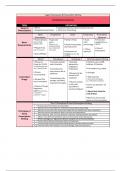
PRESCRIPTION WRITING
TERM DEFINITION
Types of ▪ WP10 ▪ Inpatient Medication Administration Record
Prescriptions ▪ Outpatient prescription ▪ Electronic Prescribing
Valid Drug Name Dose Frequency Prescribers
Prescription Signature
▪ Patient Details ▪ Approved ▪ Write in Mass ▪ Avoid ▪ Prescriber
Basic (Name, DOB, name Latin designation e.g.
Address, ID #) (Generic, not NIP/PIP
Requirements ▪ Avoid unnecessary terminology
usually branded)
▪ Weight if req decimal points
(e.g. omeprazole ▪ Date of
(e.g. for clexane) not Losec) ▪ “When
▪ Expression of required” Prescription
▪ Use CAPITALS dosage (e.g. M or Mg
not Mcg)
What? Schedule 2 Schedule 3 CD Prescription Writing
▪ Misuse of ▪ Includes opioids ▪ Includes ▪ Patients name, DOB,
Drugs Act (1972) and stimulants gabapentin, Address, ID Number
Control & restrict the pregabalin,
use of abused drugs ▪ Formulation e.g. tablet
▪ Considered to midazolam
▪ Ensure carry severe risk of
▪ Required to be ▪ Strength
accountability addiction
stored in CD
Controlled cupboard ▪ Total quantity
▪ Divides CDs ▪ Prescribing, safe In both words and figures
Drugs storage, recording e.g. 14 (fourteen) capsules
into 5 schedules ▪ Must be written
requirements apply.
in full, with ▪ Dose “as directed” not
▪ Misuse of drugs quantities in allowed
Regulation words and figures
(2001) Control who ▪ Signed and dated for
is allowed to
only 28 days
prescribe + supply
▪ Block out any unused
space on the prescription
The 10 Principles of Good Prescription Writing
1 Be clear about the reasons for prescribing
2 Take into account the patient’s medication history before prescribing
3 Take into account the other factors that might alter the benefits and risks of treatment
Principles of
4 Take into account the patients’ ideas, concerns and expectations
Good 5 Select e ective, safe, and cost-e ective medicines, individualised for the patient
Prescription 6 Adhere to the National guidelines and local formularies where appropriate
Writing 7 Write unambiguous, legal prescriptions using the correct documentation
8 Monitor the beneficial and adverse e ects of medicines
9 Communicate and document prescribing decisions and the reason for them
10 Prescribe within the limitations of your knowledge, skills and experience
PRESCRIPTION WRITING
TERM DEFINITION
Types of ▪ WP10 ▪ Inpatient Medication Administration Record
Prescriptions ▪ Outpatient prescription ▪ Electronic Prescribing
Valid Drug Name Dose Frequency Prescribers
Prescription Signature
▪ Patient Details ▪ Approved ▪ Write in Mass ▪ Avoid ▪ Prescriber
Basic (Name, DOB, name Latin designation e.g.
Address, ID #) (Generic, not NIP/PIP
Requirements ▪ Avoid unnecessary terminology
usually branded)
▪ Weight if req decimal points
(e.g. omeprazole ▪ Date of
(e.g. for clexane) not Losec) ▪ “When
▪ Expression of required” Prescription
▪ Use CAPITALS dosage (e.g. M or Mg
not Mcg)
What? Schedule 2 Schedule 3 CD Prescription Writing
▪ Misuse of ▪ Includes opioids ▪ Includes ▪ Patients name, DOB,
Drugs Act (1972) and stimulants gabapentin, Address, ID Number
Control & restrict the pregabalin,
use of abused drugs ▪ Formulation e.g. tablet
▪ Considered to midazolam
▪ Ensure carry severe risk of
▪ Required to be ▪ Strength
accountability addiction
stored in CD
Controlled cupboard ▪ Total quantity
▪ Divides CDs ▪ Prescribing, safe In both words and figures
Drugs storage, recording e.g. 14 (fourteen) capsules
into 5 schedules ▪ Must be written
requirements apply.
in full, with ▪ Dose “as directed” not
▪ Misuse of drugs quantities in allowed
Regulation words and figures
(2001) Control who ▪ Signed and dated for
is allowed to
only 28 days
prescribe + supply
▪ Block out any unused
space on the prescription
The 10 Principles of Good Prescription Writing
1 Be clear about the reasons for prescribing
2 Take into account the patient’s medication history before prescribing
3 Take into account the other factors that might alter the benefits and risks of treatment
Principles of
4 Take into account the patients’ ideas, concerns and expectations
Good 5 Select e ective, safe, and cost-e ective medicines, individualised for the patient
Prescription 6 Adhere to the National guidelines and local formularies where appropriate
Writing 7 Write unambiguous, legal prescriptions using the correct documentation
8 Monitor the beneficial and adverse e ects of medicines
9 Communicate and document prescribing decisions and the reason for them
10 Prescribe within the limitations of your knowledge, skills and experience