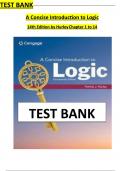
TEST BANK
A Concise Introduction to Logic 14th Edition
by Hurley All Chapter 1-14 Covered
,TABLEOFCONTENTS h h
Part I: INFORMAL LOGIC.
h h h
1.BasicConcepts.
h h
Arguments,hPremises,handhConclusions.hExercise.hRecognizinghArguments.hExercise.hDeductionhandhInduction.hExercise.hValidity,hTruth,hSo
dness,h Strength,hCogency.hExercise.hArgumenthForms:hProvinghInvalidity.hExercise.hExtendedhArguments.hExercise.
2. Language: Meaning and Definition. h h h
VarietieshofhMeaning.hExercise.hThehIntensionhandhExtensionhofhTerms.hExercise.hDefinitionshandhTheirhPurposes.hExercise.hDefinitionalhTech
ues
.hExercise.hCriteriahforhLexicalhDefinitions.hExercise.
3. Informal Fallacies. h
FallacieshinhGeneral.hExercise.hFallacieshofhRelevance.hExercise.hFallacieshofhWeakhInduction.hExercise.hFallacieshofhPresumption,hAmbiguit
hanh dhIllicithTransference.hExercise.hFallacieshinhOrdinaryhLanguage.hExercise.
Part II: FORMAL LOGIC.
h h h
4. Categorical Propositions. h
ThehComponentshofhCategoricalhPropositions.hExercise.hQuality,hQuantity,2andhDistribution.hExercise.hVennhDiagramshandhthehModernhSqu
ehoh fhOpposition.hExercise.hConversion,hObversion,handhContraposition.hExercise.hThehTraditionalhSquarehofhOpposition.hExercise.hVennhDi
amshah ndhthehTraditionalhStandpoint.hExercise.hTranslatinghOrdinaryhLanguagehStatementshintohCategoricalhForm.hExercise.
5. Categorical Syllogisms. h
StandardhForm,hMood,handhFigure.hExercise.hVennhDiagrams.hExercise.hRuleshandhFallacies.hExercise.hReducinghthehNumberhofhTerms.hExer
se.h OrdinaryhLanguagehArguments.hExercise.hEnthymemes.hExercise.hSorites.hExercise.
6.PropositionalLogic.
h h
SymbolshandhTranslation.hExercise.hTruthhFunctions.hExercise.hTruthhTableshforhPropositions.hExercise.hTruthhTableshforhArguments.hExercise
Indireh cthTruthhTables.hExercise.hArgumenthFormshandhFallacies.hExercise.
7. Natural Deduction in Propositional Logic.
h h h h
RuleshofhImplicationhI.hExercise.hRuleshofhImplicationhII.hExercise.hRuleshofhReplacementhI.hExercise.hRuleshofhReplacementhII.hExercise.hCon
tionalh Proof.hExercise.hIndirecthProof.hExercise.hProvinghLogicalhTruths.hExercise.
8. Predicate Logic. h
SymbolshandhTranslation.hExercise.hUsinghthehRuleshofhInference.hExercise.hQuantifierhNegationhRule.hExercise.hConditionalhandhIndirecthPro
f.hEh xercise.hProvinghInvalidity.hExercise.hRelationalhPredicateshandhOverlappinghQuantifiers.hExercise.hIdentity.hExercise.
Part III: INDUCTIVE LOGIC.
h h h
,9. Analogy and Legal and Moral Reasoning.
h h h h h
AnalogicalhReasoning.hLegalhReasoning.hMoralhReasoning.hExercise.
10. Causality and Mill's Methods.
h h h
,"Cause"handhNecessaryhandhSufficienthConditions.hMill'shFivehMethods.hMill'shMethodshandhScience.hExercise.
11.Probability. h
TheorieshofhProbability.hThehProbabilityhCalculus.hExercise.
12. Statistical Reasoning. h
EvaluatinghStatistics.hSamples.hThehMeaninghofh"Average."hDispersion.hGraphshandhPictograms.hPercentages.hExercise.
13. Hypothetical/Scientific Reasoning. h
ThehHypotheticalhMethod.hHypotheticalhReasoning:hFourhExampleshfromhScience.hThehProofhofhHypotheses.hThehTentativehAcceptancehofhH
poth heses.hExercise.
14. ScienceandSuperstition. h h
DistinguishinghBetweenhSciencehandhSuperstition.hEvidentiaryhSupport.hObjectivity.hIntegrity.hAbusinghScience.hExercise.h An
swershtohSelectedhExercises.
A Concise Introduction to Logic 14th Edition
by Hurley All Chapter 1-14 Covered
,TABLEOFCONTENTS h h
Part I: INFORMAL LOGIC.
h h h
1.BasicConcepts.
h h
Arguments,hPremises,handhConclusions.hExercise.hRecognizinghArguments.hExercise.hDeductionhandhInduction.hExercise.hValidity,hTruth,hSo
dness,h Strength,hCogency.hExercise.hArgumenthForms:hProvinghInvalidity.hExercise.hExtendedhArguments.hExercise.
2. Language: Meaning and Definition. h h h
VarietieshofhMeaning.hExercise.hThehIntensionhandhExtensionhofhTerms.hExercise.hDefinitionshandhTheirhPurposes.hExercise.hDefinitionalhTech
ues
.hExercise.hCriteriahforhLexicalhDefinitions.hExercise.
3. Informal Fallacies. h
FallacieshinhGeneral.hExercise.hFallacieshofhRelevance.hExercise.hFallacieshofhWeakhInduction.hExercise.hFallacieshofhPresumption,hAmbiguit
hanh dhIllicithTransference.hExercise.hFallacieshinhOrdinaryhLanguage.hExercise.
Part II: FORMAL LOGIC.
h h h
4. Categorical Propositions. h
ThehComponentshofhCategoricalhPropositions.hExercise.hQuality,hQuantity,2andhDistribution.hExercise.hVennhDiagramshandhthehModernhSqu
ehoh fhOpposition.hExercise.hConversion,hObversion,handhContraposition.hExercise.hThehTraditionalhSquarehofhOpposition.hExercise.hVennhDi
amshah ndhthehTraditionalhStandpoint.hExercise.hTranslatinghOrdinaryhLanguagehStatementshintohCategoricalhForm.hExercise.
5. Categorical Syllogisms. h
StandardhForm,hMood,handhFigure.hExercise.hVennhDiagrams.hExercise.hRuleshandhFallacies.hExercise.hReducinghthehNumberhofhTerms.hExer
se.h OrdinaryhLanguagehArguments.hExercise.hEnthymemes.hExercise.hSorites.hExercise.
6.PropositionalLogic.
h h
SymbolshandhTranslation.hExercise.hTruthhFunctions.hExercise.hTruthhTableshforhPropositions.hExercise.hTruthhTableshforhArguments.hExercise
Indireh cthTruthhTables.hExercise.hArgumenthFormshandhFallacies.hExercise.
7. Natural Deduction in Propositional Logic.
h h h h
RuleshofhImplicationhI.hExercise.hRuleshofhImplicationhII.hExercise.hRuleshofhReplacementhI.hExercise.hRuleshofhReplacementhII.hExercise.hCon
tionalh Proof.hExercise.hIndirecthProof.hExercise.hProvinghLogicalhTruths.hExercise.
8. Predicate Logic. h
SymbolshandhTranslation.hExercise.hUsinghthehRuleshofhInference.hExercise.hQuantifierhNegationhRule.hExercise.hConditionalhandhIndirecthPro
f.hEh xercise.hProvinghInvalidity.hExercise.hRelationalhPredicateshandhOverlappinghQuantifiers.hExercise.hIdentity.hExercise.
Part III: INDUCTIVE LOGIC.
h h h
,9. Analogy and Legal and Moral Reasoning.
h h h h h
AnalogicalhReasoning.hLegalhReasoning.hMoralhReasoning.hExercise.
10. Causality and Mill's Methods.
h h h
,"Cause"handhNecessaryhandhSufficienthConditions.hMill'shFivehMethods.hMill'shMethodshandhScience.hExercise.
11.Probability. h
TheorieshofhProbability.hThehProbabilityhCalculus.hExercise.
12. Statistical Reasoning. h
EvaluatinghStatistics.hSamples.hThehMeaninghofh"Average."hDispersion.hGraphshandhPictograms.hPercentages.hExercise.
13. Hypothetical/Scientific Reasoning. h
ThehHypotheticalhMethod.hHypotheticalhReasoning:hFourhExampleshfromhScience.hThehProofhofhHypotheses.hThehTentativehAcceptancehofhH
poth heses.hExercise.
14. ScienceandSuperstition. h h
DistinguishinghBetweenhSciencehandhSuperstition.hEvidentiaryhSupport.hObjectivity.hIntegrity.hAbusinghScience.hExercise.h An
swershtohSelectedhExercises.