The White Tiger - Themes
The First Night
Class and Social Stratification
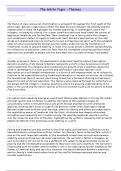
The theme of class and social stratification is prevalent throughout the first night of The
White Tiger. Balram’s experiences reflect the deep divisions between the wealthy and the
impoverished in India. He highlights his humble beginnings in Laxmangarh, where the
villagers, including his family, live in poor conditions and work hard under the control of
oppressive landlords like The Buffalo. These landlords live in luxury while the villagers,
such as Balram’s father, struggle to make ends meet. Balram’s observations of the class
divide are emphasized when he contrasts his own entrepreneurial spirit with the outdated
ideas of success promoted by foreign business books, underscoring the limitations of
traditional routes to upward mobility in India. This social divide is further exemplified by
his reflections on education, where he feels that his incomplete schooling and the limited
opportunities available to people like him have kept him in a state of being "half-baked."
Identity and Self-Perception
Another prominent theme is the development of personal identity and self-perception.
Balram’s evolution from Munna to Balram represents a shift in how he perceives himself
and his potential. His changing name symbolizes his growth, from a nameless, powerless
child in Laxmangarh to a more assertive and self-aware individual. Balram's self-
description as a self-taught entrepreneur is a form of self-empowerment, as he refuses to
conform to the expectations set by traditional education or societal structures. He critiques
the conventional idea of success, positioning himself as a forward-thinking entrepreneur,
despite his lack of formal education. This theme is also explored through his reflections on
the Ganga and the villagers' religious practices, where his growing understanding of his
place in the world and the harsh realities of his environment clash with his desire to break
free from them.
Corruption and Inequality
Corruption and inequality emerge as significant themes when Balram criticizes the Indian
political system and its failure to address the needs of the underprivileged. He
sarcastically refers to the politicians who greet foreign dignitaries with ceremonial
gestures, mocking their focus on superficial gestures rather than meaningful change.
Balram’s experience with the local tea shop, where his family and others are subjected to
the exploitative power of landlords like the Stork, illustrates how deeply entrenched
corruption and inequality are in Indian society. The wealthy landlords maintain control
over the resources and lives of the poor, highlighting the systemic inequality that prevents
people like Balram from achieving social mobility or justice.
Family and Tradition
Family and tradition are also central to the first night, with Balram’s reflections on his
household and his interactions with his father. His family’s focus on the buffalo, which is
seen as the most important member of the household, reveals how survival and economic
stability are prioritized over personal aspirations. The narrator’s father’s struggles, as
well as his desire for his son to live a different life, speak to the generational cycles of
poverty and the limited options available to those born into such conditions. The narrator’s
relationship with his father and his mother’s role in his upbringing further emphasize the
themes of familial duty and sacrifice. However, the tension between Balram's ambitions
and his family's traditional values hints at the conflict between personal desires and
societal expectations.
, The Second Night
Social Inequality
The narrator's experiences highlight the stark contrast between the privileged lives of
people like Mr. Ashok and Pinky Madam and his own struggles as a servant. The disparity
between the rich and poor is vividly depicted through the narrator's observations and the
way he is treated by those of higher social status. For example, the narrator reflects on his
work conditions, where he is expected to perform menial tasks like sweeping and making
tea, while also feeling envy toward Ram Persad, who drives a better car. This theme of
social inequality is also reinforced by the narrator's resentment toward the Pomeranians,
who are treated better than him by the Nepali servant.
Corruption
The narrator's experiences with the corruption in various sectors of Indian society,
including healthcare, politics, and employment, are woven throughout the narrative. The
death of the narrator's father, caused by tuberculosis, highlights the inadequate and
corrupt healthcare system, where the government hospital is underfunded, and patients are
neglected. The narrator overhears conversations about corruption in the medical field,
which shapes his cynical view of the world. Additionally, the mention of corruption within
the political system and the Naxalite violence shows how deep-rooted corruption is in
different aspects of life.
Caste and Identity
The narrator grapples with his caste identity and its impact on his opportunities in life.
Throughout the Second Night, the theme of caste is explored, especially when the narrator
lies about his caste to the Stork in an attempt to secure a job. The narrator’s feelings about
his caste come to the surface when he talks about being from the "Halwai" caste, which
means sweet-maker, yet he doesn't follow that occupation. The theme of caste and identity
is also touched upon in the narrator's interactions with the Stork, who inquires about his
background and caste, illustrating the ongoing social divisions based on caste.
Aspiration and Ambition
The narrator's desire to escape his circumstances and improve his life is a recurring theme
in the Second Night. He is determined to make a living and learn new skills, such as driving,
in order to secure better job opportunities. His ambitions are evident when he overhears a
conversation about the pay of taxi drivers and resolves to learn how to drive, despite
facing several challenges along the way. The narrator's drive to change his life is also
reflected in his willingness to negotiate his salary with the Stork, demonstrating his
determination to break free from the confines of his current social position.
Loyalty and Relationships
The theme of loyalty is explored in the narrator’s interactions with Mr. Ashok and the Stork.
Although the narrator eventually kills Mr. Ashok, he expresses respect for him and his
family, and remains loyal to his memory. The narrator also forms a complicated
relationship with the Stork, where he demonstrates loyalty despite the Stork’s harsh
treatment of him and others. The theme of loyalty extends to the narrator's family as well,
as he is expected to send money home, which he resents, but ultimately feels responsible for
upholding the expectations of his family and their opinion of his success.
The First Night
Class and Social Stratification
The theme of class and social stratification is prevalent throughout the first night of The
White Tiger. Balram’s experiences reflect the deep divisions between the wealthy and the
impoverished in India. He highlights his humble beginnings in Laxmangarh, where the
villagers, including his family, live in poor conditions and work hard under the control of
oppressive landlords like The Buffalo. These landlords live in luxury while the villagers,
such as Balram’s father, struggle to make ends meet. Balram’s observations of the class
divide are emphasized when he contrasts his own entrepreneurial spirit with the outdated
ideas of success promoted by foreign business books, underscoring the limitations of
traditional routes to upward mobility in India. This social divide is further exemplified by
his reflections on education, where he feels that his incomplete schooling and the limited
opportunities available to people like him have kept him in a state of being "half-baked."
Identity and Self-Perception
Another prominent theme is the development of personal identity and self-perception.
Balram’s evolution from Munna to Balram represents a shift in how he perceives himself
and his potential. His changing name symbolizes his growth, from a nameless, powerless
child in Laxmangarh to a more assertive and self-aware individual. Balram's self-
description as a self-taught entrepreneur is a form of self-empowerment, as he refuses to
conform to the expectations set by traditional education or societal structures. He critiques
the conventional idea of success, positioning himself as a forward-thinking entrepreneur,
despite his lack of formal education. This theme is also explored through his reflections on
the Ganga and the villagers' religious practices, where his growing understanding of his
place in the world and the harsh realities of his environment clash with his desire to break
free from them.
Corruption and Inequality
Corruption and inequality emerge as significant themes when Balram criticizes the Indian
political system and its failure to address the needs of the underprivileged. He
sarcastically refers to the politicians who greet foreign dignitaries with ceremonial
gestures, mocking their focus on superficial gestures rather than meaningful change.
Balram’s experience with the local tea shop, where his family and others are subjected to
the exploitative power of landlords like the Stork, illustrates how deeply entrenched
corruption and inequality are in Indian society. The wealthy landlords maintain control
over the resources and lives of the poor, highlighting the systemic inequality that prevents
people like Balram from achieving social mobility or justice.
Family and Tradition
Family and tradition are also central to the first night, with Balram’s reflections on his
household and his interactions with his father. His family’s focus on the buffalo, which is
seen as the most important member of the household, reveals how survival and economic
stability are prioritized over personal aspirations. The narrator’s father’s struggles, as
well as his desire for his son to live a different life, speak to the generational cycles of
poverty and the limited options available to those born into such conditions. The narrator’s
relationship with his father and his mother’s role in his upbringing further emphasize the
themes of familial duty and sacrifice. However, the tension between Balram's ambitions
and his family's traditional values hints at the conflict between personal desires and
societal expectations.
, The Second Night
Social Inequality
The narrator's experiences highlight the stark contrast between the privileged lives of
people like Mr. Ashok and Pinky Madam and his own struggles as a servant. The disparity
between the rich and poor is vividly depicted through the narrator's observations and the
way he is treated by those of higher social status. For example, the narrator reflects on his
work conditions, where he is expected to perform menial tasks like sweeping and making
tea, while also feeling envy toward Ram Persad, who drives a better car. This theme of
social inequality is also reinforced by the narrator's resentment toward the Pomeranians,
who are treated better than him by the Nepali servant.
Corruption
The narrator's experiences with the corruption in various sectors of Indian society,
including healthcare, politics, and employment, are woven throughout the narrative. The
death of the narrator's father, caused by tuberculosis, highlights the inadequate and
corrupt healthcare system, where the government hospital is underfunded, and patients are
neglected. The narrator overhears conversations about corruption in the medical field,
which shapes his cynical view of the world. Additionally, the mention of corruption within
the political system and the Naxalite violence shows how deep-rooted corruption is in
different aspects of life.
Caste and Identity
The narrator grapples with his caste identity and its impact on his opportunities in life.
Throughout the Second Night, the theme of caste is explored, especially when the narrator
lies about his caste to the Stork in an attempt to secure a job. The narrator’s feelings about
his caste come to the surface when he talks about being from the "Halwai" caste, which
means sweet-maker, yet he doesn't follow that occupation. The theme of caste and identity
is also touched upon in the narrator's interactions with the Stork, who inquires about his
background and caste, illustrating the ongoing social divisions based on caste.
Aspiration and Ambition
The narrator's desire to escape his circumstances and improve his life is a recurring theme
in the Second Night. He is determined to make a living and learn new skills, such as driving,
in order to secure better job opportunities. His ambitions are evident when he overhears a
conversation about the pay of taxi drivers and resolves to learn how to drive, despite
facing several challenges along the way. The narrator's drive to change his life is also
reflected in his willingness to negotiate his salary with the Stork, demonstrating his
determination to break free from the confines of his current social position.
Loyalty and Relationships
The theme of loyalty is explored in the narrator’s interactions with Mr. Ashok and the Stork.
Although the narrator eventually kills Mr. Ashok, he expresses respect for him and his
family, and remains loyal to his memory. The narrator also forms a complicated
relationship with the Stork, where he demonstrates loyalty despite the Stork’s harsh
treatment of him and others. The theme of loyalty extends to the narrator's family as well,
as he is expected to send money home, which he resents, but ultimately feels responsible for
upholding the expectations of his family and their opinion of his success.