NR509 advanced physical assessment
midterm week 1-4
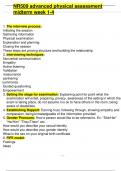
1. The interview process:
Initiating the session
Gathering information
Physical examination
Explanation and planning
Closing the session
These steps are proving structure and building the relationship
2. interviewing techniques:
Nonverbal communication
Empathy
Active listening
Validation
reassurance
partnering
summarize
Guided questioning
Empowerment
3. Setting the stage for examination: Explaining point for point what the
examination will entail, preparing, privacy, awareness of the setting in which the
exam is taking place, do not assume it is ok to have others in the room, being
aware of disabilities.
4. Establishing Rapport: Earning trust, following through, showing empathy and
compassion, being knowledgeable of the information provided
5. Gender Pronouns: How a person would like to be referred to. Ex: "She/Her"
"He/Him" "They/Them" etc.
How would you describe your sexual identity
How would you describe your gender identity
What is the sex on your original birth certificate
6. FIFE model:
Feelings
Ideas
,Functioning
Expectations
Helps explore the patient's perspective about their health and illness
7. Patient-centered medical care: Involving the patient in their care and coming
up with a plan with the provider. Provider must acknowledge their own personal
biases while being aware of what is the safest Sam's most effective plan for the
patient
8. Fundamentals of skilled interviewing: Active listening, empathetic
responses, guided questioning, nonverbal communication, validation,
reassurance, partnering, summarization, transitions, empowering the patient
9. verbal communication: expressing ideas to others by using spoken words
10. nonverbal communication: communication using body movements,
gestures, and facial expressions rather than speech
11. Challenging Patient Situations and behaviors:
Silent Talkative
With confusing narrative
With altered state or cognition
With emotional lability
Angry or aggressive
Flirtatious
Discriminatory
With hearing loss
With low or impaired vision
With limited intelligence
Burdened by personal problems
Nonadherent
With low literacy
With low health literacy
With limited language proficiency
With terminal illness or dying
12. 5 R's off cultural humility:
Reflection— what did I learn? Respect—did I treat everyone involved w respect?
Regard—did unconscious bias drive this encounter?
Relevance—how was cultural humility relevant?
Resiliency—how did my personal resilience affect this interaction?
, NR509 advanced physical assessment
midterm week 1-4
13. Core Values of Medical Ethics: nonmaleficence, beneficence, respect for
autonomy, decisional capacity, confidentiality, informed consent, truth telling,
justice
14. Focused Health History: ALL components of the Complete Health History
with the focus on the specific reason the client is seeking care.
15. Comprehensive Health History: includes biographic data, reason for seeking
care, present health status, past medical history, family history, personal and
psychosocial history, and a review of all body systems
Psych
Obstetrics
Surgery c-section goes here
Hospital stays
16. Components of Health History:
1) Demographic information
2) Source of history
3) Chief concern
4) History of present illness
——OLDCARTS
5) Past health history and current health status
6) Family history
7) Social history
8) Health promotion behaviors
9) ROS
——all subjective
17. Determining the Scope of patient assessment: The patient's symptoms,
age, and health history help determine the scope of the focused examination,
as does your knowledge of disease patterns.
18. seven attributes of a symptom:
1. Location
2. Quality
3. Quantity or severity
4. Timing (including onset, duration, and frequency)
midterm week 1-4
1. The interview process:
Initiating the session
Gathering information
Physical examination
Explanation and planning
Closing the session
These steps are proving structure and building the relationship
2. interviewing techniques:
Nonverbal communication
Empathy
Active listening
Validation
reassurance
partnering
summarize
Guided questioning
Empowerment
3. Setting the stage for examination: Explaining point for point what the
examination will entail, preparing, privacy, awareness of the setting in which the
exam is taking place, do not assume it is ok to have others in the room, being
aware of disabilities.
4. Establishing Rapport: Earning trust, following through, showing empathy and
compassion, being knowledgeable of the information provided
5. Gender Pronouns: How a person would like to be referred to. Ex: "She/Her"
"He/Him" "They/Them" etc.
How would you describe your sexual identity
How would you describe your gender identity
What is the sex on your original birth certificate
6. FIFE model:
Feelings
Ideas
,Functioning
Expectations
Helps explore the patient's perspective about their health and illness
7. Patient-centered medical care: Involving the patient in their care and coming
up with a plan with the provider. Provider must acknowledge their own personal
biases while being aware of what is the safest Sam's most effective plan for the
patient
8. Fundamentals of skilled interviewing: Active listening, empathetic
responses, guided questioning, nonverbal communication, validation,
reassurance, partnering, summarization, transitions, empowering the patient
9. verbal communication: expressing ideas to others by using spoken words
10. nonverbal communication: communication using body movements,
gestures, and facial expressions rather than speech
11. Challenging Patient Situations and behaviors:
Silent Talkative
With confusing narrative
With altered state or cognition
With emotional lability
Angry or aggressive
Flirtatious
Discriminatory
With hearing loss
With low or impaired vision
With limited intelligence
Burdened by personal problems
Nonadherent
With low literacy
With low health literacy
With limited language proficiency
With terminal illness or dying
12. 5 R's off cultural humility:
Reflection— what did I learn? Respect—did I treat everyone involved w respect?
Regard—did unconscious bias drive this encounter?
Relevance—how was cultural humility relevant?
Resiliency—how did my personal resilience affect this interaction?
, NR509 advanced physical assessment
midterm week 1-4
13. Core Values of Medical Ethics: nonmaleficence, beneficence, respect for
autonomy, decisional capacity, confidentiality, informed consent, truth telling,
justice
14. Focused Health History: ALL components of the Complete Health History
with the focus on the specific reason the client is seeking care.
15. Comprehensive Health History: includes biographic data, reason for seeking
care, present health status, past medical history, family history, personal and
psychosocial history, and a review of all body systems
Psych
Obstetrics
Surgery c-section goes here
Hospital stays
16. Components of Health History:
1) Demographic information
2) Source of history
3) Chief concern
4) History of present illness
——OLDCARTS
5) Past health history and current health status
6) Family history
7) Social history
8) Health promotion behaviors
9) ROS
——all subjective
17. Determining the Scope of patient assessment: The patient's symptoms,
age, and health history help determine the scope of the focused examination,
as does your knowledge of disease patterns.
18. seven attributes of a symptom:
1. Location
2. Quality
3. Quantity or severity
4. Timing (including onset, duration, and frequency)