Human – Environment Relationship
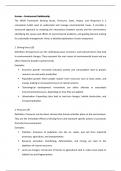
The DPSIR Framework (Driving forces, Pressures, State, Impact, and Response) is a
conceptual model used to understand and manage environmental issues. It provides a
structured approach to analyzing the interactions between society and the environment,
identifying the causes and effects of environmental problems, and guiding decision-making
for sustainable management. Here's a detailed explanation of each component:
1. Driving forces (D)
Definition: Driving forces are the underlying social, economic, and cultural factors that lead
to environmental changes. They represent the root causes of environmental issues and are
often related to broader societal trends.
Examples:
Economic growth: Increased industrial activity and consumption lead to greater
resource use and waste production.
Population growth: More people require more resources such as food, water, and
energy, leading to increased pressure on natural systems.
Technological development: Innovations can either alleviate or exacerbate
environmental pressures, depending on how they are applied.
Urbanization: Expanding cities lead to land-use changes, habitat destruction, and
increased pollution.
2. Pressures (P)
Definition: Pressures are the direct stresses that human activities place on the environment.
They are the immediate effects of driving forces and represent specific actions or processes
that alter the environment.
Examples:
Pollution: Emissions of pollutants into the air, water, and soil from industrial
processes, agriculture, and transportation.
Resource extraction: Overfishing, deforestation, and mining can lead to the
depletion of natural resources.
Land use changes: Conversion of forests to agricultural land or urban areas leads to
habitat loss and fragmentation.
The DPSIR Framework (Driving forces, Pressures, State, Impact, and Response) is a
conceptual model used to understand and manage environmental issues. It provides a
structured approach to analyzing the interactions between society and the environment,
identifying the causes and effects of environmental problems, and guiding decision-making
for sustainable management. Here's a detailed explanation of each component:
1. Driving forces (D)
Definition: Driving forces are the underlying social, economic, and cultural factors that lead
to environmental changes. They represent the root causes of environmental issues and are
often related to broader societal trends.
Examples:
Economic growth: Increased industrial activity and consumption lead to greater
resource use and waste production.
Population growth: More people require more resources such as food, water, and
energy, leading to increased pressure on natural systems.
Technological development: Innovations can either alleviate or exacerbate
environmental pressures, depending on how they are applied.
Urbanization: Expanding cities lead to land-use changes, habitat destruction, and
increased pollution.
2. Pressures (P)
Definition: Pressures are the direct stresses that human activities place on the environment.
They are the immediate effects of driving forces and represent specific actions or processes
that alter the environment.
Examples:
Pollution: Emissions of pollutants into the air, water, and soil from industrial
processes, agriculture, and transportation.
Resource extraction: Overfishing, deforestation, and mining can lead to the
depletion of natural resources.
Land use changes: Conversion of forests to agricultural land or urban areas leads to
habitat loss and fragmentation.