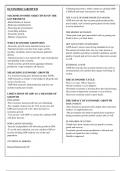
ECONOMIC GROWTH -Gathering data from a whole country to calculate GDP
is difficult and many inaccuracies are made.
MACROECONOMIC OBJECTIVES OF THE
THE VALUE OF HOME PRODUCED GOODS:
GOVERNMENT
-GDP does not take into account goods produced that
-Redistribution of income.
aren’t traded, such as home-grown plants for the family
-Reducing unemployment.
to eat by themselves.
-Protecting the environment.
-Controlling inflation.
THE HIDDEN ECONOMY:
-Economic growth.
-Some paid work goes unrecorded, such as paying your
-Balance of payments.
friend to drive you back home.
WHAT ECONOMIC GROWTH IS GDP AND LIVING STANDARDS:
-Economic growth means national income rises. -GDP doesn’t always mean living standards have rise.
-National income is income from wages, profits, The amount of leisure time, the way extra income is
royalties, dividends, interest and income gathered shared, whether growth has resulted in pollution, and the
abroad. quality of goods and services must be taken into account
-National income is also equal to the value of production as well.
and spending in the economy.
-Good economic growth means aggregate demand, EXTERNAL COSTS:
production, wages and prices all increase. -GDP does not take into account external costs such as
environmental costs and hoe they impact well being of
MEASURING ECONOMIC GROWTH society.
-It is measured using gross domestic product (GDP).
-GDP measures a country’s total output of all goods and THE ECONOMIC CYCLE
services for the year. Please see page 198 for diagram
-GDP Only measures final production and does not -Boom (economy is at its highest).
include manufacture of parts. -Downturn (economy is slowing down but still growing).
-Recession or depression (economy is at its lowest).
LIMITATIONS OF GDP AS A MEASURE OF -Recovery (economy starts to grow back).
GROWTH
INFLATION: THE IMPACT OF ECONOMIC GROWTH
-Price increases mean growth rates are misleading. EMPLOYMENT:
-For example, if prices rise by 2.6% in one year and -Since businesses generate more output, they need more
GDP also increases by 2.6%, there has been no workers, so employment rises.
economic growth. -The government also tends to spend more on projects
-You can use “real GDP” to correct this; subtract GDP during economic growth and this creates jobs as well.
with price increase.
STANDARDS OF LIVING:
POPULATION CHANGES: -People have more income and can spend it on more
-Increase in population will offset the growth in GDP. goods and services.
-To avoid such confusion, you can calculate GDP per -Economic growth means production is efficient and
head by dividing GDP with the size of the total people can spend less time working.
population. -Health is improved.
STATISTICAL ERRORS:
Hamad Mohammed|11D
, POVERTY:
-Poverty is reduced due to more jobs.
-Growing income means government can collect more
tax revenue, which can be used to provide services such
as health care, education and provision for the poor.
PRODUCTIVE POTENTIAL:
Please see page 200 for PPC diagram.
-Economic growth raises the amount a country can
produce as goods and services.
INFLATION:
-If economy grows too fast, it can overheat and cause
demand-pull inflation.
THE ENVIRONMENT:
-Economic growth means more production, and more
production means more environmental damage.
-More production uses non-renewable resources, so
growth is unsustainable and future generations will have
lesser resources.
Hamad Mohammed|11D
is difficult and many inaccuracies are made.
MACROECONOMIC OBJECTIVES OF THE
THE VALUE OF HOME PRODUCED GOODS:
GOVERNMENT
-GDP does not take into account goods produced that
-Redistribution of income.
aren’t traded, such as home-grown plants for the family
-Reducing unemployment.
to eat by themselves.
-Protecting the environment.
-Controlling inflation.
THE HIDDEN ECONOMY:
-Economic growth.
-Some paid work goes unrecorded, such as paying your
-Balance of payments.
friend to drive you back home.
WHAT ECONOMIC GROWTH IS GDP AND LIVING STANDARDS:
-Economic growth means national income rises. -GDP doesn’t always mean living standards have rise.
-National income is income from wages, profits, The amount of leisure time, the way extra income is
royalties, dividends, interest and income gathered shared, whether growth has resulted in pollution, and the
abroad. quality of goods and services must be taken into account
-National income is also equal to the value of production as well.
and spending in the economy.
-Good economic growth means aggregate demand, EXTERNAL COSTS:
production, wages and prices all increase. -GDP does not take into account external costs such as
environmental costs and hoe they impact well being of
MEASURING ECONOMIC GROWTH society.
-It is measured using gross domestic product (GDP).
-GDP measures a country’s total output of all goods and THE ECONOMIC CYCLE
services for the year. Please see page 198 for diagram
-GDP Only measures final production and does not -Boom (economy is at its highest).
include manufacture of parts. -Downturn (economy is slowing down but still growing).
-Recession or depression (economy is at its lowest).
LIMITATIONS OF GDP AS A MEASURE OF -Recovery (economy starts to grow back).
GROWTH
INFLATION: THE IMPACT OF ECONOMIC GROWTH
-Price increases mean growth rates are misleading. EMPLOYMENT:
-For example, if prices rise by 2.6% in one year and -Since businesses generate more output, they need more
GDP also increases by 2.6%, there has been no workers, so employment rises.
economic growth. -The government also tends to spend more on projects
-You can use “real GDP” to correct this; subtract GDP during economic growth and this creates jobs as well.
with price increase.
STANDARDS OF LIVING:
POPULATION CHANGES: -People have more income and can spend it on more
-Increase in population will offset the growth in GDP. goods and services.
-To avoid such confusion, you can calculate GDP per -Economic growth means production is efficient and
head by dividing GDP with the size of the total people can spend less time working.
population. -Health is improved.
STATISTICAL ERRORS:
Hamad Mohammed|11D
, POVERTY:
-Poverty is reduced due to more jobs.
-Growing income means government can collect more
tax revenue, which can be used to provide services such
as health care, education and provision for the poor.
PRODUCTIVE POTENTIAL:
Please see page 200 for PPC diagram.
-Economic growth raises the amount a country can
produce as goods and services.
INFLATION:
-If economy grows too fast, it can overheat and cause
demand-pull inflation.
THE ENVIRONMENT:
-Economic growth means more production, and more
production means more environmental damage.
-More production uses non-renewable resources, so
growth is unsustainable and future generations will have
lesser resources.
Hamad Mohammed|11D