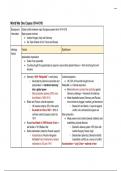
World War One Causes 1914-1918
Background Global conflict between major European powers from 1914-1918.
information Major powers involved:
● Austria-Hungary, Italy and Germany
● the Triple Entente of UK, France and Russia
Ideology Factors Significance
factors
Nationalistic imperialism:
● Scale of war expanded
● Countries fought for opportunities to expand or secure their global influence -> form the driving force for
tensions
● Germany: 1890 “Weltpolitik” = world policy Colonial expansion:
○ Advocated by German economists and ● UK: 25% of the world brought into war
policymakers -> transform Germany Weltpolitik v.s. Colonial expansion:
into a global power ● More defensive to protect their authority against
○ Steel production growing 330% more Germany challenge -> framework for alliances
than Britain’s (1890-1913) ● Made dissatisfied power (Germany and Russia)
● Britain and France: colonial expansion more inclined to engage in warfare, get dominance
○ UK massive empire, 25% of the world ○ Backed AH and Serbia -> beyond regional
○ Scramble for Africa 1881 -> 90% of conflict, into continental European war
continent under European control by Steel production:
1914 ● Made powers more inclined towards militarism and
● Russia humiliated in 1908 Bosnian Crisis -> establishing cultural alliances
aid Serbia in 1912 Balkan War ○ Bismark’s alliance system 1870 (bloc with
● Serbia nationalism (raised by Russian support) Austria Hungary, Russia, Italy)
○ Assassination of Austro-Hungarian ○ Bismarckian diplomacy: Bismarck identify
Archduke Franz Ferdinand by Serbian imperialistic conflict as a source of conflict
nationalist on 28 June 1914 Assassination -> July Crisis = outbreak of war
, Militarism:
● Sparked initial conflicts
● Leaders are more confident to go to war (strength of armies)
● Europe increasing armaments Armaments + conscription
○ Navies increased by nearly 200% ● Created the climate of war-mongering
(1900-1914) ● Germany army -> expansionist motives
● Conscription of soldiers (Weltpolitik) + defend insecurities in face of larger
○ France 3 Year National Service Law imperialist powers
1913 -> increase army by 50% Anglo-German Naval Race
○ Russia built up 1.3 million strong army ● German’s heavy investment -> challenge of status
○ Germany 1.9 million strong army quo, challenge of authority of UK as largest naval
● Anglo-German Naval Race power
○ Kaiser order large shipbuilding initiatives AH v.s. Serbia:
1898 & 1900 ● Slavic unity: countering imperialist interest of AH
○ UK launch super battleship ● Army double: AH fear of Serbia military surpassing
Dreadnought 1906 their military of 350,000 -> see Serbia militarism
● AH v.s. Serbia as a threat
○ Balkan nationalism: Serbia call for ○ Triggered aggression -> first nation to
Slavic unity mobilise power 29 June 1914
○ Serbian militarism: army double after
victory in 1st Balkan War 1912 (190,000
in 1913)
Historian John George Stoessinger blames outbreak of war on role of personalities in July Crisis that saw overly
defensive and aggressive leaders
Historian Vitaly Churkin: “Russia had its own priorities when supporting Serbia in Balkan Crisis”
System of System of alliances:
alliances ● Created by imperialism in short-term crises, founded by mutual protections
● Not the most important, because it was motivated by nationalistic imperialism, aim to fulfil their imperialistic
ambitions
, Factors Significance
● Bismarck’s 1882 Triple Alliance 1904 Anglo-French Entente Cordiale
○ Germany, Italy, AH -> protect against ● 1905 Moroccan crisis, UK backed France in
French attack resisting German influence in Morocco
● 1904 Anglo-French Entente Cordiale + 1907 ● 1911 Agadir Crisis, UK stopped German intentions
Anglo-Russian Convention to control Morocco
○ Common goal to protect status quo ● Became more united, fuel German insecurity ->
against newer powers like Germany fear of encirclement
● AH alliance with Germany ○ Reactionary Germany moved to create
○ Germany guarantee support in 1908 its own defensive alliances with AH
Bosnian Crisis -> sparked AH military Russian support ally Serbia
confidence in Balkan Wars ● Intensify Balkan nationalism, used Balkan crisis to
(1912-1913) assert her own power
● Russian support ally Serbia ● Alliance were drawn based on imperialism,
○ Deepen conflict between AH and Serbia nationalism
○ Russia mobilise on 30 July 1914 to Unconditional German support
support Serbia -> join war ● AH confidence to go to war boosted -> prompted
● Central Powers AH to force unreasonable ultimatum on Serbia &
○ Germany issued Austria declare war on 28 July 1914
unconditional German support on 5
July
● Germany fear of encirclement due to
Anglo-Russian alliance (1891-94)
○ Schlieffen Plan, invade Belgium and
France -> 1839 Treaty of London with
Belgium drag largest superpower UK
Historian Niall Ferguson: “WW1 was a product of Germany’s fear of encirclement by hostile powers”
● The risk of economic ruin after war is predictable
Historian Sidney Bradshow Fay: “myriad of long-term imperialism, militarism and alliances were to blame”
Background Global conflict between major European powers from 1914-1918.
information Major powers involved:
● Austria-Hungary, Italy and Germany
● the Triple Entente of UK, France and Russia
Ideology Factors Significance
factors
Nationalistic imperialism:
● Scale of war expanded
● Countries fought for opportunities to expand or secure their global influence -> form the driving force for
tensions
● Germany: 1890 “Weltpolitik” = world policy Colonial expansion:
○ Advocated by German economists and ● UK: 25% of the world brought into war
policymakers -> transform Germany Weltpolitik v.s. Colonial expansion:
into a global power ● More defensive to protect their authority against
○ Steel production growing 330% more Germany challenge -> framework for alliances
than Britain’s (1890-1913) ● Made dissatisfied power (Germany and Russia)
● Britain and France: colonial expansion more inclined to engage in warfare, get dominance
○ UK massive empire, 25% of the world ○ Backed AH and Serbia -> beyond regional
○ Scramble for Africa 1881 -> 90% of conflict, into continental European war
continent under European control by Steel production:
1914 ● Made powers more inclined towards militarism and
● Russia humiliated in 1908 Bosnian Crisis -> establishing cultural alliances
aid Serbia in 1912 Balkan War ○ Bismark’s alliance system 1870 (bloc with
● Serbia nationalism (raised by Russian support) Austria Hungary, Russia, Italy)
○ Assassination of Austro-Hungarian ○ Bismarckian diplomacy: Bismarck identify
Archduke Franz Ferdinand by Serbian imperialistic conflict as a source of conflict
nationalist on 28 June 1914 Assassination -> July Crisis = outbreak of war
, Militarism:
● Sparked initial conflicts
● Leaders are more confident to go to war (strength of armies)
● Europe increasing armaments Armaments + conscription
○ Navies increased by nearly 200% ● Created the climate of war-mongering
(1900-1914) ● Germany army -> expansionist motives
● Conscription of soldiers (Weltpolitik) + defend insecurities in face of larger
○ France 3 Year National Service Law imperialist powers
1913 -> increase army by 50% Anglo-German Naval Race
○ Russia built up 1.3 million strong army ● German’s heavy investment -> challenge of status
○ Germany 1.9 million strong army quo, challenge of authority of UK as largest naval
● Anglo-German Naval Race power
○ Kaiser order large shipbuilding initiatives AH v.s. Serbia:
1898 & 1900 ● Slavic unity: countering imperialist interest of AH
○ UK launch super battleship ● Army double: AH fear of Serbia military surpassing
Dreadnought 1906 their military of 350,000 -> see Serbia militarism
● AH v.s. Serbia as a threat
○ Balkan nationalism: Serbia call for ○ Triggered aggression -> first nation to
Slavic unity mobilise power 29 June 1914
○ Serbian militarism: army double after
victory in 1st Balkan War 1912 (190,000
in 1913)
Historian John George Stoessinger blames outbreak of war on role of personalities in July Crisis that saw overly
defensive and aggressive leaders
Historian Vitaly Churkin: “Russia had its own priorities when supporting Serbia in Balkan Crisis”
System of System of alliances:
alliances ● Created by imperialism in short-term crises, founded by mutual protections
● Not the most important, because it was motivated by nationalistic imperialism, aim to fulfil their imperialistic
ambitions
, Factors Significance
● Bismarck’s 1882 Triple Alliance 1904 Anglo-French Entente Cordiale
○ Germany, Italy, AH -> protect against ● 1905 Moroccan crisis, UK backed France in
French attack resisting German influence in Morocco
● 1904 Anglo-French Entente Cordiale + 1907 ● 1911 Agadir Crisis, UK stopped German intentions
Anglo-Russian Convention to control Morocco
○ Common goal to protect status quo ● Became more united, fuel German insecurity ->
against newer powers like Germany fear of encirclement
● AH alliance with Germany ○ Reactionary Germany moved to create
○ Germany guarantee support in 1908 its own defensive alliances with AH
Bosnian Crisis -> sparked AH military Russian support ally Serbia
confidence in Balkan Wars ● Intensify Balkan nationalism, used Balkan crisis to
(1912-1913) assert her own power
● Russian support ally Serbia ● Alliance were drawn based on imperialism,
○ Deepen conflict between AH and Serbia nationalism
○ Russia mobilise on 30 July 1914 to Unconditional German support
support Serbia -> join war ● AH confidence to go to war boosted -> prompted
● Central Powers AH to force unreasonable ultimatum on Serbia &
○ Germany issued Austria declare war on 28 July 1914
unconditional German support on 5
July
● Germany fear of encirclement due to
Anglo-Russian alliance (1891-94)
○ Schlieffen Plan, invade Belgium and
France -> 1839 Treaty of London with
Belgium drag largest superpower UK
Historian Niall Ferguson: “WW1 was a product of Germany’s fear of encirclement by hostile powers”
● The risk of economic ruin after war is predictable
Historian Sidney Bradshow Fay: “myriad of long-term imperialism, militarism and alliances were to blame”