Translational Genomics
TRANSLATIONAL GENOMICS
KW1 Radboud Universiteit
2024/ 2025
0
,Translational Genomics
1
,Translational Genomics
TABLE OF CONTENTS
BLOC I: GENOME ARCHITECTURE AND GENOME VARIATION .......................................... 3
UNIT 1: Genome architecture...................................................................................... 3
UNIT 2: Genome variation ........................................................................................... 7
UNIT 3: Determination of variation ............................................................................ 12
BLOC II: CHROMOSOMAL ABNORMALITIES AND MENDELIAN INHERITANCE ................ 16
UNIT 4: Mendelian inheritance .................................................................................. 16
UNIT 5: The needle in the haystack ............................................................................ 22
BLOC III: MICROSATELLITE INSTABILITY ........................................................................ 26
UNIT 6: Clinical genetics of Myotonic Dystrophy ........................................................ 26
UNIT 7: Molecular mechanisms of microsatellite instability ....................................... 31
UNIT 8: Disease mechanisms in microsatellite instability diseases ............................ 36
UNIT 9: Missplicing, nuclear foci and RAN translation ................................................ 39
UNIT 10: Molecular therapy for myotonic dystrophy ................................................... 42
BLOC IV: MULTIFACTORIAL DISEASES........................................................................... 47
UNIT 11: Multifactorial diseases................................................................................ 47
BLOC V: NIPT & PGD .................................................................................................... 52
UNIT 12: Non-Invasive Prenatal Testing (NIPT)............................................................ 52
UNIT 13: Preimplantation Genetic Testing (PGT) ......................................................... 58
BLOC VI: ANIMAL MODELS ........................................................................................... 60
UNIT 14: Animal models in genomic research ............................................................ 60
UNIT 15: Model organism Drosophila melanogaster ................................................... 62
UNIT 16: Genome editing: a crash course .................................................................. 64
UNIT 17: Genome editing therapies for Usher syndrome type 2A ................................ 68
UNIT 18: a novel CRISPR/ Cas9-based tool ................................................................ 70
2
, Translational Genomics
BLOC I: GENOME ARCHITECTURE AND GENOME VARIATION
UNIT 1: Genome architecture
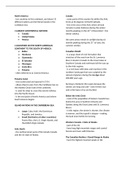
1. The human genome
- DNA: nucleus and mitochondria.
- Nucleus: 22 pair autosomes, 2 sex chromosomes (XX of XY), 20 000 genes, 25 000
non-coding genes.
- Chromosomes: 22 pairs in humans + XX or XY, 19 pairs in mouse + XX or XY.
- Base pairs: exon 1 is GC rich (hard to separate because it has 3 bonds). ATG (start
codon).
o Purines: Adenine, Guanine.
o Pyrimidines: Thymine, Cytosine, Uracil (RNA only)
2. Functional DNA
- Components of the human genome:
o Functional:
▪ Protein coding genes (1,5%): 80% of diseases.
▪ Introns.
▪ Miscellaneous unique sequences.
▪ Miscellaneous heterochromatin, segmental duplications.
o Junk: involve in structure of the genes and structure of the DNA.
▪ LINEs.
▪ SINEs.
▪ LTR retrotransposons.
▪ DNA transposons.
▪ Simple sequence repeats.
Protein coding genes
- Genes:
- Splicing: exons (bold lines), introns (light lines).
3
TRANSLATIONAL GENOMICS
KW1 Radboud Universiteit
2024/ 2025
0
,Translational Genomics
1
,Translational Genomics
TABLE OF CONTENTS
BLOC I: GENOME ARCHITECTURE AND GENOME VARIATION .......................................... 3
UNIT 1: Genome architecture...................................................................................... 3
UNIT 2: Genome variation ........................................................................................... 7
UNIT 3: Determination of variation ............................................................................ 12
BLOC II: CHROMOSOMAL ABNORMALITIES AND MENDELIAN INHERITANCE ................ 16
UNIT 4: Mendelian inheritance .................................................................................. 16
UNIT 5: The needle in the haystack ............................................................................ 22
BLOC III: MICROSATELLITE INSTABILITY ........................................................................ 26
UNIT 6: Clinical genetics of Myotonic Dystrophy ........................................................ 26
UNIT 7: Molecular mechanisms of microsatellite instability ....................................... 31
UNIT 8: Disease mechanisms in microsatellite instability diseases ............................ 36
UNIT 9: Missplicing, nuclear foci and RAN translation ................................................ 39
UNIT 10: Molecular therapy for myotonic dystrophy ................................................... 42
BLOC IV: MULTIFACTORIAL DISEASES........................................................................... 47
UNIT 11: Multifactorial diseases................................................................................ 47
BLOC V: NIPT & PGD .................................................................................................... 52
UNIT 12: Non-Invasive Prenatal Testing (NIPT)............................................................ 52
UNIT 13: Preimplantation Genetic Testing (PGT) ......................................................... 58
BLOC VI: ANIMAL MODELS ........................................................................................... 60
UNIT 14: Animal models in genomic research ............................................................ 60
UNIT 15: Model organism Drosophila melanogaster ................................................... 62
UNIT 16: Genome editing: a crash course .................................................................. 64
UNIT 17: Genome editing therapies for Usher syndrome type 2A ................................ 68
UNIT 18: a novel CRISPR/ Cas9-based tool ................................................................ 70
2
, Translational Genomics
BLOC I: GENOME ARCHITECTURE AND GENOME VARIATION
UNIT 1: Genome architecture
1. The human genome
- DNA: nucleus and mitochondria.
- Nucleus: 22 pair autosomes, 2 sex chromosomes (XX of XY), 20 000 genes, 25 000
non-coding genes.
- Chromosomes: 22 pairs in humans + XX or XY, 19 pairs in mouse + XX or XY.
- Base pairs: exon 1 is GC rich (hard to separate because it has 3 bonds). ATG (start
codon).
o Purines: Adenine, Guanine.
o Pyrimidines: Thymine, Cytosine, Uracil (RNA only)
2. Functional DNA
- Components of the human genome:
o Functional:
▪ Protein coding genes (1,5%): 80% of diseases.
▪ Introns.
▪ Miscellaneous unique sequences.
▪ Miscellaneous heterochromatin, segmental duplications.
o Junk: involve in structure of the genes and structure of the DNA.
▪ LINEs.
▪ SINEs.
▪ LTR retrotransposons.
▪ DNA transposons.
▪ Simple sequence repeats.
Protein coding genes
- Genes:
- Splicing: exons (bold lines), introns (light lines).
3