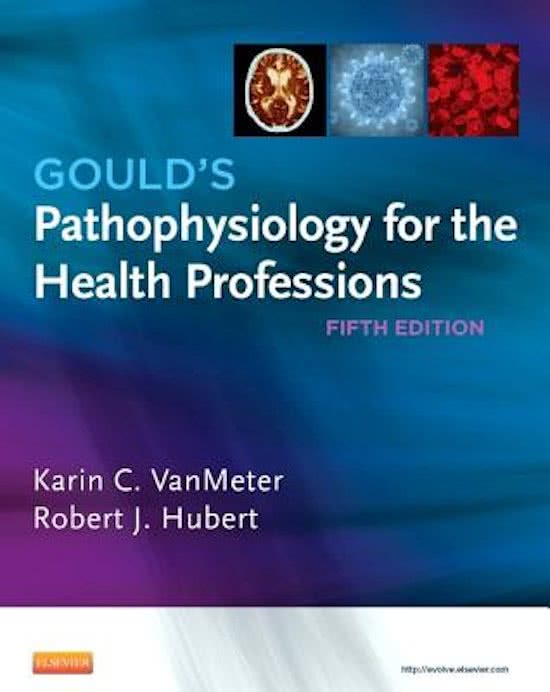
Pathophysiology:NR283 Week 1:NR283 Week 1 Edapt
Define World health organization - ANSWER:a state of physical, mental, social well being, and absence of
disease and infirmity
Define world health assembly - ANSWER:citizens reach a level of health that allows them to live a socially
and economically productive life
Define healthy people 2010 - ANSWER:an interaction between an individuals biology and behavior,
physical, and social environments, government policies and interventions, and access to quality health
care
the study of body function is? - ANSWER:physiology
the study of the body's response to dysfunction or disease is? - ANSWER:pathophysiology
______is an interruption, cessation, or disorder of a body system or organ structure - ANSWER:disease
the mechanism of high blood pressure is an example of ?
Hint:pathology is whats wrong with the heart.
physiology is how the "heart" maintains blood pressure.
pathophysiology is why blood pressure happens - ANSWER:pathophysiology
______ is the cause of the disease - ANSWER:etiology
______is how the disease progresses/how it happens. - ANSWER:pathogenesiss, i.e how the HIV virus
gets into the body
Clinical manifestations are considered ______ - ANSWER:the signs and symptoms of the disease. i.e fever
(objective)
What is the difference btwn subjective and objective - ANSWER:something you cant measure(pain)
objective is something you can measure (fever)
What is the clinical course of the disease? - ANSWER:what happens if there is no treatment. i.e if you
have a cold, and do nothing.(you get sick,sicker,better,then fine). You get better or you die.
What are some etiological factors or cases of a disease? -
ANSWER:bacteria,viruses,trauma,burns,radiation,poisons,alcohol,nutritional excess or defecits.
what are some factors affecting adaptation to stressors? - ANSWER:age, health status,psychosocial
resources. (school) rapidity with which the need to adapt occurs, and the availability of adaptive
responses and the ability of the body to select the most appropriate response.
______is anything that can cause disease - ANSWER:stressors
_______ is the nature or cause of a health problem - ANSWER:diagnosis
, ______ is the extent to which an observation, when repeated gives the same result - ANSWER:reliability
_____ is the extent to which a measurement tool measures what it is intended to measure. -
ANSWER:validity
_____and ______determines the likelihood or how well the test or observation identifies people with or
without a disease. - ANSWER:sensitivity and specificity
_____is an observation or test result that can predict the presence of a disease or condition. i.e if we see
someone coughing or sneezing, we know that this person is coming down with a cold. -
ANSWER:predictive value.
______can either be an EXISTING case or the number of new episodes of a particular illness. (i.e,
meningitis on a college campus, the frequency is 1 or 2 per year). - ANSWER:disease case
______ the number of NEW cases arising in a population at risk during a specified time. i.e 500 -
ANSWER:incidence
_____ a measure of EXISTING disease in a population at a given point in time. i.e, measles 1 in 5000 -
ANSWER:prevalence
_____ a person who studies disease progression such as the factors affecting the health and illness of
populations. (NOT NUMBER). - ANSWER:epidemiology
What are some factors derived by using epidemiologic methods? - ANSWER:how the disease spreads,
how to control the disease, how to prevent the disease, and how to eliminate the disease.
_____describes the effect an illness has on a persons life. - ANSWER:Morbidity
______ pertains to the CAUSE of death in a given population. i.e heart disease - ANSWER:Mortality
______is removing RISK factors so that the disease does not occur. i.e immunizations,healthy
lifestyle,water sanitation, sewer system. - ANSWER:primary prevention
_______ is detecting the disease when still curable. i.e pap smears,mammograms, chest x-ray. -
ANSWER:secondary prevention
______ is preventing further deterioration or reducing complications of disease. i.e antibiotics, rehab for
someone who had a stroke. - ANSWER:tertiary prevention
________ evidence that is proven to work. (i.e. if you give someone antibiotics,you have to keep the
blood level up. if it drops, the anti-biotic stops working and the bacteria continues to grow). -
ANSWER:evidence based practice
_____ use the simultaneous collection of info to classify exposure and outcome status - ANSWER:cross-
sectional studies
____compare case subjects to control subjects. i.e marijanna smokers, and non smokers - ANSWER:case-
control studies
____ is a group that has something in common - ANSWER:cohort studies
Define World health organization - ANSWER:a state of physical, mental, social well being, and absence of
disease and infirmity
Define world health assembly - ANSWER:citizens reach a level of health that allows them to live a socially
and economically productive life
Define healthy people 2010 - ANSWER:an interaction between an individuals biology and behavior,
physical, and social environments, government policies and interventions, and access to quality health
care
the study of body function is? - ANSWER:physiology
the study of the body's response to dysfunction or disease is? - ANSWER:pathophysiology
______is an interruption, cessation, or disorder of a body system or organ structure - ANSWER:disease
the mechanism of high blood pressure is an example of ?
Hint:pathology is whats wrong with the heart.
physiology is how the "heart" maintains blood pressure.
pathophysiology is why blood pressure happens - ANSWER:pathophysiology
______ is the cause of the disease - ANSWER:etiology
______is how the disease progresses/how it happens. - ANSWER:pathogenesiss, i.e how the HIV virus
gets into the body
Clinical manifestations are considered ______ - ANSWER:the signs and symptoms of the disease. i.e fever
(objective)
What is the difference btwn subjective and objective - ANSWER:something you cant measure(pain)
objective is something you can measure (fever)
What is the clinical course of the disease? - ANSWER:what happens if there is no treatment. i.e if you
have a cold, and do nothing.(you get sick,sicker,better,then fine). You get better or you die.
What are some etiological factors or cases of a disease? -
ANSWER:bacteria,viruses,trauma,burns,radiation,poisons,alcohol,nutritional excess or defecits.
what are some factors affecting adaptation to stressors? - ANSWER:age, health status,psychosocial
resources. (school) rapidity with which the need to adapt occurs, and the availability of adaptive
responses and the ability of the body to select the most appropriate response.
______is anything that can cause disease - ANSWER:stressors
_______ is the nature or cause of a health problem - ANSWER:diagnosis
, ______ is the extent to which an observation, when repeated gives the same result - ANSWER:reliability
_____ is the extent to which a measurement tool measures what it is intended to measure. -
ANSWER:validity
_____and ______determines the likelihood or how well the test or observation identifies people with or
without a disease. - ANSWER:sensitivity and specificity
_____is an observation or test result that can predict the presence of a disease or condition. i.e if we see
someone coughing or sneezing, we know that this person is coming down with a cold. -
ANSWER:predictive value.
______can either be an EXISTING case or the number of new episodes of a particular illness. (i.e,
meningitis on a college campus, the frequency is 1 or 2 per year). - ANSWER:disease case
______ the number of NEW cases arising in a population at risk during a specified time. i.e 500 -
ANSWER:incidence
_____ a measure of EXISTING disease in a population at a given point in time. i.e, measles 1 in 5000 -
ANSWER:prevalence
_____ a person who studies disease progression such as the factors affecting the health and illness of
populations. (NOT NUMBER). - ANSWER:epidemiology
What are some factors derived by using epidemiologic methods? - ANSWER:how the disease spreads,
how to control the disease, how to prevent the disease, and how to eliminate the disease.
_____describes the effect an illness has on a persons life. - ANSWER:Morbidity
______ pertains to the CAUSE of death in a given population. i.e heart disease - ANSWER:Mortality
______is removing RISK factors so that the disease does not occur. i.e immunizations,healthy
lifestyle,water sanitation, sewer system. - ANSWER:primary prevention
_______ is detecting the disease when still curable. i.e pap smears,mammograms, chest x-ray. -
ANSWER:secondary prevention
______ is preventing further deterioration or reducing complications of disease. i.e antibiotics, rehab for
someone who had a stroke. - ANSWER:tertiary prevention
________ evidence that is proven to work. (i.e. if you give someone antibiotics,you have to keep the
blood level up. if it drops, the anti-biotic stops working and the bacteria continues to grow). -
ANSWER:evidence based practice
_____ use the simultaneous collection of info to classify exposure and outcome status - ANSWER:cross-
sectional studies
____compare case subjects to control subjects. i.e marijanna smokers, and non smokers - ANSWER:case-
control studies
____ is a group that has something in common - ANSWER:cohort studies