

Unit 1
Meeting Customer needs
The Market
Mass Markets
These are products and services that are designed to appeal to a broad range of people.
Characteristics of Mass Markets
● The target market is not specific and is characterised by a wide demographic.
● Mass markets focus on high volume production distribution and sales
● Businesses following the mass market plan aim to achieve economies of scale to
produce goods with low average costs.
Niche Markets
A niche market targets a well defined segment of the population which is characterised by
specific needs, preferences or characteristics (eg. socio economic group).
Characteristics of Niche Markets:
● Products and services are tailored to meet the needs of the specialised audience.
● Niche markets operate within the business model of low production volumes and high
profit margins (large difference between the cost of producing and the price at which
the business sells them).
● Marketing strategies are targeted personalised
● Companies operating in niche markets offer unique and specialised products that are
not found in mass markets.
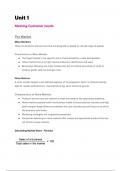
Calculating Market Share - Formula:
,Brands
A brand is a name, image, or logo which helps one product/service stand out from its
competitors.
It gives a company or product a distinct identity which differentiates it from others.
Purpose of Brands:
1. Differentiation: Helps products or services stand out from competitors
2. Builds Trust and Loyalty: A strong brand creates a sense of trust and loyalty for
repeat purchases.
3. Builds an Emotional Connection: Brands create emotional connections with
customers and evoke associations such as luxury or sustainability.
4. Premium Pricing: A strong and well established brand is able to charge higher
prices due to perceived quality and status.
Dynamic Markets
Dynamic markets are markets that experience rapid or continuous changes. These changes
can cause markets to grow, shrink, fragment, or even disappear altogether. Businesses that
fail to adapt to these changes risk collapse.
,Key Sources of Change:
● Customer tastes and preferences: Shifts in what consumers want or value.
● Technological impact: Changes in what customers buy and how they make purchases
due to new technology.
● New market entrants: The influence of new competitors entering the market.
● Economic changes: Fluctuations in the economy eg. Interest Rates, Inflation etc. that
affect market demand.
● External shocks: Unexpected events, such as natural disasters or political changes,
that impact the market.
Examples of Markets that have changed
- Film industries (netflix, amazon prime)
- Taxi services (uber, bolt)
- Mobile Phone market (Iphones)
There are 4 Areas to consider when examining dynamic markets:
● Online retailing
● How markets change
● Innovation and market growth
● Adapting to change
Online Retailing (E-commerce)
The rapid growth of online retailing has a major factor for today’s dynamic markets, pushing
businesses to adapt to stay competitive. `As consumer preferences shift towards online
shopping, driven by e-commerce, customer taste have shifted greatly eg. seen through
Amazon.
Benefits of Online Retailing:
● Customer Convenience: Appeals to those who prefer shopping from home or find
visiting physical stores tiring.
, ● Lower Operating Costs: Online retailing reduces costs operating costs eg. rent, staff,
and store overheads, allowing retailers to offer lower prices and maintain higher
profit margins.
● Wider Reach: Businesses have the ability to market to a wider audience through
online platforms.
● 24/7 Accessibility: Online stores are open all the time.
● Increased Flexibility: Online stores can quickly update newly arrived products whilst
in physical shops a period is required for stocking them up.
How Markets Change
1. Market Size: Most markets grow due to factors such as rising incomes, technological
advancements and changing consumer preferences.
2. Market Nature: Many markets are changing in nature due to advancements in
technology, shift in consumer behaviour, social media influence etc. these factors
make businesses adapt to evolving needs to remain competitive.
3. New markets: The entrance of new markets changes the landscape of existing
markets by bringing new competitors and innovation.
Innovation and Market Growth
Markets grow at varying rates and this growth is influenced by several factors that drives
advancements of dynamic markets:
- Economic Growth: The economic climate faces large discrepancies with periods of
growth (booms) and contractions (recessions) as well as the impact of volatile
interest rates and inflation. These overall change the demand asked from consumers
for goods and services - influencing market growth.
- Innovation: The rise of technological advancements have formed completely new
markets and change the way existing ones operate including new marketing and
distribution methods challenging traditional industries.
- Social Changes: Societal changes such as changes in family structures and the
increase of dual income families has fueled demand for convenience foods fostering
growth in certain markets.
Meeting Customer needs
The Market
Mass Markets
These are products and services that are designed to appeal to a broad range of people.
Characteristics of Mass Markets
● The target market is not specific and is characterised by a wide demographic.
● Mass markets focus on high volume production distribution and sales
● Businesses following the mass market plan aim to achieve economies of scale to
produce goods with low average costs.
Niche Markets
A niche market targets a well defined segment of the population which is characterised by
specific needs, preferences or characteristics (eg. socio economic group).
Characteristics of Niche Markets:
● Products and services are tailored to meet the needs of the specialised audience.
● Niche markets operate within the business model of low production volumes and high
profit margins (large difference between the cost of producing and the price at which
the business sells them).
● Marketing strategies are targeted personalised
● Companies operating in niche markets offer unique and specialised products that are
not found in mass markets.
Calculating Market Share - Formula:
,Brands
A brand is a name, image, or logo which helps one product/service stand out from its
competitors.
It gives a company or product a distinct identity which differentiates it from others.
Purpose of Brands:
1. Differentiation: Helps products or services stand out from competitors
2. Builds Trust and Loyalty: A strong brand creates a sense of trust and loyalty for
repeat purchases.
3. Builds an Emotional Connection: Brands create emotional connections with
customers and evoke associations such as luxury or sustainability.
4. Premium Pricing: A strong and well established brand is able to charge higher
prices due to perceived quality and status.
Dynamic Markets
Dynamic markets are markets that experience rapid or continuous changes. These changes
can cause markets to grow, shrink, fragment, or even disappear altogether. Businesses that
fail to adapt to these changes risk collapse.
,Key Sources of Change:
● Customer tastes and preferences: Shifts in what consumers want or value.
● Technological impact: Changes in what customers buy and how they make purchases
due to new technology.
● New market entrants: The influence of new competitors entering the market.
● Economic changes: Fluctuations in the economy eg. Interest Rates, Inflation etc. that
affect market demand.
● External shocks: Unexpected events, such as natural disasters or political changes,
that impact the market.
Examples of Markets that have changed
- Film industries (netflix, amazon prime)
- Taxi services (uber, bolt)
- Mobile Phone market (Iphones)
There are 4 Areas to consider when examining dynamic markets:
● Online retailing
● How markets change
● Innovation and market growth
● Adapting to change
Online Retailing (E-commerce)
The rapid growth of online retailing has a major factor for today’s dynamic markets, pushing
businesses to adapt to stay competitive. `As consumer preferences shift towards online
shopping, driven by e-commerce, customer taste have shifted greatly eg. seen through
Amazon.
Benefits of Online Retailing:
● Customer Convenience: Appeals to those who prefer shopping from home or find
visiting physical stores tiring.
, ● Lower Operating Costs: Online retailing reduces costs operating costs eg. rent, staff,
and store overheads, allowing retailers to offer lower prices and maintain higher
profit margins.
● Wider Reach: Businesses have the ability to market to a wider audience through
online platforms.
● 24/7 Accessibility: Online stores are open all the time.
● Increased Flexibility: Online stores can quickly update newly arrived products whilst
in physical shops a period is required for stocking them up.
How Markets Change
1. Market Size: Most markets grow due to factors such as rising incomes, technological
advancements and changing consumer preferences.
2. Market Nature: Many markets are changing in nature due to advancements in
technology, shift in consumer behaviour, social media influence etc. these factors
make businesses adapt to evolving needs to remain competitive.
3. New markets: The entrance of new markets changes the landscape of existing
markets by bringing new competitors and innovation.
Innovation and Market Growth
Markets grow at varying rates and this growth is influenced by several factors that drives
advancements of dynamic markets:
- Economic Growth: The economic climate faces large discrepancies with periods of
growth (booms) and contractions (recessions) as well as the impact of volatile
interest rates and inflation. These overall change the demand asked from consumers
for goods and services - influencing market growth.
- Innovation: The rise of technological advancements have formed completely new
markets and change the way existing ones operate including new marketing and
distribution methods challenging traditional industries.
- Social Changes: Societal changes such as changes in family structures and the
increase of dual income families has fueled demand for convenience foods fostering
growth in certain markets.


